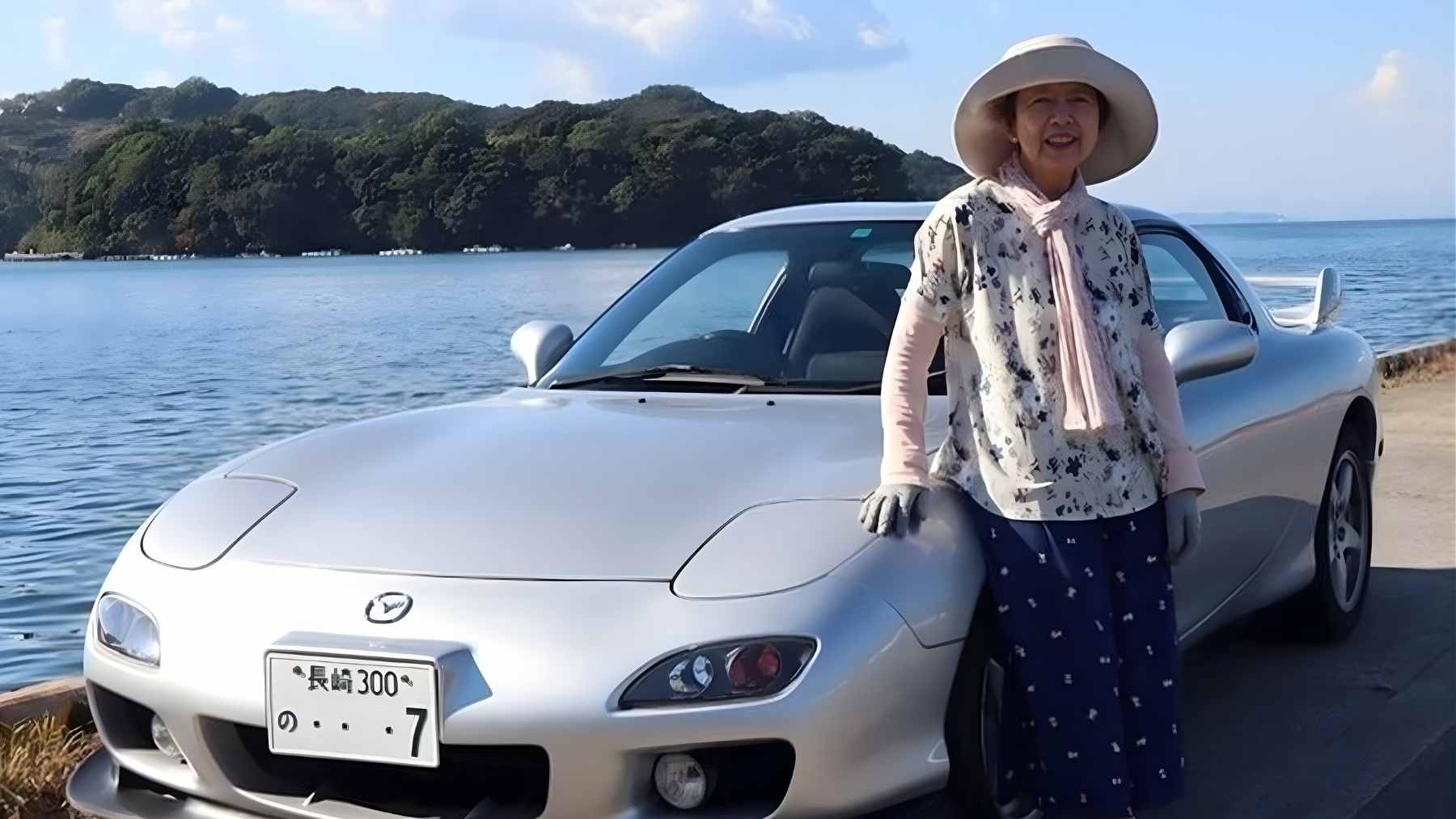
Most milestone birthdays come with gifts and surprises. For Japanese driver Naoko Nishimoto, turning 80 meant something very different: giving up her driver’s license and handing the keys of her silver third generation RX‑7 back to Mazda Motor Corporation.
After 25 years and roughly 48,000 miles together, she chose to retire on a high note and send the car home to the people who built it.
A promise kept at 80
Nishimoto fell for the RX‑7 in her fifties while watching the street racing anime Initial D with her son. She went straight to a local Mazda dealer, ordered a Type RB S version with suede seats, a rear spoiler, ZR rated tires and a five speed manual, and paid about 3.2 million yen, close to $20,000 at the time.
She bought her first car in her twenties, when it was still unusual to see a woman behind the wheel in Nagasaki. That early independence never really faded.
In Mazda’s own profile of her story, Nishimoto talks about carefully waxing the RX‑7, parking it where she could see it from the living room, and deciding at 78 that she would surrender her license when she turned 80 rather than wait for an accident or a scare.
When she finally looked for a new home for the car, local TV coverage and a Facebook post drew hundreds of offers from enthusiasts.
One of the emails came from Mazda’s public relations team. The result was a small handover ceremony at a dealer, complete with flowers, a framed replica of the number plate, and a personal letter from Mazda president Masahiro Moro.
From daily driver to rolling heritage
Nishimoto’s RX‑7 did not disappear into a private collection or a drift build. Mazda committed to full maintenance while keeping traces of her ownership, then sending the car to its facility in Yokohama where it now serves as a publicity and heritage car at events.
In his letter, Moro called her decision “a moving reminder” that a car can be more than simple transportation, describing the RX‑7 as an important partner in life and noting that this model was the first he worked on after joining Mazda. He promised that the company would treasure both the car and the stories of the energetic life it represented.
For Mazda, it is a perfect brand story. For enthusiasts, it is also a quiet endorsement of something they feel already that an analog sports car can be a long-term companion, not just a fast weekend toy.
Why this RX‑7 still matters
Part of the magic comes from the car itself. The RX‑7 is built around a compact rotary engine that sits far back in the chassis, which helps deliver low-weight, near-balanced front rear distribution, and the kind of nimble handling that made it a favorite on mountain roads and race tracks.
It later became a star of tuner culture and drifting, then gained global pop culture status through appearances in series like “The Fast and the Furious Tokyo Drift.”
There is also a broader backdrop. Japan has been encouraging older drivers to hand in their licenses for years, using measures like cognitive tests for drivers over 75 and local incentives that discount public transport or other services for those who stop driving.
In that context, Nishimoto’s choice sits at the crossroads of road safety and personal freedom. At the end of the day, her story shows what a graceful exit from the driver’s seat can look like keeping memories, avoiding tragedy, and turning one last drive into something bigger than an errand or a commute.
The official story was published on Mazda Mirai Base.