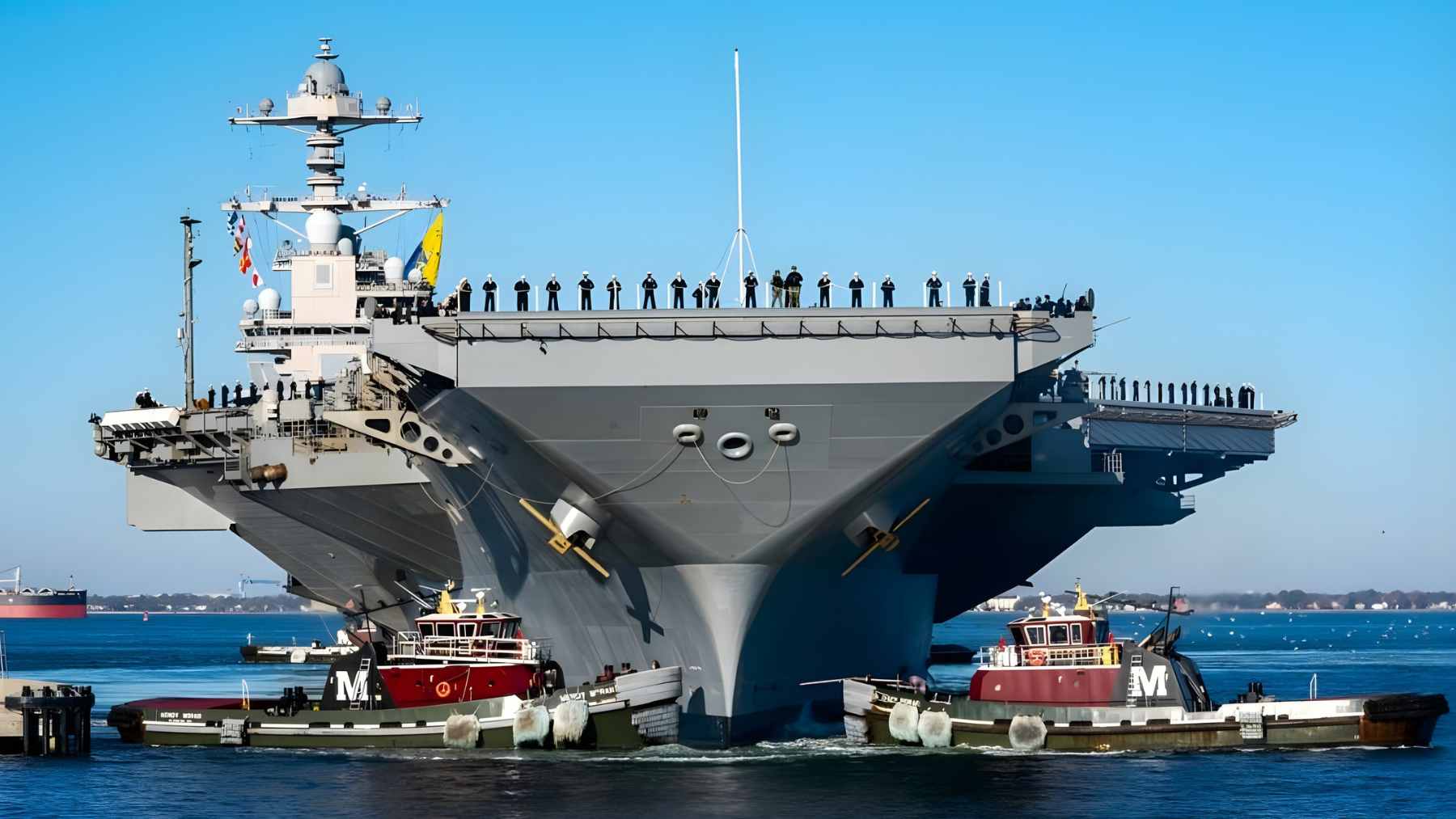
The most expensive warship the United States has ever built is being tripped up by one of the oldest problems on any ship. Off the coast of Venezuela, the USS Gerald R. Ford is deployed with about 4,600 sailors on board, yet internal documents and radio reports show its toilet and sewage system failing again and again, sometimes on a near daily basis.
Vacuum toilet system design and why it keeps clogging
For a vessel that cost around $13 billion and showcases cutting-edge catapults and radar, the weak point is surprisingly basic. At the heart of the problem is the Vacuum Collection, Holding and Transfer system, a vacuum-based sewage network borrowed in part from the cruise ship industry to save water. It relies on narrow pipes and negative pressure to whisk away waste using far less water than a traditional gravity system.
On paper, that sounds efficient. At sea, the story is very different. Emails obtained through public records requests describe 205 trouble calls in less than four days and sewage technicians working nineteen-hour days trying to keep up.
Other reports say the ship has needed outside help with the sewage system 42 times since 2023, with 32 of those calls packed into a single year.
When one small valve at the back of a toilet comes loose, it can knock out suction in an entire zone of the ship. That means dozens of toilets going offline at once and long lines forming in the few remaining working heads.
Sailors have found everything from T shirts and mop heads to the wrong kind of toilet paper jammed into the vacuum lines. The Navy points to those “improper materials” as a major cause, but earlier watchdog reports already warned that the pipes were undersized for a crew of over four thousand people.
Sailor living conditions and sanitation risks on an aircraft carrier
The human side is hard to ignore. In 2025, a sailor’s mother shared photos with public media that showed toilets backed up and sewage spilled across the deck, describing the conditions as “not sanitary” and saying her child’s berthing area occasionally woke up to waste on the floor. Sixth Fleet officials later acknowledged that the Ford’s system was averaging about two clogged zones a day, with each outage typically lasting between half an hour and two hours.
No one expects an aircraft carrier to feel like a cruise vacation. But functioning toilets are not a luxury. When breakdowns become routine, they affect health, morale and basic dignity in what is essentially a floating city. And that is where this story touches something bigger than one unlucky ship.
Shipboard waste management and the environmental footprint
A crew of several thousand people produces thousands of gallons of sewage and graywater every day. If the onboard systems that collect and treat that waste are fragile or constantly clogged, engineers have to fight simply to keep everything contained.
The more energy and chemicals they spend on repair, the harder it becomes to claim that the ship’s water saving design is truly sustainable.
Oversight agencies have been flagging the cost of these shortcuts for years. A 2020 Government Accountability Office report on Navy shipbuilding highlighted that the Ford-class vacuum sewage system requires periodic acid flushes to clear calcium buildup, with each flush estimated at around $400,000. Subsequent reporting shows the Ford has already gone through at least ten of these treatments since 2023, and they can only be done in port.
That is a lot of money and a lot of chemistry just to keep pipes open. Strong acids need to be manufactured, transported, handled and then neutralized or treated after use. Even if everything is managed carefully, the environmental footprint is substantial.
Add in the extra maintenance days, replacement parts and energy use, and the supposedly lean, water-saving system starts to look less like a green innovation and more like a costly experiment that forgot real-world conditions.
GAO oversight and what happens next for Navy sustainability
GAO analysts have also warned that the Navy has underestimated the long-term cost of sustaining new ship classes by roughly $130 billion, identifying 150 recurring technical problems that would cost at least $4.2 billion to fix even for the cases where repair estimates exist. To a large extent, the Ford’s toilet saga fits that pattern. When sustainment is treated as an afterthought, basic systems can become chronic drains on budgets, time and, ultimately, the environment.
So what does all this mean beyond one very unlucky plumbing diagram. In practical terms, it is a reminder that “green” or efficient technology on paper has to match the messy reality of how people live and work.
A sewage system that saves water but cannot handle realistic flush habits, heavy use and months at sea is not truly resilient. Designers and policymakers will have to weigh not only energy and water savings, but also chemical use, maintainability and failure modes if military fleets are serious about shrinking their overall footprint.
At the end of the day, sailors should not have to choose between doing their jobs and worrying whether the nearest head will work. And oceans that are already under pressure from warming, pollution and overuse should not have to absorb the fallout from underbuilt infrastructure on some of the largest machines humans have ever made.
The report was published by New England Public Media.