Imagine if the carbon pouring out of smokestacks could one day help make food ingredients, cosmetics, or even planet-friendly fuels instead of heating the atmosphere. A team of synthetic biologists from Northwestern University and Stanford University has taken a concrete step in that direction with a new artificial metabolism that turns waste CO2 into valuable chemical building blocks.
At the heart of the work is a cell-free system called the Reductive Formate Pathway, or ReForm.
The researchers designed this pathway to take formate, a simple liquid made from captured CO2 using electricity and water, and upgrade it into acetyl CoA.
That molecule sits at the center of life’s chemistry, used by cells to build everything from fats to many industrial chemicals. As a proof of concept, the team then used the same pathway to turn acetyl CoA into malate, a compound already used in foods, cosmetics, and biodegradable plastics on store shelves.
Michael Jewett, one of the senior authors, put the motivation in simple terms. “We urgently need cost-effective, environmentally-sustainable, and energy-efficient ways to deal with the abundance of CO2 in our atmosphere,” he said, noting that biology offers a promising but still inefficient route for turning that climate pollution into so called green chemicals.
Turning a climate problem into a resource
Globally, human activities have already warmed the planet by about 1.1 degrees Celsius compared with preindustrial times, largely because of rising greenhouse gas emissions. For years, scientists have explored the idea of “upcycling” captured CO2 so it does not just end up in the air again after leaving a power plant or factory.
Formate has become a favorite intermediate in this vision. Electrochemical systems can convert CO2 and water into formate using electricity, ideally from wind or solar. The result is a liquid carbon source that is easier to handle than gas. The missing piece has been an efficient way to take that simple molecule and turn it into something useful for industry. Nature never evolved a pathway that builds acetyl CoA directly from formate.
ReForm was created to fill exactly that gap.
Metabolism without cells
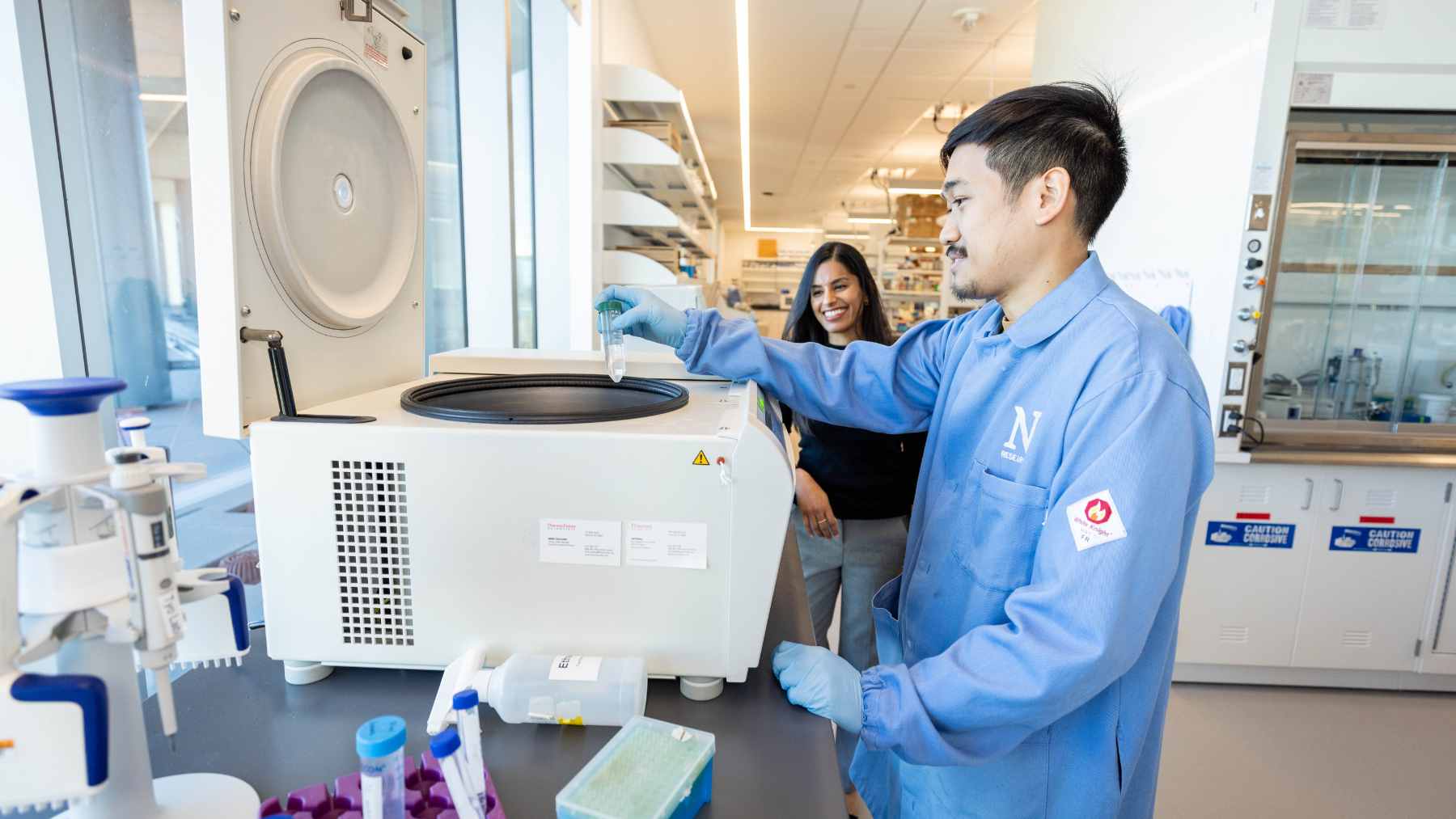
Instead of forcing a living microbe to learn a brand new trick, the team stripped metabolism down to its parts. In a cell-free synthetic biology system, scientists break open cells, keep the enzyme machinery, and move it into a test tube. “It’s like opening the hood of a car and removing the engine,” Jewett explained. “Then, we can use that engine for different purposes, free from the constraints of the car.”
Running outside of cells gives researchers tight control over every ingredient. They can dial in how much of each enzyme is present, adjust the mix of helper molecules known as cofactors, and tweak conditions in ways that would stress or kill an organism. It is more like tuning an engine on a workbench than trying to do the same job while driving through rush-hour traffic.
Five enzymes and thousands of tests
Designing ReForm meant inventing chemistry that does not exist in any natural organism. The team started by screening 66 enzyme candidates, drawn from bacteria and other sources.
Then they used rapid, cell-free testing to evaluate more than 3,000 engineered variants, looking for those that could carry out completely new reactions on formate and related molecules.
The final pathway uses five specially engineered enzymes working in six reaction steps to convert formate into acetyl CoA. Once that core “spine” was in place, the researchers showed that ReForm could also accept other one-carbon inputs such as formaldehyde and methanol, including versions produced directly from electrochemically reduced CO2.
In practical terms, that means ReForm behaves like a plug-in module. Feed it different simple carbon sources, and it still delivers the same central building block that biology already knows how to use in thousands of ways.
From lab bench to everyday products
For now, all of this happens in carefully controlled flasks, not in full-scale factories. Even so, the team has already connected ReForm to an everyday target. By extending the pathway, they converted acetyl CoA into malate, a chemical that shows up in food products, personal care items, and some biodegradable plastics.
This might sound far from the electric bill on your kitchen table or the traffic fumes outside your window. Yet if systems like ReForm can be scaled and linked to real CO2 capture and renewable power, they could help supply ingredients for fuels and materials without digging more fossil carbon out of the ground.
The authors of the study describe their work as expanding the toolkit for synthetic one-carbon metabolism and helping lay the groundwork for a future “formate-based bioeconomy.”
A cautious step toward carbon-negative industry
Experts regularly stress that no single technology will fix the climate crisis. Even the most efficient systems for turning CO2 into products will need clean energy, smart policy, and big changes in how we use resources.
Still, this artificial metabolism shows how chemistry and biology can be combined in new ways to treat CO2 not only as waste, but also as raw material. At the end of the day, ReForm is a reminder that the same molecule driving global warming can, under the right conditions, become part of a more sustainable industrial cycle instead.
The study was published in Nature Chemical Engineering.