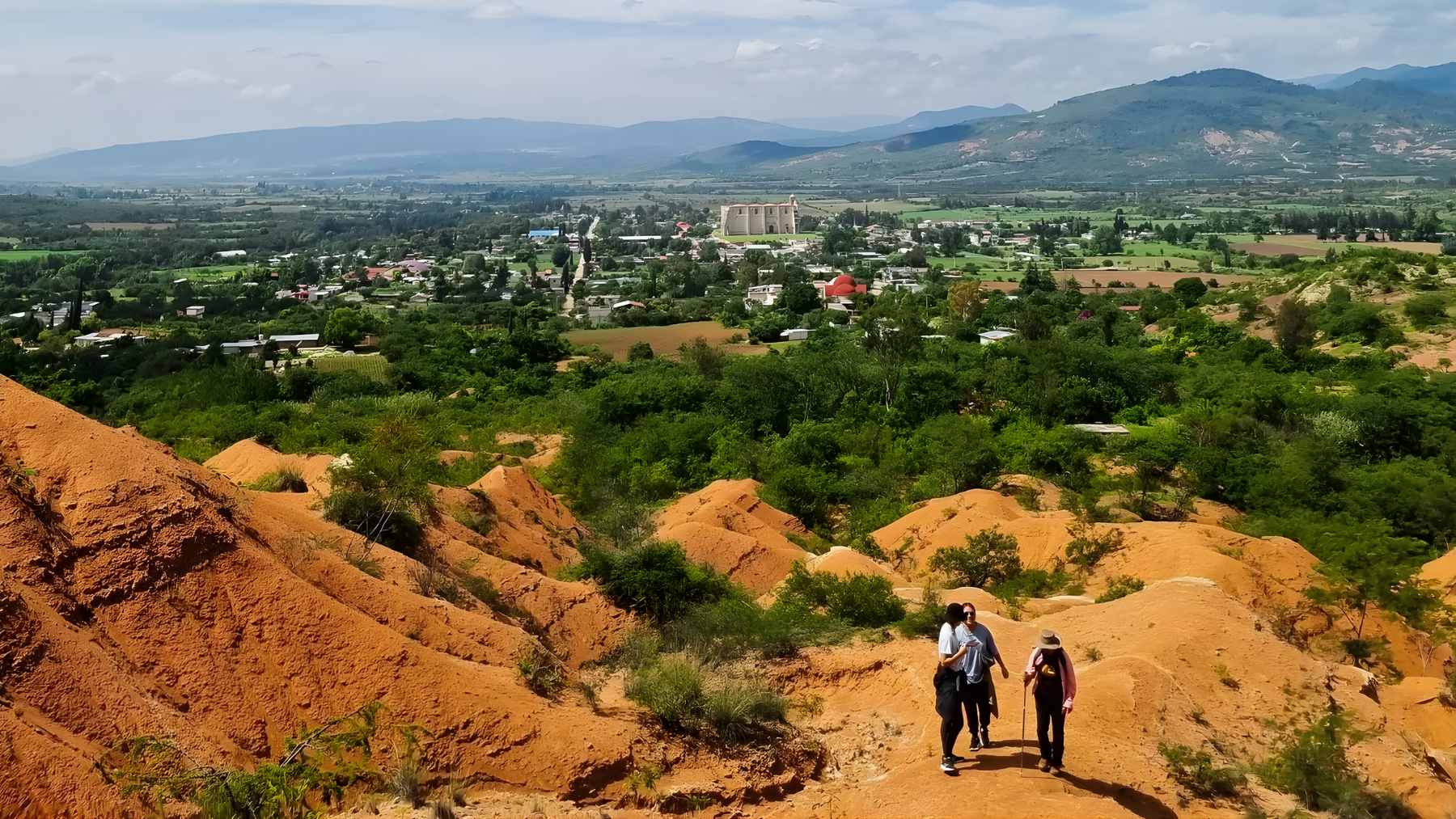
Across the steep hills and valleys of Oaxaca’s Mixteca Alta region, the real allies of farmers turn out to be invisible. Scientists from the National Autonomous University of Mexico have uncovered a huge diversity of beneficial soil bacteria in the Mixteca Alta UNESCO Global Geopark, a microbial “army” that naturally feeds plants and shields them from disease.
By combining advanced DNA sequencing with centuries of local farming know-how, the team showed that ancient terrace systems in the region host bacterial communities that recycle nutrients, build stable organic matter, and help crops grow in thin, erosion-prone soils.
Researchers say these native microbes could be turned into locally-made biofertilizers and other biological inputs, cutting dependence on imported chemical products and offering a new tool for restoring degraded land.
An invisible army beneath Oaxaca’s fields
The discovery took place in the Mixteca Alta UNESCO Global Geopark in southern Mexico, a landscape of canyons, gullies, and small maize plots that has long battled soil erosion.
Local Mixtec communities have farmed this rugged terrain for more than 3,400 years using traditional systems known as lama bordos, contour terraces, and valley fields that trap water and fertile sediments.
The research team, led by biologist Mario Alberto Martínez Núñez at the Oaxaca Genomic Observatory in the Academic Unit of Territorial Studies (UAET) Oaxaca of UNAM’s Institute of Geography, sampled soils from lama bordos, terraces, and valleys that are still under cultivation today.
Using 16S rRNA gene sequencing, a method that reads bacterial DNA the way a barcode scanner reads groceries, they mapped the microbiome, the full community of microscopic life in these soils. The university later detailed the findings in a UNAM Global report for the wider public.
What makes these soil bacteria so special?
Analysis of the samples revealed at least 21 major groups of bacteria. Four phyla, or big branches on the bacterial family tree, dominated the soils, with Acidobacteria, Proteobacteria, Actinobacteria, and Chloroflexi together making up roughly 80% of the sequences found in the three agroecosystems.
Many of these microbes specialize in breaking down plant residues, locking carbon into stable organic matter, and freeing up nutrients such as nitrogen so crops can use them. Others, including families like Solibacteraceae and Sphingomonadaceae, are known to help form soil aggregates and naturally suppress plant diseases, acting almost like a built-in immune system for fields that rarely see synthetic pesticides.
Genomic analysis of the DNA sequences also pointed to metabolic pathways linked to the production of natural antibiotics and vitamins that support plant growth and stress tolerance. In simple terms, the soil microbes in these old fields are not just passengers, they are tiny chemical factories quietly working to keep the whole system running.
As Martínez put it, “Although farmers did not explicitly identify microbes, their traditional knowledge regarding soil management created environments that promote beneficial bacterial communities”.
From lab sequencing to local biofertilizers
Because the team now knows which bacteria are present and what they do, they can begin designing microbial mixes tailored to the Mixteca Alta. UNAM scientists describe these as local biofertilizers and biostimulants, live formulations that farmers could apply to seeds or soils to boost fertility without relying as heavily on industrial agrochemicals that are often imported and priced in foreign currency.
For small-scale growers who already struggle with rising fertilizer bills and unpredictable weather, using native microbes that are adapted to local conditions could be a big deal. Researchers say these bacterial communities may help bring tired, eroded plots back into production, increase yields over time, and cut pollution from chemical runoff that can damage rivers and groundwater.
The same microbiome maps can also serve as indicators to guide ecological restoration, showing when a degraded soil is regaining key bacterial groups associated with healthy structure and nutrient cycling. In a way, the strategy is similar to giving land a probiotic treatment, only scaled up from a yogurt cup to an entire hillside.
That image might feel a bit playful, yet it captures how seriously scientists now take the life hidden in soil.
Why this Mexican study matters far beyond Oaxaca
The scientific paper published in an article in the journal Agriculture, notes that this is the first detailed map of bacterial microbiomes in the ancient agroecosystems of the Mixteca Alta Geopark. By tying those genetic data to long-standing practices like lama bordos and terraces, the work positions the region as a model for how traditional agriculture and modern genomics can pull in the same direction.
Earlier research in the region, such as a 2013 study on lama bordo engineering in the Journal of Archaeological Science, has already shown how Mixtec farmers reshaped entire hillsides to capture water and soil, laying the groundwork for resilient food systems.
Linking that history to living microbiomes suggests that the real infrastructure of agriculture includes microscopic allies that we are only beginning to see, a lesson that could resonate from Mexican cornfields to any farm worried about climate shocks and the cost of the next harvest.
If an ancient terrace in Oaxaca hides such a powerful microbial community, what might be living under fields in other parts of the world? At the end of the day, understanding and protecting these hidden allies could help keep food on the table while easing pressure on land and water.
The main study was published in the journal Agriculture.