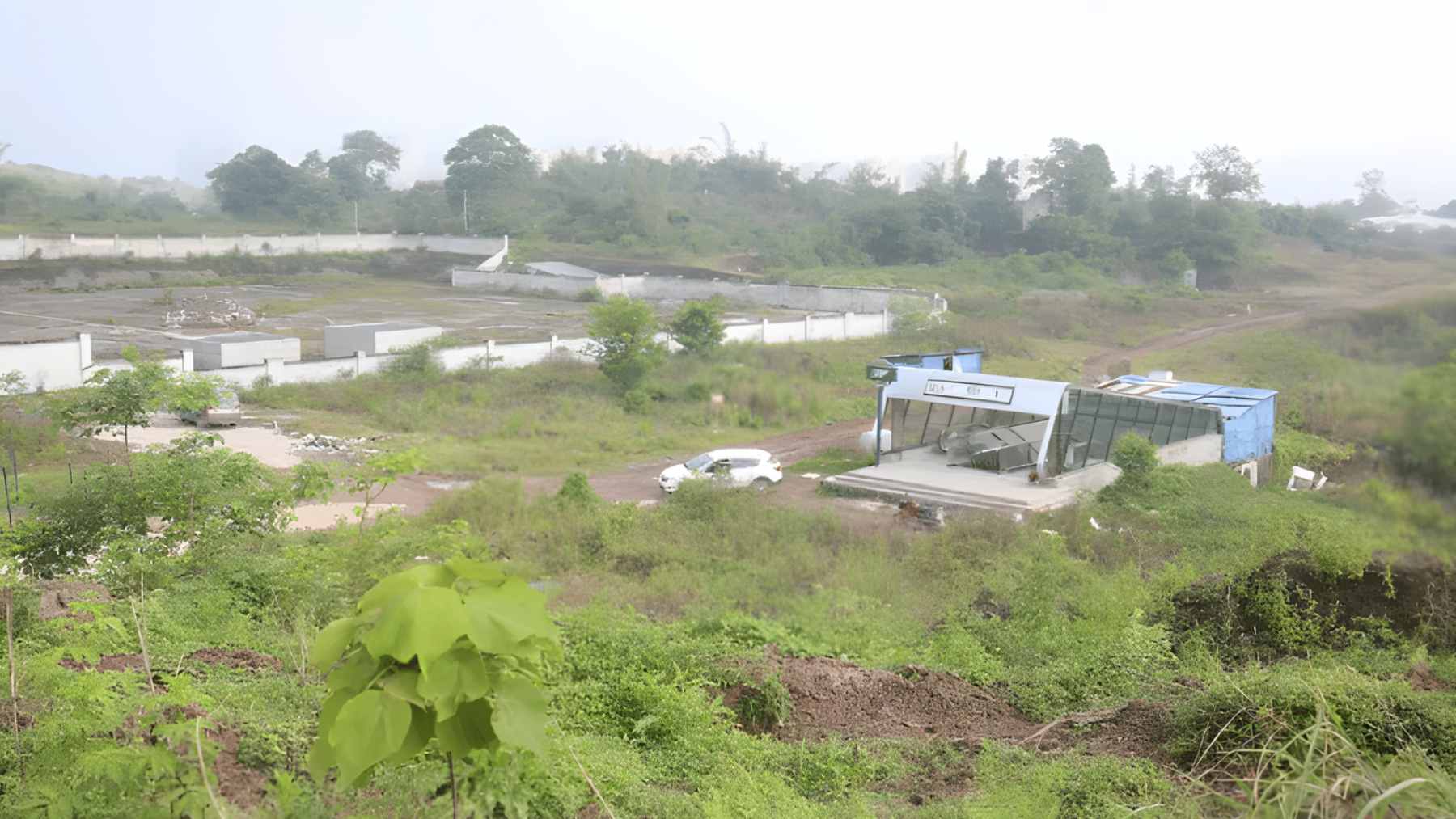
In the late 2000s, photos of new subway entrances rising from empty fields in China spread online. They fed jokes about ghost cities. Fifteen years later, many of those stations now sit among busy roads and apartment towers, filled with commuters on their way to work or home.
The gamble on building the subway first mostly worked, but the bill is heavy.
Planners flipped the usual logic of urban transport and built rail first, people later. By the end of 2024, urban lines stretched for almost eleven thousand kilometers and carried over thirty billion passenger trips in a year, across more than fifty cities. Land near stations rose in value.
A study in Wuhan found commercial properties within four hundred meters of a metro stop selling around 9% higher than similar sites, a strong incentive for local governments to build early.
Caojiawan station on the edge of Chongqing became the most famous symbol. When it opened in 2015, its exits rose into empty fields and a staff member admitted that “Very few passengers get off at this station.”
Photos went viral. By 2019 the main avenue was paved, and by 2020 comparison images showed wide roads, high-rise apartments and busy sidewalks where the fields had been.
The pattern appears in Lanzhou New Area in Gansu. Around 2016 reporters counted about 150,000 residents and 40,000 construction workers in a district pitched as a future home for a million people by 2030. Newer figures show several hundred thousand residents, proof that people did arrive, although more slowly than planned.
Large sections still sit between finished blocks and empty plots, something anyone walking those long, windswept avenues can see.
The financial picture is less encouraging. Analyses of metro operators suggest combined debts of around 4.3 trillion yuan (around $620 million) and persistent losses even after subsidies.
In Shenzhen, one of the busiest systems, the metro carries more than eleven million passengers on peak days yet still reports yearly deficits in the tens of billions of yuan. Cheap fares keep trips accessible for everyday riders counting their monthly transport budget, but they leave cities searching for revenue.
Beijing has tapped the brakes. Since 2018, national rules have limited new subway projects to cities with at least three million urban residents and solid public finances. Planners now have to show that forecast ridership will be high enough before work begins.
Safety also moved up the agenda after deadly flooding on the Zhengzhou metro in 2021, when extreme rainfall overwhelmed tunnels on one line and fourteen people died.
In one recent study, researchers mapped weak points in networks like Chongqing’s and recommended changes to station design, transfer layouts and backup systems rather than simply adding more lines.
The next phase of China’s metro story looks likely to focus less on spectacular openings and more on resilience, maintenance and passenger experience, from shorter transfer walks to better crowd management in the evening rush.
To a large extent, the story of China’s so-called ghost stations is a story about time horizons. Building metros years ahead of demand helped steer where new cities grew and made car-free commutes possible for millions, but it also loaded local governments with heavy debts and left networks still catching up on safety and comfort.
The study was published in the journal Buildings.