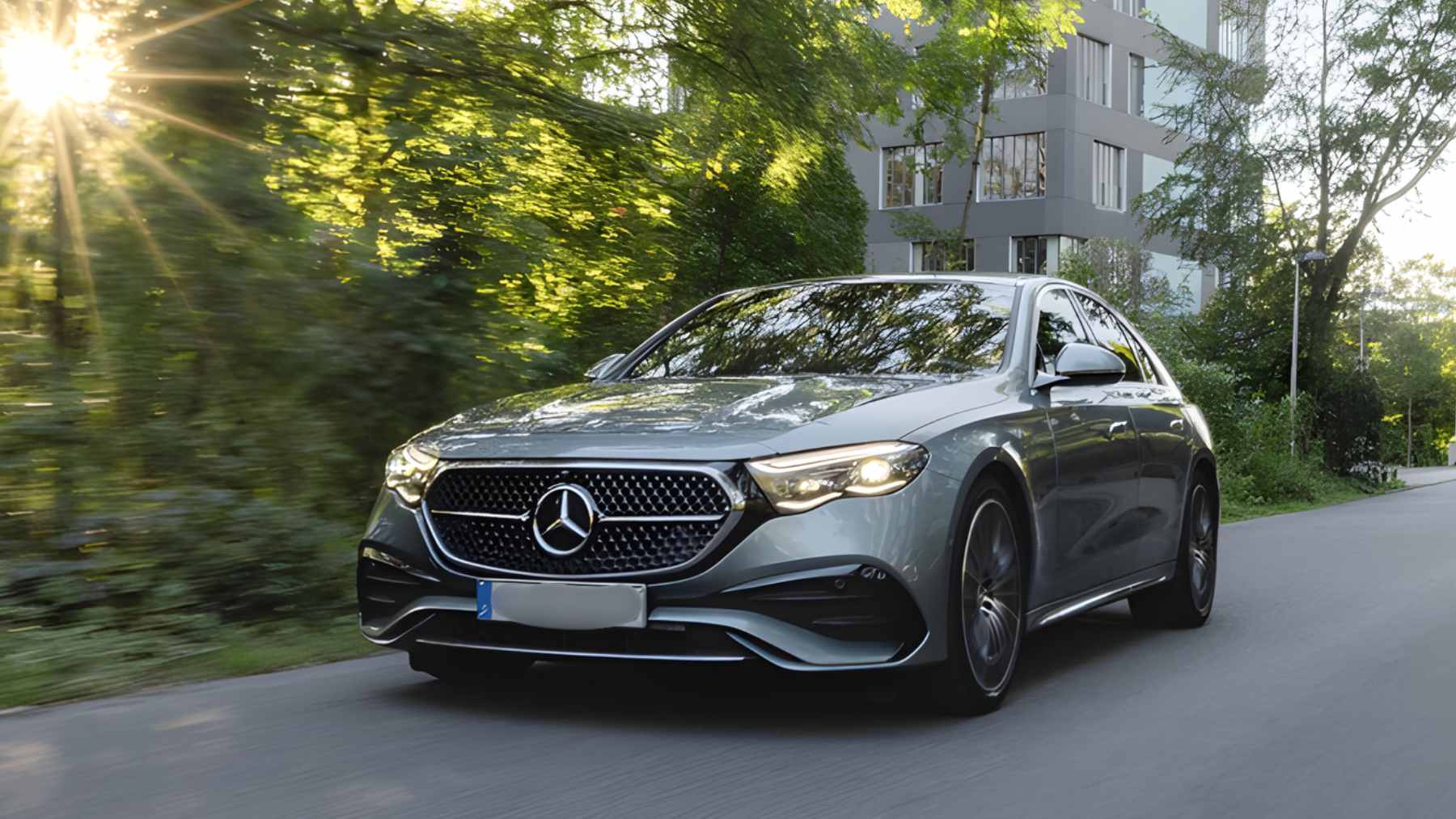
German economist Moritz Schularick has sent shockwaves through Europe’s car capital by predicting that the three big German automakers Volkswagen, BMW and Mercedes-Benz will probably no longer exist in their current form by the end of this decade.
He delivered that warning on the prime time talk show “Caren Miosga” on public broadcaster ARD Das Erste, in a conversation about whether Germany’s auto industry is still “saveable.”
Why germany’s auto industry could face a major shake-up
So what exactly is he saying here? Schularick, who leads the Kiel Institute for the World Economy, is not predicting that the brand names will vanish from grilles overnight.
His point is more subtle and, in some ways, more unsettling. In his view, ownership structures, control and the places where profits are really made could shift so much that today’s German champions might end up as junior partners or takeover targets for foreign players, particularly from China, or be broken up and reshaped through alliances and deep restructuring.
The pressure of electric vehicles and autonomous driving
On air, he criticized what he called a backward-looking debate that focuses on defending combustion engines instead of preparing for the next revolution in software, autonomous driving and new mobility services.
He reminded viewers that something similar has happened before, pointing to Volvo’s transformation after its acquisition by Chinese group Geely, which turned the Swedish brand into a profitable, technology-focused global player under new ownership.
Porsche and Mercedes face financial freefall
The data behind the alarm is hard to ignore. Sports car maker Porsche, part of the Volkswagen group, has seen its operating profit for the first nine months of 2025 collapse to about 40 million euros, compared with just over 4 billion a year earlier.
That is a drop of roughly 99%, driven by huge one-off costs tied to reversing ambitious electric vehicle plans, extending combustion engine programs and reorganizing battery activities.
Mercedes profits have tumbled as well, with net income for the first nine months falling by about half, while analysts describe the group as being under pressure in China and struggling to hold margins in a cooling premium market.
Germany losing ground as global car production hub
Zoom out and the picture looks even tougher. Germany built around 5.6 million cars in 2017 but fewer than 4 million in 2024, according to recent industry analysis.
At the same time, Chinese makers such as BYD have surged in Europe, even starting local production in Hungary to sidestep higher European Union tariffs on Chinese-built electric vehicles. For German brands that once enjoyed long waiting lists and fat margins, that is a very different game.
Industry leaders and politicians react to the forecast
Not everyone on the show agreed with Schularick’s bleak timeline. Hildegard Müller, who heads the powerful German Association of the Automotive Industry, dismissed his forecast as an “absurd prediction.”
She argued that there are still successful companies in the sector and blamed much of the current crisis on German politics, high energy prices and mounting regulation that make it expensive to keep factories running and workers on payrolls.
In other words, for her the problem sits more in Berlin and Brussels than in Stuttgart or Wolfsburg.
What’s at stake for german jobs and innovation?
Green politician Cem Özdemir took a middle road. He expressed confidence that Germany’s carmakers can adapt if everyone “does their job” and he almost completely rejected the notion that Chinese investors are poised to seize control of companies like Mercedes.
At the same time, he has repeatedly called for cheaper energy and faster innovation so that the country does not lose the race to build the cars and software of the future.
Behind this television clash sits a very practical question for millions of workers and drivers. If German carmakers shift more production abroad to chase lower energy costs, that means fewer well-paid jobs in the factory towns that built the country’s middle class.
If they fall behind in software and autonomous tech, more of the value in every vehicle will flow to American or Chinese companies that control operating systems and data, while Europeans are left stamping metal and paying the electric bill for smart factories that no longer set the rules.
What it means for consumers and climate goals
For everyday drivers, a shake up could show up in quieter ways. Fewer model choices with traditional engines, more joint ventures with Asian brands in showrooms, and dashboard software that feels more like a smartphone designed in California or Shenzhen than a classic German cockpit.
For climate policy, the stakes are just as real, because Europe needs strong, profitable manufacturers to invest in cleaner fleets rather than retreating into short-term cost cutting.
Germany’s car giants face a fork in the road
Schularick’s warning is, to a large extent, a call to stop arguing over the rearview mirror and focus on where the road is heading.
Whether his timeline proves right or not, the financial stress at Porsche, the shrinking margins at Mercedes and the fierce rise of competitors like BYD suggest that the era when “Made in Germany” could rely on reputation alone is ending.
The real question now is who will own and control the brands that still fill highways from Los Angeles to Berlin in ten years’ time.
The official press release was published on ARD Das Erste.