If you feel guilty for not squeezing long workouts into an already packed week, you are not alone. New figures from the World Health Organization suggest nearly 1.8 billion adults are not moving enough and are putting themselves at higher risk of heart disease, diabetes, dementia, and some cancers.
Now a large wearable-based study led by Professor Emmanuel Stamatakis at the University of Sydney suggests many people may be leaving health benefits on the table by focusing on duration instead of effort.
Each breathless minute of vigorous activity was linked to health gains that would usually take several minutes of brisk walking, or even more time spent in light movement.
One hard minute, several easy ones
The new analysis used data from 73,485 adults in the UK Biobank who wore an accelerometer on their wrist around the clock for seven days. Researchers followed them for about eight years and tracked major outcomes such as deaths from any cause, cardiovascular deaths, type 2 diabetes, and several cancers related to physical activity.
When they compared different intensities, the pattern was striking. For reductions in the risk of major cardiovascular events, about one minute of vigorous effort matched the benefit of roughly six minutes of moderate activity such as brisk walking.
For type-2 diabetes, that ratio climbed to around one to nine. For overall risk of death, one vigorous minute lined up with about four minutes of moderate effort. Cancer-related outcomes showed smaller but still meaningful gaps, often around one to three and a half.
Light activity such as slow walking helped much less on a minute for minute basis. For several outcomes, it took between 53 and 156 minutes of light movement to match a single minute of vigorous work.
These numbers challenge the long-standing rule of thumb used in current guidelines, which treat one minute of vigorous activity as equivalent to about two minutes of moderate activity.
What “vigorous” really feels like
Vigorous intensity is not a technical lab term here. For most adults, it describes any effort where the heart is pounding, breathing is heavy, and speaking in full sentences becomes difficult. You can usually keep it up for only a few minutes before needing a break.
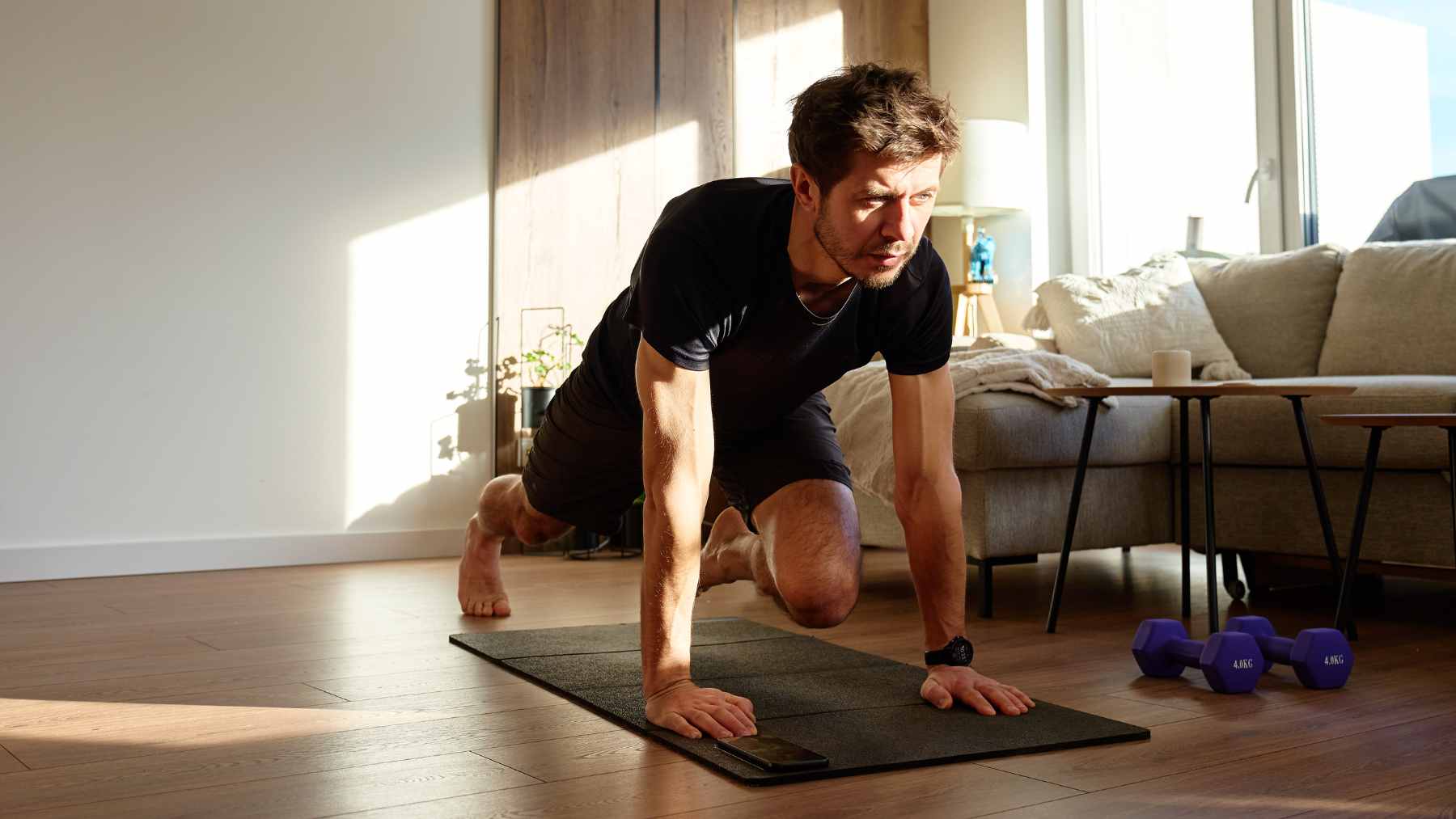
That can happen in a structured workout such as high-intensity interval training or fast laps in the pool. It can also show up in everyday life when you climb several flights of stairs with groceries, rush to catch a bus, or pedal hard up a hill on your bike.
If you reach that breathless point a few times per week, the new study suggests your heart and metabolism may get a bigger payoff than the clock alone would imply.
The case for “exercise snacks”
The Nature Communications paper builds on earlier work from the same group on vigorous intermittent lifestyle physical activity, often shortened to VILPA. In a 2022 study in Nature Medicine, Stamatakis and colleagues looked at more than 25,000 middle-aged adults who did no structured exercise.
Wearing the same kind of wrist devices, those who accumulated around four to five minutes per day of very short vigorous bursts, usually in one or two minute chunks, had 26 to 30 percent lower risk of death from any cause and around one third lower risk of cardiovascular death compared with those who did none.
Those bursts came from things like walking very fast up a hill or carrying heavy loads, not from gym sessions. The pattern suggests that for people who rarely set foot in a fitness center, small spikes in effort scattered through the day can still matter a great deal.
Professor Stamatakis has put it simply in interviews. For people who do no vigorous activity at all, “introducing anything even four to five minutes per day seems to have some effect long term.”
How this might look in an ordinary week
In practical terms, the research points to a menu of options rather than a single prescription. Someone who enjoys long walks can still lean on moderate intensity, but will need more minutes to reach the same level of protection. Someone who feels constantly short on time might trade part of that walking for brief, tougher efforts.
For example, a time pressed office worker could try:
- Taking the stairs at a pace that feels challenging for 30 to 60 seconds, repeating this several times a day
- Turning part of a regular walk into short “power sections” where they speed up until talking in full sentences is hard
- Doing a handful of fast bodyweight moves at home, such as squats or step ups, during TV ads or while the coffee brews
Short, intense bursts are not suitable for everyone. People with heart disease, lung conditions, or other medical problems should check with a health professional before adding vigorous efforts. The study also cannot prove cause and effect, since it is observational, although it does line up with earlier controlled trials that found similar advantages for vigorous training.
Intensity is powerful, but enjoyment still matters
The authors are careful not to present vigorous work as a moral obligation. Higher intensity usually feels less comfortable, and that discomfort is a common reason people abandon exercise entirely. For some older adults, a sociable park walk or an easy bike ride may be much more sustainable than repeated all-out efforts.
In Professor Stamatakis’s words, “the point here is to give people as many options as possible.”
At the end of the day, the message is not that walking no longer counts. It is that, in a world where many people struggle to carve out even half an hour for movement, a few well-chosen breathless minutes can carry surprising weight for long-term health.
The study was published in Nature Communications.