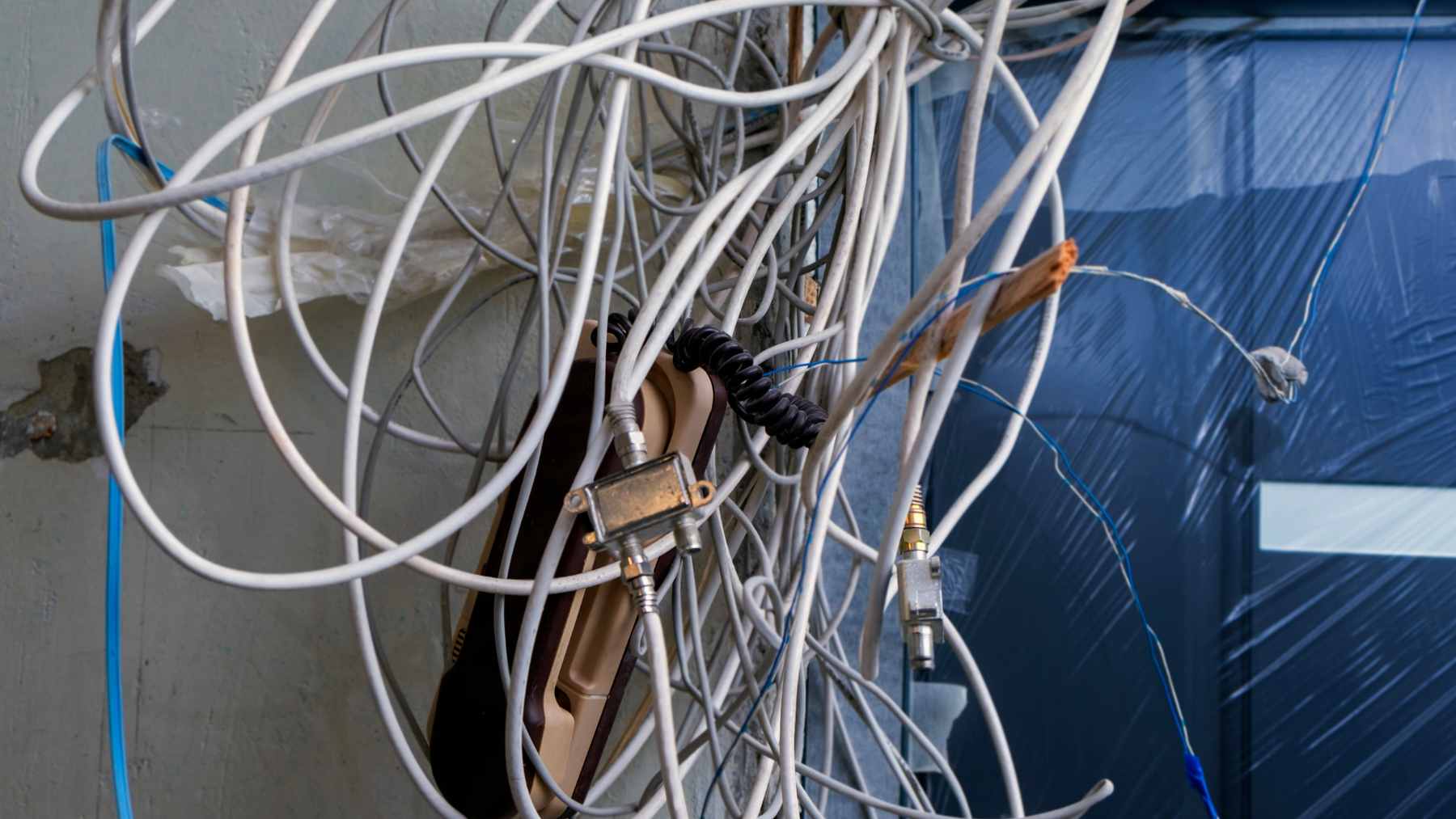
Old phone jacks are not usually the heroes of a home network. In one London flat, though, they now carry gigabit level data to almost every room. A developer who blogs as “The HFT Guy” has shown how the forgotten telephone wiring in his vintage British home can be turned into a high-speed wired network with a pair of compact G.hn modems.
His step by step write up, which later caught the eye of tech outlet Tom’s Hardware, is quietly challenging assumptions about what it takes to modernize old buildings.
From noisy powerline to copper comeback
Like many older houses in the United Kingdom, his place was full of telephone sockets and had no ethernet pre-wired. For years he relied on powerline adapters, which send data over electrical wiring and often struggle with interference and added latency.
Anyone who has tried to stream a movie during a storm or a heavy appliance cycle knows how that story goes.
Instead of chasing new cable through plaster or drilling between floors, he looked at the copper already in the walls. The internal phone runs were made with Cat5 cable, a type normally used for networking.
Traditional landlines only use two of the eight conductors, so most of that copper was sitting idle.
The catch is that British phone sockets are daisy chained, one after another, while ethernet prefers a star layout where every run comes back to a central switch. You cannot simply swap the wall plates and call it a day, so he needed hardware that could speak ethernet at one end and ride happily on those phone pairs at the other.
How the G.hn bridge works in plain language
The solution came from GIGA Copper and its G4201TM adapters. Each unit has a standard RJ45 ethernet jack on one side and a small RJ11 phone connector on the other. You plug one box into the home router, then into a nearby phone socket.
At the far end, another box hooks into a different phone socket in the room where you need a solid wired link, such as a home office or gaming corner.
Inside, the devices use the ITU G.hn standard, which slices the signal into hundreds of tiny sub channels across a wide band of frequencies and continuously adjusts how many bits each one carries. That approach, similar in spirit to modern DSL, lets G.hn push gigabit class speeds over existing telephone or coaxial cabling instead of fresh ethernet runs.
According to the manufacturer’s documentation, a pair of G4201TM bridges can negotiate a physical link around 1.8 gigabits per second and deliver roughly 1.5 gigabits per second of usable bandwidth, shared between the rooms that are connected.
In tests reported on his blog, the London developer was able to saturate his home network with a full gigabit link over the reused phone wiring, plenty of headroom for his 500 megabit fiber service and large game downloads.
A taste of how older homes could upgrade
G.hn is already used by broadband providers to bring multi-gigabit service from a fiber node into apartments over existing copper pairs, especially in buildings where opening walls would be disruptive or expensive.
This do it yourself experiment shows the same concept working at a small domestic scale. For renters who cannot rewire or for homeowners staring at a maze of mystery cables, it hints at a middle path between flaky Wi Fi and full renovation.
There are limits. Performance still depends on cable quality and distance, and these pro grade adapters are not cheap compared with a basic mesh router. G.hn also turns all the connected phone sockets into a shared medium, so heavy traffic in one room can affect others if several people start big downloads at once.
Even so, the project underscores how much useful infrastructure is already hiding in old walls. Instead of ripping everything out, some homes may be able to lean on past generations of copper to support present day bandwidth needs, from 4K streaming to remote work, without another dusty weekend of drilling.
The official technical standard for G.hn was published on the ITU-T site.