Imagine waking up to a world where every pampered pug, fluffy Pomeranian and giant Great Dane suddenly had to fend for itself. In a thought experiment shared by veterinary epidemiologist Dan O’Neill from the Royal Veterinary College in the United Kingdom, the wild version of that world does not look good for our designer dogs.
Within about five years, he suggests, most modern breeds would vanish and the survivors would start to look surprisingly similar.
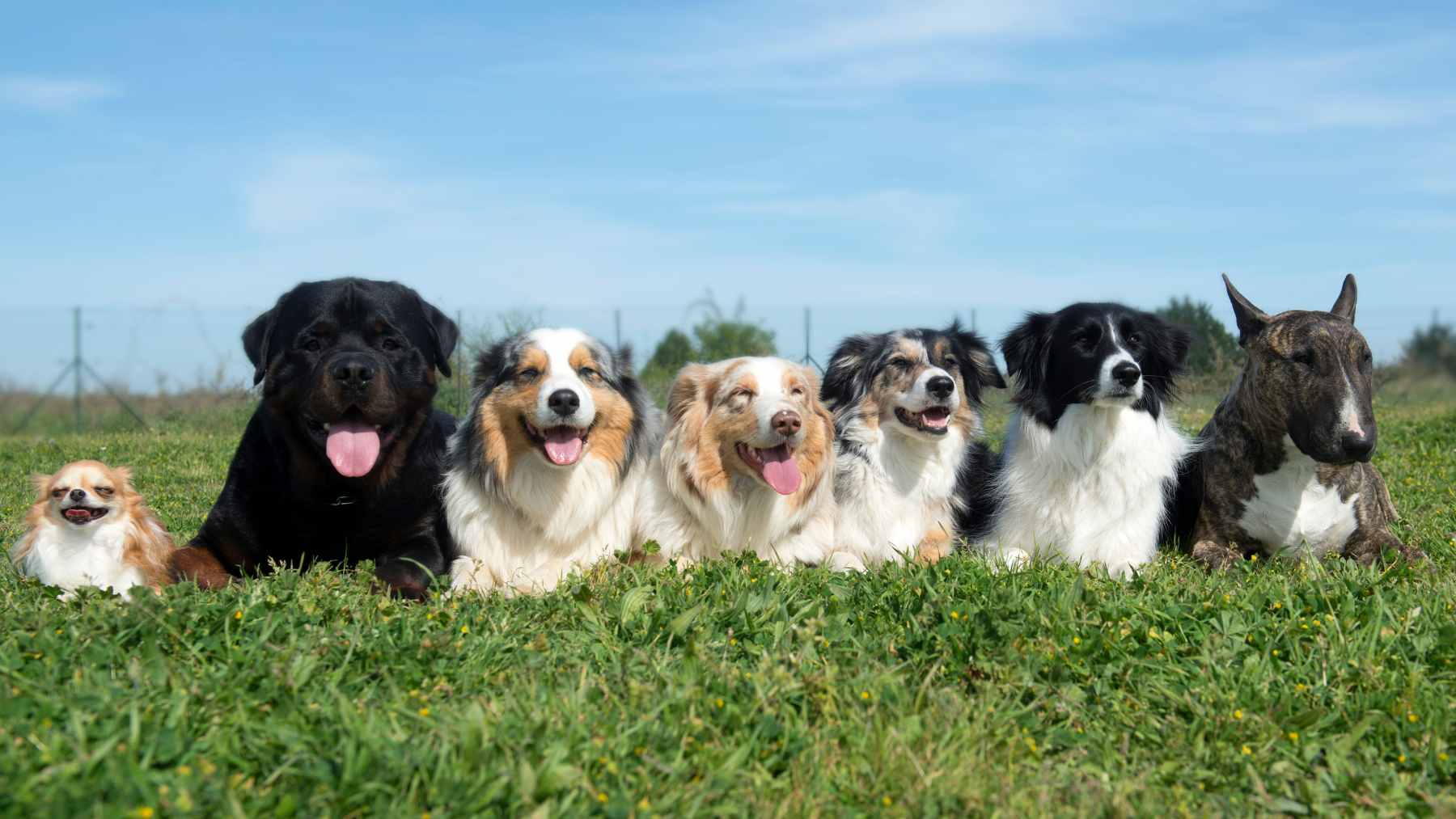
The idea sounds like science fiction yet it rests on real numbers and real biology. The huge variety of more than four hundred dog breeds exists mainly because humans keep choosing which animals reproduce and because we feed, shelter and medicate the results.
Take people out of the picture and natural selection would once again reward dogs that can hunt or scavenge, stay healthy without surgery and raise puppies without help.
How humans created hundreds of dog breeds
Modern dogs did not diversify on their own in quiet forests or lonely mountains. Registry groups such as the American Kennel Club report about two hundred recognized breeds in the United States and note that international registries list roughly four hundred breeds worldwide.
Most of that explosion of types is recent, shaped during the last couple of centuries by hobby breeders and dog fanciers rather than by survival pressures.
At first people shaped dogs for practical jobs. Farmers selected steady herders, hunters picked fast pointers and families favored alert guardians that would bark when something rustled at the gate.
As O’Neill and other welfare experts point out, looks have increasingly taken over from function so owners now line up for flat-faced pets that wheeze on a short walk or giant breeds whose joints fail long before the mortgage is paid off.
That shift has consequences you can see in the vet waiting room. A 2024 analysis supported by Dogs Trust found that popular flat-faced breeds such as French bulldogs live on average around one and a half years less than more typical dogs and face higher risks of breathing and eye problems.
O’Neill, who also chairs the United Kingdom’s Brachycephalic Working Group, has warned that many of these much-loved animals are no longer fully functional as dogs in everyday life.
What would happen to dogs if people vanished?
So what would happen to your couch-loving Labrador or tiny Chihuahua if humans quietly disappeared one night? According to O’Neill’s scenario, the first wave of losses would hit the most extreme breeds that depend heavily on human care.
Dogs that struggle to breathe, overheat easily or cannot give birth without surgery would be unlikely to survive long once the kibble, air conditioning and emergency vet visits stopped.
Yet scientists do not think every dog would die out at once. A 2019 review led by Lauren Smith at the University of Leeds estimated that around three quarters of the world’s roughly seven hundred million domestic dogs already live as free roaming animals that feed from trash, handouts and roadkill.
These street and village dogs are better prepared for a world without humans although they still rely heavily on human waste and crowded cities.
In that harsher new world, natural selection would work quickly. Timid animals that cannot compete for food, dogs that lack social skills to raise pups in a group or individuals made sterile through neutering programs would leave few descendants.
Large dogs might have strength on their side but their high calorie needs could become a serious disadvantage while very small dogs would slip too easily into the role of prey.
The “ultimate dog” shaped by natural selection
O’Neill calls the surviving type the ultimate dog, an animal defined entirely by natural selection rather than pedigree papers. In his thought experiment all remaining dogs mix freely without owners arranging matings or striving to keep lines pure.
Over several generations, he argues, the most successful survivors would converge on a single general body plan that balances strength, speed and modest energy needs.
Clues about that future body already exist in the dogs that live with little human interference today. A genetic study led by Adam Boyko at Cornell University examined thousands of dogs including hundreds of village dogs and found that free-breeding populations are far more genetically diverse than purebreds and often show a similar medium-sized shape.
Biologists Raymond and Lorna Coppinger have also argued that about three quarters of the world’s dogs which control their own reproduction end up looking much the same with moderate build, pointy ears and flexible behavior suited to scavenging.
In Vietnam, journalists have linked O’Neill’s ultimate dog to the common rural village dog often called “chó ta” or “chó cỏ”.
These dogs are usually medium in size, with a balanced frame, pricked ears, a tapered muzzle and a tail that curves over the back, features that help them stay alert, shed heat and move quickly through fields or alleys.
They represent the sort of hardy, all-purpose survivor that could thrive when no one is topping up the food bowl.
Why this thought experiment matters for dog owners now
On one level this is a playful what-if scenario that imagines life after people. On another it is a sharp critique of the way humans currently shape dog bodies and lives. If the traits we prize would disappear within a few generations without constant medical support, O’Neill and other experts argue, that is a sign that our breeding choices may be working against canine welfare.
Recent campaigns by groups such as the International Collaborative on Extreme Conformations in Dogs urge buyers to favor natural body shapes and avoid features like very flat faces, bulging eyes or screw tails that are linked to pain and disability.
In a newspaper interview O’Neill summed up the message clearly, saying that “it is the general public that now control how dogs look” and that owners therefore share responsibility for avoiding extreme designs that shorten lives and fill clinics.
Thinking about a planet full of village-type dogs can feel like a loss if you love a particular breed standard yet it also highlights what really matters to the animals themselves, which is a healthy body and a life where they can breathe, run, play and raise young.
Even without any global disaster, dog owners already influence evolution every time they choose which puppies to buy or which animals to breed. The ultimate dog may stay a thought experiment but it nudges us toward breeding and buying choices that support long-term health instead of short-term fashion.
The main coverage of this hypothesis was published on Người Nổi Tiếng.