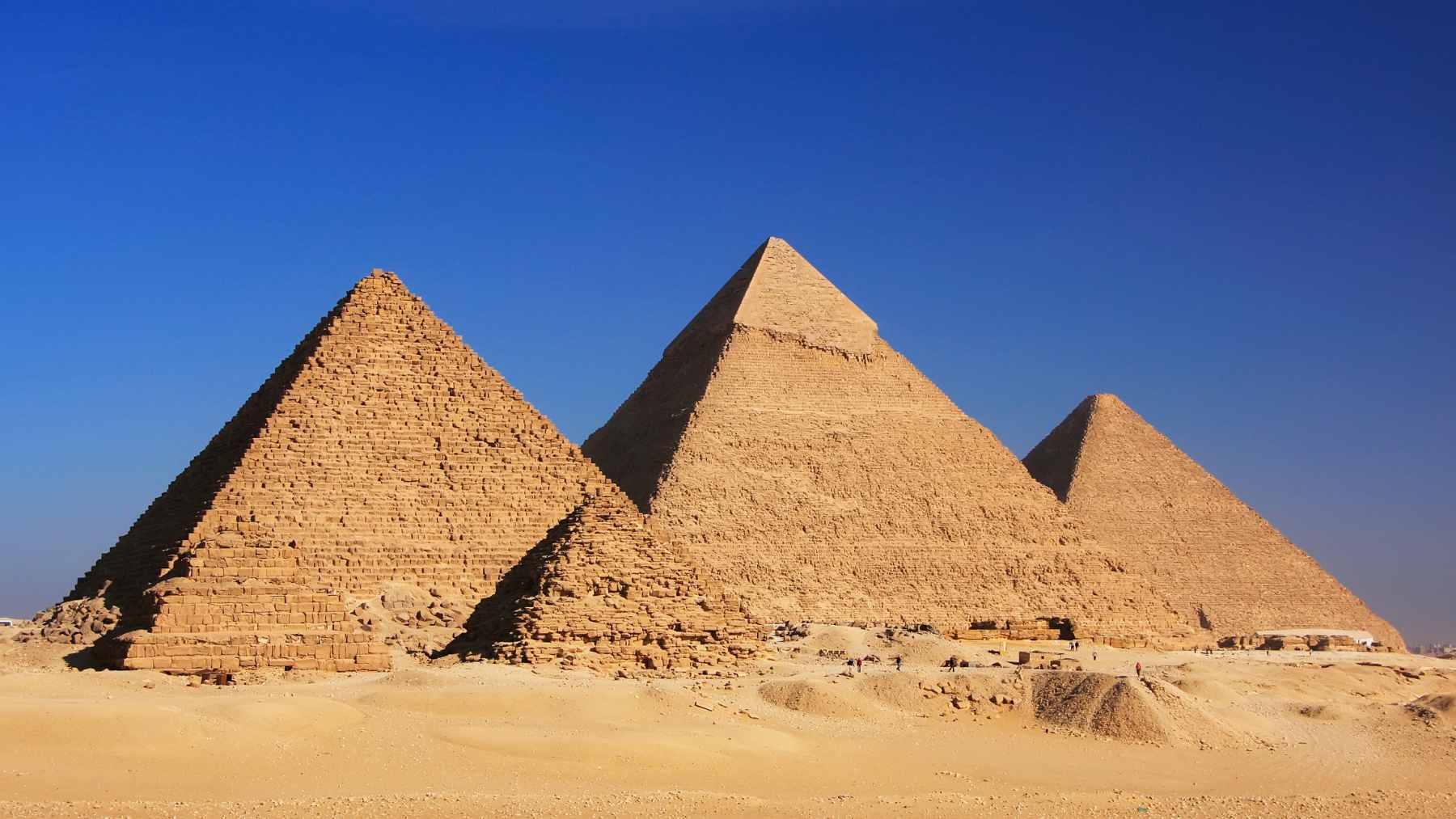
For generations, history books have told the same story about the Great Pyramid of Giza. Built around 4,500 years ago as the tomb of Pharaoh Khufu, it has anchored our timeline of ancient Egypt and human engineering.
Now a new preliminary study is asking a provocative question. What if that timeline is off not by a few centuries, but by tens of thousands of years?
An Italian engineer, Alberto Donini of the University of Bologna, has proposed an unconventional dating technique called the Relative Erosion Method, or REM.
Applied to the pyramid of Khufu, his measurements suggest the monument could have been built sometime between roughly 9,000 and 36,000 years before Christ, with an average estimate close to 22,900 BCE.
If that sounds like it would rewrite prehistory, that is because it would. For now, though, the work sits firmly in the category of bold hypothesis, not settled fact.
An age that would upend the textbooks
In his report, Donini compares the erosion of limestone blocks at the pyramid’s base that have always been exposed to the elements with neighboring blocks that were once shielded by smooth outer casing stones until the Middle Ages.
Historical accounts describe how those casing stones were stripped and reused in Cairo after a powerful earthquake around the year 1303, leaving previously protected surfaces open to the weather for only a few centuries.
That setup creates a kind of natural clock. One surface has been exposed for about 675 years. The other, in theory, has been exposed since the structure was first built. If the long exposed stone is much more worn than the recently exposed stone, and if erosion has happened at a constant rate, then the difference in wear can be used to estimate total age.
Donini reports measurements at twelve points around the base. Each point gives a different result, something he attributes to local factors such as orientation, tiny differences in the rock, and microclimates along the pyramid’s flanks.
When he averages those values, he arrives at about 24,941 years before present, which he converts to roughly 22,900 BCE. A statistical analysis of his data defines a wide window in which he thinks the true construction date is most likely to fall, roughly between 8,900 and 36,800 BCE for about two thirds of the possible values.
In the study’s most eye-catching lines, he argues that this makes the standard date around 2,560 BCE statistically unlikely and even suggests that Khufu may have renovated a structure that was already ancient in his time. He also notes that his numbers would imply a civilization in Egypt about 20,000 years ago capable of building at least one giant pyramid.
That is a remarkable claim. It also runs straight into a wall of existing evidence.
Where it collides with established archaeology
Modern Egyptology dates the Great Pyramid to the Fourth Dynasty of the Old Kingdom, around the middle of the third millennium BCE.
The monument is tied to Khufu through quarry marks with his name inside the structure, through surrounding tombs from the same period, and through radiocarbon dating of organic material found in the pyramid’s mortar and nearby contexts. Together, those lines of evidence place construction around 4,500 years ago, not tens of thousands.
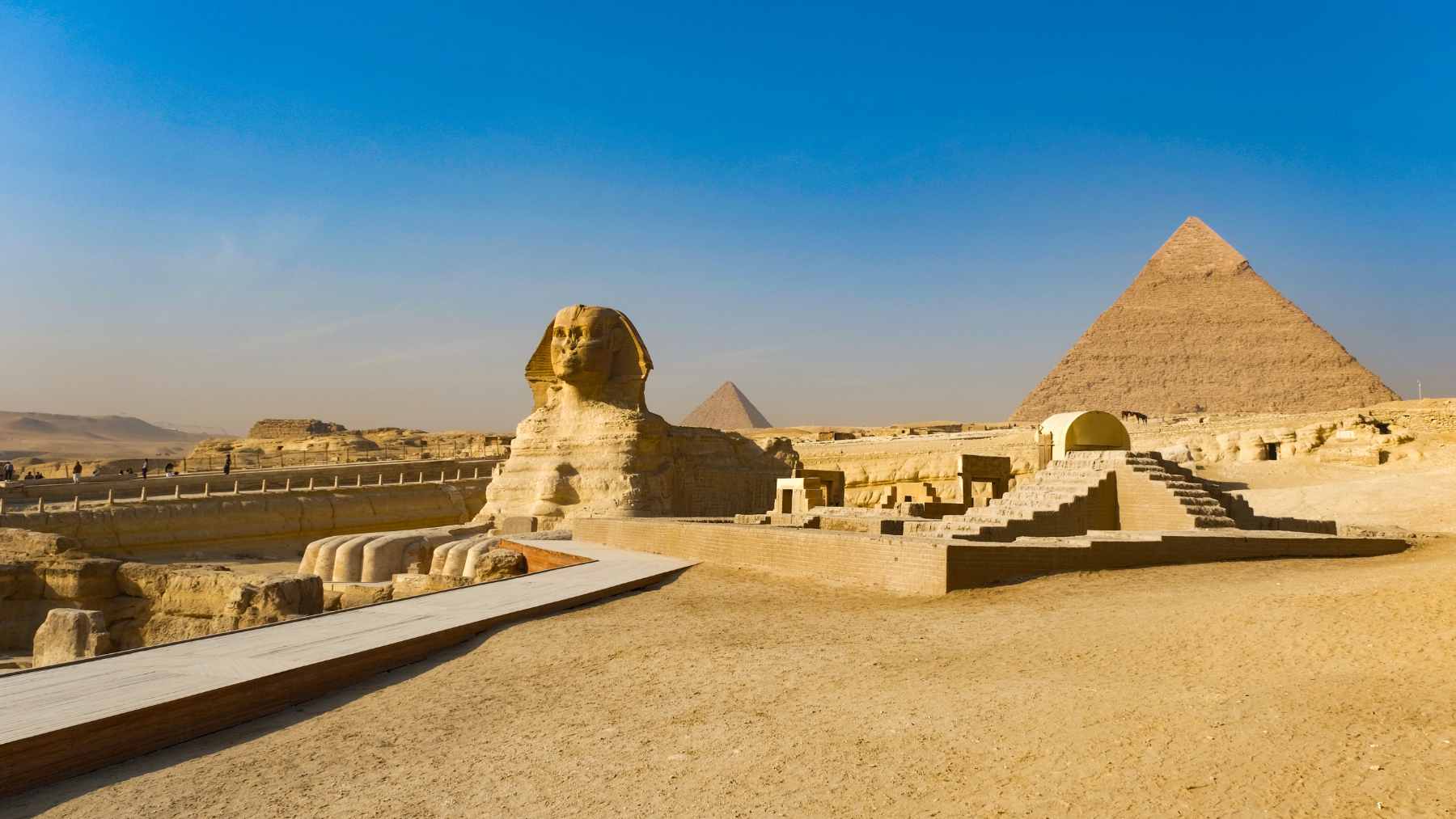
Researchers working on projects such as the long-running Giza Plateau excavations and international World Heritage studies treat the pyramid complex as the centerpiece of an Old Kingdom landscape that also includes workers’ villages, quarry sites, and boat pits, all of which point to a pharaonic date rather than a Stone Age origin.
So what is going on when one new method collides with decades of archaeological work?
How the Relative Erosion Method tries to read stone
REM is built on a simple idea that feels intuitive. Stone left in the open air slowly loses material under wind, water, temperature changes, and chemical reactions. The longer it sits there, the more it erodes. Anyone who has walked on an old staircase and then on a freshly poured sidewalk has felt that difference underfoot.
At Giza, Donini focuses on pavement slabs and foundation stones near the base of the pyramid. Some sections were always exposed. Others were protected by casing stones until those were removed a few centuries ago.
He measures how much material has been lost on each surface, either by calculating the volume of small pits and cavities or by checking how much a slab’s thickness has decreased where the erosion is more uniform.
The method then treats erosion as proportional to time. If a surface that has been exposed for 675 years has lost a certain amount of material, and an adjacent surface of the same rock has lost many times more, simple ratios can turn that difference into an age estimate for the older surface.
On paper, it is a clever way to use the damage left by centuries of wind and visitors’ shoes to ask how long the stone has really been standing there. In practice, the picture is messier.
Why many specialists remain cautious
The first and biggest concern is that erosion rarely behaves like a perfectly steady clock. Climate in the Nile Valley has shifted over thousands of years. Periods with more rainfall or stronger storms could have accelerated wear compared with today.
On the other hand, some sections may have spent long stretches buried under sand, essentially paused in time while the desert covered them.
Modern human activity complicates things further. Millions of tourists walking the same pathways, air pollution from Cairo, and local restoration work can all chew away at limestone surfaces in ways that are hard to reconstruct after the fact.
Even within a single block, tiny differences in mineral content can make one patch crumble faster than another.
To his credit, Donini acknowledges many of these caveats. He describes his dates as an order of magnitude estimate rather than a precise timestamp and frames the report as a starting point that needs better measurements and independent checks. The work is available as a technical report, not yet as a peer-reviewed journal article.
Outside commentators have echoed those cautions. Media reports citing archaeologists and geologists point out that basing a radical rewrite of history on a single, unvalidated method is risky, especially when better established tools such as radiocarbon dating and stratigraphy point to a much younger age.
In short, most specialists are intrigued, but far from convinced.
What this means for curious visitors on the plateau
If you are planning that bucket list trip, standing at the base of the pyramid with buses idling behind you and desert dust in the air, should you imagine a monument from the Stone Age or from the Bronze Age?
For the most part, archaeologists would still tell you that the Great Pyramid belongs to the world of pharaohs, not Ice Age hunter gatherers. The consensus around an Old Kingdom date comes from several independent lines of evidence and has survived many earlier alternative chronologies.
At the same time, studies like Donini’s are a reminder that even the most photographed monuments on Earth can still raise new technical questions.
Using erosion as a dating tool is an interesting idea. With more data, better climate reconstructions, and collaboration between geologists and archaeologists, it might one day become a useful complement to other methods or it might show its limits and fade away.
That is how science usually moves forward. Not in one dramatic leap, but through a long back and forth where bold proposals are tested, poked at, and either strengthened or set aside.
Until that process plays out, the safest approach is curiosity with caution. The Great Pyramid still stands where it has always stood, catching the same harsh sunlight and desert wind. Whether its stones have faced that weather for five thousand years or far longer is exactly the kind of question that careful, transparent research is meant to answer.
The study was published on Zenodo.