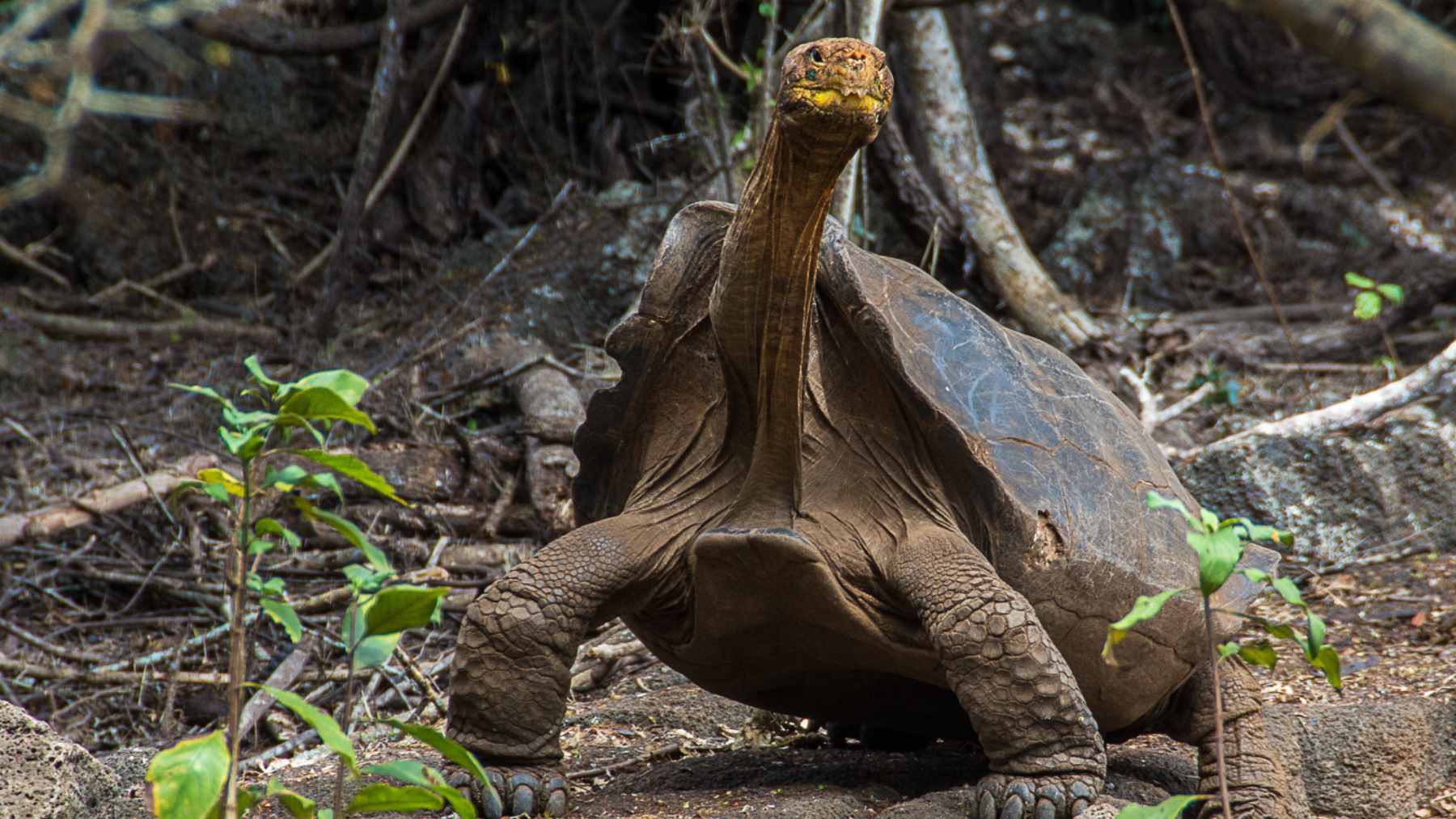
On a remote volcanic island in the Galápagos Islands, a giant tortoise that science had written off as gone forever has rewritten the record. A new genomic study confirms that a solitary female known as Fernanda belongs to the Fernandina giant tortoise lineage, a species last seen in 1906 and long filed under “probably extinct.”
For conservationists, that confirmation is more than a feel-good headline. Scientists sequenced Fernanda’s entire genome and compared it with DNA from the only other Fernandina tortoise ever found, a male collected in 1906 and preserved at the California Academy of Sciences.
They then stacked those results against genomes from every other known Galápagos giant tortoise lineage. The two Fernandina animals clustered tightly together and stood apart from all the rest, showing they form their own distinct genetic branch within the archipelago.
A lone tortoise on a sea of lava
Fernanda was discovered in 2019 on Fernandina Island, the most volcanically active island in the chain. Rangers and scientists found her in a small patch of dry, scrubby vegetation cut off from greener areas by recent lava flows.
The terrain there is so jagged and unstable that whole teams can spend days hopping across black rock without seeing a single animal.
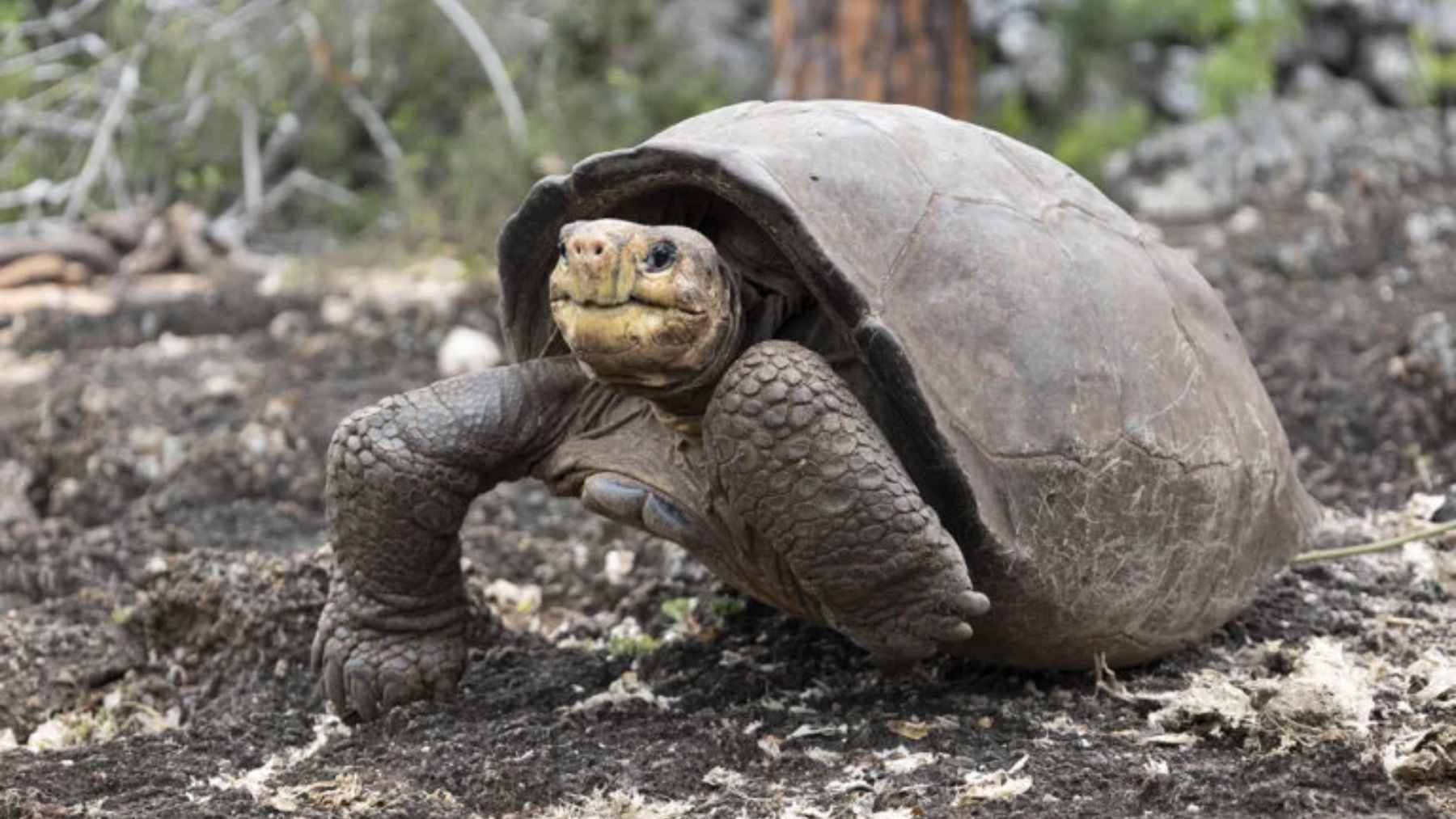
She is likely well over 50 years old yet unusually small for a giant tortoise. Researchers suspect that limited food on that isolated patch stunted her growth and subtly warped her shell, which made visual identification tricky.
The historic male Fernandina tortoise had a dramatic “saddleback” shell shape. Fernanda’s carapace looks smoother, so early on some experts wondered if she might have drifted in from another island.
After the find, park staff moved Fernanda to the Giant Tortoise Breeding Center on Santa Cruz Island, where specialists can keep her safe from eruptions and monitor her health.
From there, her blood samples traveled much farther than she ever will, heading to labs at Yale University and Princeton University for detailed genetic work that was later highlighted by Yale scientists in an official report on the discovery of this “lonely tortoise” in the Galápagos.
Genomes settle a century-old mystery
To a large extent, genomics is what turned this rediscovery from rumor into proof. The research team sequenced the full genomes of both Fernanda and the 1906 male, then used more than 750 thousand genetic markers to compare them with three individuals from each of the 12 living Galápagos giant tortoise lineages and one extinct lineage.
Principal component analyses and phylogenomic trees showed the two Fernandina tortoises forming a tight group and clearly separated from all other species, which fits the picture drawn by university press releases describing the species as a unique “fantastic giant tortoise.”
In other words, Fernanda really is a Fernandina giant tortoise, not an accidental visitor. As lead geneticist Adalgisa Caccone put it, the work “shows the importance of using museum collections to understand the past,” a point that Yale underscored in its coverage of the study.
Old bone in a cabinet and fresh blood from a living animal turned out to be two halves of the same evolutionary story.
The study also found something unexpected. Despite being the only two confirmed members of their species, Fernanda and the museum male show relatively high genetic diversity across their genomes when compared with other Galápagos tortoises. That kind of diversity is usually a good sign for a species’ long-term prospects, if additional individuals can be located.
Why one tortoise matters for an entire archipelago
Giant tortoises once roamed the Galápagos in the hundreds of thousands. Their numbers have dropped sharply since the early 1800s, largely because whalers and pirates loaded them onto ships as living meat that could survive weeks in the hold with almost no food or water, as documented by conservation groups working in the islands.
The result today is a patchwork of small, vulnerable populations scattered across the islands.
Against that backdrop, confirming a “lost” lineage carries real weight. Each island’s tortoises play a different ecological role, shaping vegetation and soils a bit like slow moving gardeners. Losing one lineage means changing how those islands function, not just crossing a name off a checklist.
Field teams from Galápagos Conservancy and the Galápagos National Park Directorate have returned to Fernandina repeatedly, searching for any sign that Fernanda is not alone.
Tracks and scat suggest that at least two or three other tortoises may still roam the island, but so far no additional animals have been found, even with helicopter support, as described in official updates on Fernanda’s case from Galápagos organizations.
If more individuals turn up, managers will have to decide how much to rely on captivity. One successful program on another island rebuilt a tortoise population from just 15 founders to more than 3,000 animals through long-term breeding and careful release, a result that breeding center reports present as a model for recovery.
Yet experts are also mindful of the story of Lonesome George, the last Pinta Island tortoise, who died in 2012 without producing offspring despite years of effort.
A small shell with a big question
For now, Fernanda shuffles slowly around her enclosure while the world races to decide what happens next. In a century filled with headlines about species vanishing, watching one quietly return from the “extinct” column feels almost unreal.
If a giant tortoise can hide for more than 100 years on a lava-covered island, how many other rare species might be holding on in places where people almost never go?
The study was published in Communications Biology.