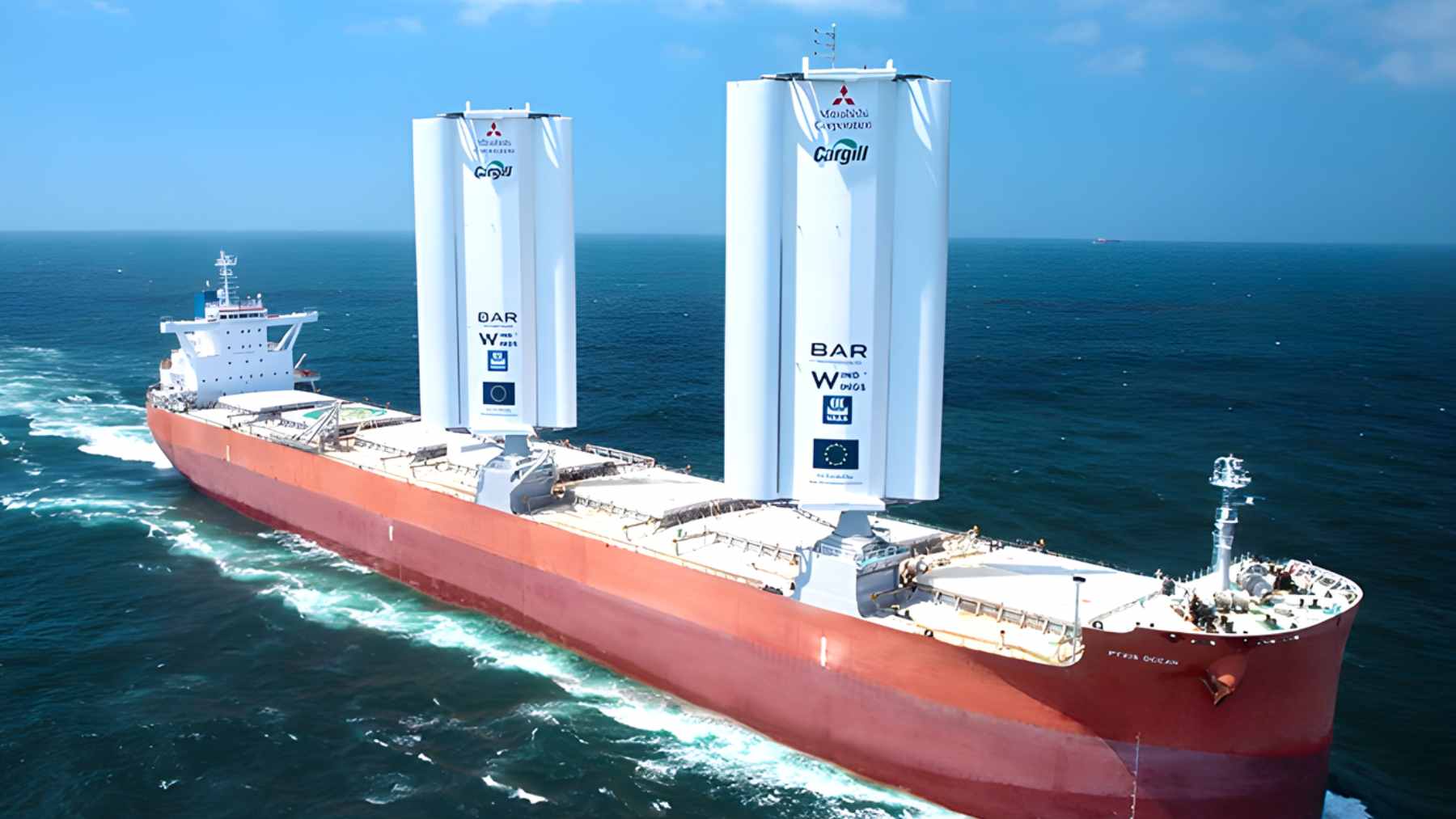
Most of the sneakers, phones, and coffee beans in our homes spent time on a ship. Maritime trade moves more than 80% of global goods and produces about 3% of human made greenhouse gas emissions. When a rusty red bulk carrier sailed past with two towering metal “wings” on its deck, people paid attention.
Pyxis Ocean trial results and fuel savings
The vessel is the Pyxis Ocean, a Kamsarmax cargo ship chartered by agribusiness giant Cargill and retrofitted with two rigid WindWings from BAR Technologies. In a six-month trial, the partners report average savings of three tonnes of fuel per day and 14% lower emissions.
On the best days, ideal winds cut fuel use by more than 11 tonnes, a 37% drop in climate pollution. BAR Technologies chief executive John Cooper said the first voyage “clearly demonstrated significant fuel savings and emissions reduction.”
How WindWings work on commercial vessels
Instead of canvas sails, the ship carries two 37.5 meter foils that look more like airplane wings than masts. Once raised, crew use a touch panel on the bridge while onboard software and sensors adjust their angle to grab useful wind.
In practical terms, the system lets the captain throttle back the engines and still keep the schedule, so wind energy quietly replaces part of the fuel bill.
Retrofitting existing ships for decarbonization
One reason this trial matters is that the Pyxis Ocean is not a new ship. WindWings were added during a retrofit, and BAR Technologies says many existing bulkers and tankers could take the same upgrade.
That lines up with climate targets from the International Maritime Organization, which wants more of shipping’s energy to come from low-carbon sources by 2030. Wind-assisted propulsion will not solve everything, but it can cut fuel use today while cleaner fuels scale up.
Port operations and real world challenges
Tall rigid wings can complicate crane movements, bridge clearances, and loading at crowded terminals. Cargill says it has worked with more than 250 ports to decide where winged ships can berth and when the structures must be folded down.
Even so, Jan Dieleman, who leads Cargill’s ocean transportation business, said the company was “encouraged by the results” and had learned a lot about wind-assisted propulsion on dry bulk vessels.
Lifecycle assessment and emissions payback
A recent lifecycle assessment with the MarineShift360 program found that each WindWing pays back the emissions from its manufacture in under six months of operation. To a large extent, that eases worries that new equipment shifts emissions from sea to land.
Wind on its own will not decarbonize the ships that stock shelves, but two giant wings on one freighter hint at how fast change might come once the idea spreads.
The lifecycle assessment was published by BAR Technologies.