When the lights suddenly go out, most of us do the same thing without thinking. We look down at the small battery icon on our phone. In a blackout, that rectangle of glass becomes your map, your wallet and your main way to reach family or check a banking app.
The safest and most practical way to keep a phone running during a power outage is to plan ahead with a certified portable battery or a small solar charger. With the right backup, you can get through many hours without electricity instead of watching the last few percentages disappear.
Portable batteries that actually help in an outage
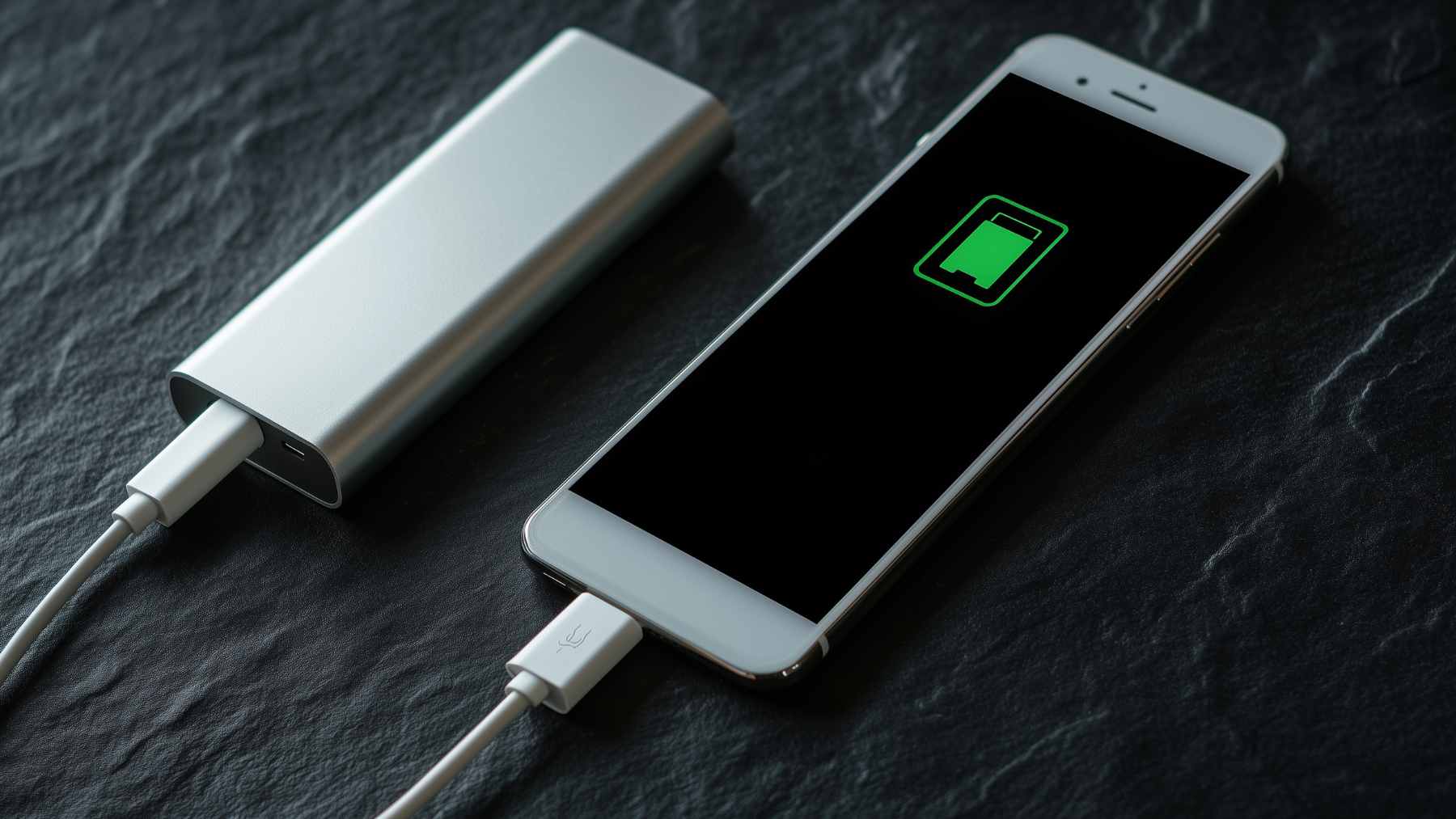
A portable battery, often called a power bank, works like a spare fuel tank for your phone. Its capacity is measured in milliampere hours, usually written as mAh.
A compact model around ten thousand mAh can typically recharge a modern smartphone about twice, although the exact number depends on the phone and how you use it.
Capacity is only the starting point. Many models now offer two or more USB ports so you can charge a phone and another small device at the same time, plus simple LED indicators that show how much energy is left. Certified devices also include protections against overcharge, overheating and short circuits.
Official safety guidance warns people not to charge power banks or phones on soft surfaces like beds or under pillows, where heat can get trapped next to flammable materials. One safety guide puts it simply “Heat is the biggest danger” for portable batteries.
If a battery ever feels unusually hot, swells, leaks or gives off a strange smell, it should be unplugged and replaced, not forced to keep working.
A portable battery only helps you if it is charged before the grid fails. That is why emergency planners now recommend adding portable chargers and power banks to home kits, next to flashlights and radios. Once it is part of your routine, topping up the power bank becomes as normal as refilling a reusable water bottle.
If you do not own a power bank
If a blackout catches you without a portable battery, there are still a couple of options. One is a small solar charger that connects directly to your phone. It is slower than a wall outlet and depends on clear daylight, but it can help in long outages or in rural areas where repair crews take longer to arrive.
Another common backup is the family car. Many modern vehicles include USB ports, and older ones can use a simple adapter in the twelve-volt socket. Officials advise that if the engine needs to run to provide power, the car should be parked outside or in a very well ventilated spot, never in a closed garage, to reduce the risk of carbon monoxide buildup.
For short top ups, you can usually charge a phone briefly with the engine off, although older car batteries may struggle if several devices stay plugged in for hours.
Small habits that stretch every percent
Even the best backup loses its value if your phone burns through charge quickly. That is why conservation habits matter just as much as extra hardware. Energy experts recommend lowering screen brightness, turning on power-saving mode, turning off Bluetooth and location when they are not essential and closing apps that keep refreshing in the background.
Checking the battery menu on your phone can reveal surprise drains like social media feeds or constant email syncing.
During an outage, it also helps to change how you use the phone. Streaming video or scrolling through short clips can empty a battery fast. Emergency communication guides suggest keeping calls brief, using text messages when possible and downloading maps or key documents for offline use while you still have a strong signal.
Can your phone survive a night without endless scrolling if it means staying reachable when you really need it? At the end of the day, a charged power bank in a drawer and a few simple habits can turn an inconvenient outage into a manageable disruption instead of a crisis.
The official guidance was published on energy.gov.