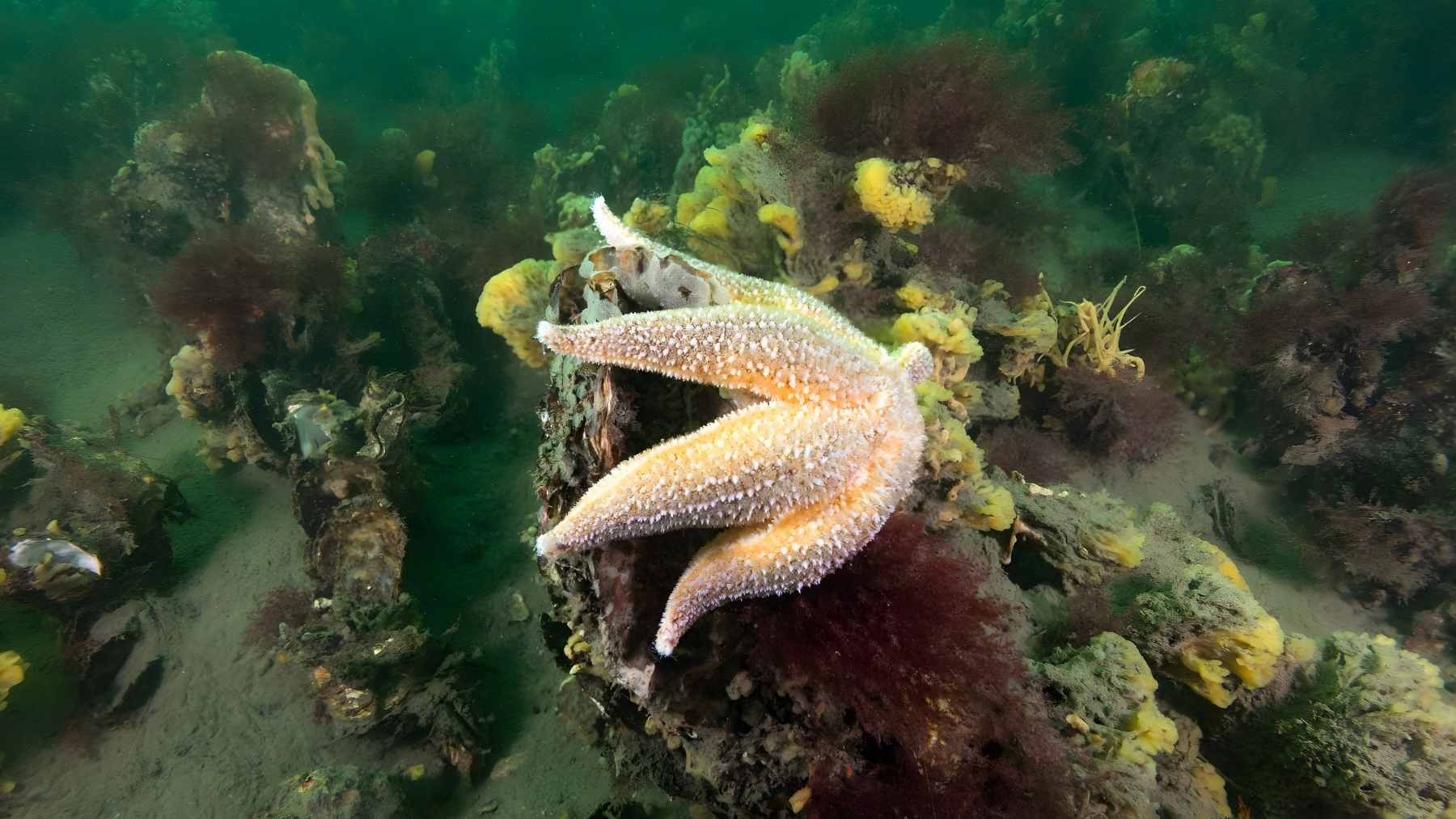
Far from the Dutch coast, rows of offshore wind turbines were built for one clear purpose. They are there to generate clean electricity for homes and businesses and to bring down the emissions behind your power bill. Yet something unexpected is starting to happen in the water around their foundations.
At the OranjeWind offshore wind project in the Dutch North Sea, a joint development by energy companies RWE and TotalEnergies, engineers plan to place special concrete blocks called Reef Cubes around selected turbine bases once construction is complete.
These blocks are meant to protect the seabed from erosion while also creating shelter for fish, shellfish, and other marine life that once had no reason to stay in this flat, empty area. In practical terms, a wind farm designed to power the grid could also grow into a nursery for the sea.
From empty sand to underwater neighborhood
For decades, offshore zones like this were treated as blank space that held up steel structures. The ground beneath the turbines was seen as a neutral platform, useful but lifeless.
Traditional foundation designs kept the seabed flat and open, with few crevices or rough surfaces where young organisms could get a grip. Without shelter, nutrients and larvae drifted past, so many species simply moved on. That quiet absence was driven by engineering choices that favored simplicity and control.
How Reef Cubes change the rules underwater
Reef Cubes are heavy concrete blocks with a cubed shape, cavities, and textured sides that interrupt fast water flow and create pockets of calmer water. At OranjeWind, plans call for sixty six of these structures to be clustered around eleven turbine foundations, together providing about 1,440 square meters of new surface for marine organisms.
Each unit is about 1.5 meters tall, weighs nearly 6,000 kilograms, and is made from low-carbon recycled materials mixed with shell fragments that are considered safe for the marine environment.
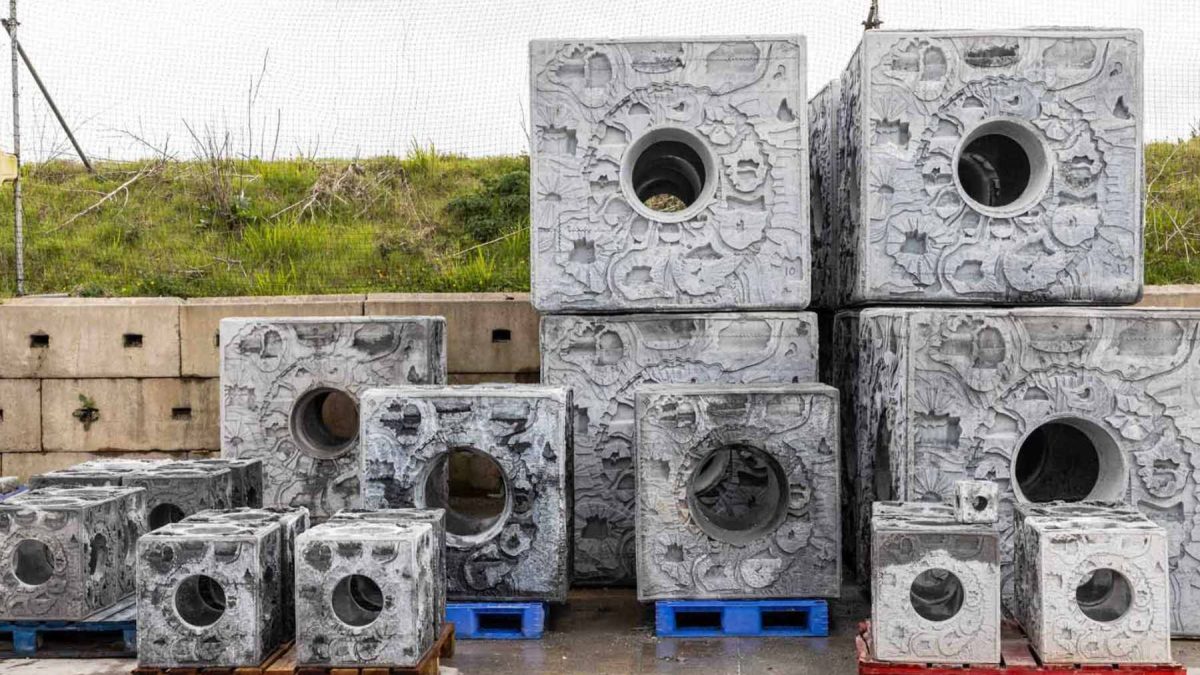
Those rough surfaces and internal chambers give small creatures something to cling to and somewhere to hide from predators and strong currents. Over time, layers of algae, worms, barnacles, and other tiny organisms can turn bare concrete into a living skin.
Once that first layer is in place, larger animals start to move in and the whole area begins to behave more like a reef.
What early research is already revealing
Earlier trials by eco-engineering company ARC Marine in the North Sea found that a wide range of species began living in and around Reef Cubes once they were placed on the seabed. Cameras and divers recorded fish sheltering inside openings, crustaceans tucked into corners, and shellfish building dense clusters on the surfaces.
For the OranjeWind project, cod and native oysters have been selected as key species because they can bring wider benefits when their numbers grow. RWE has already tested this type of structure at the Rampion offshore wind farm in the United Kingdom, where around 75,000 Reef Cubes were installed as part of the scour protection system, and lessons from that site now guide the Dutch project.
“We are proud that the OranjeWind project can make a contribution to biodiversity in the North Sea,” explained Tobias Keitel, Chief Technology Officer for RWE Offshore.
Clean energy and marine recovery at the same time
When OranjeWind is fully operational, its turbines are expected to deliver enough renewable electricity to power roughly one million Dutch households each year. What if clean energy projects could also help repair damaged marine habitats while they run?
Monitoring programs will use sensors, underwater video, and repeated surveys to see whether species diversity increases and how fast the new communities stabilize. Experts stress that artificial reefs are not a cure all, since they do not replace the need to cut pollution, protect key areas, and limit overfishing.
At the end of the day, though, projects like OranjeWind suggest a different way to think about offshore construction, where the same investment that keeps turbines stable can also support life instead of pushing it away.
The official press release was published on the RWE website.