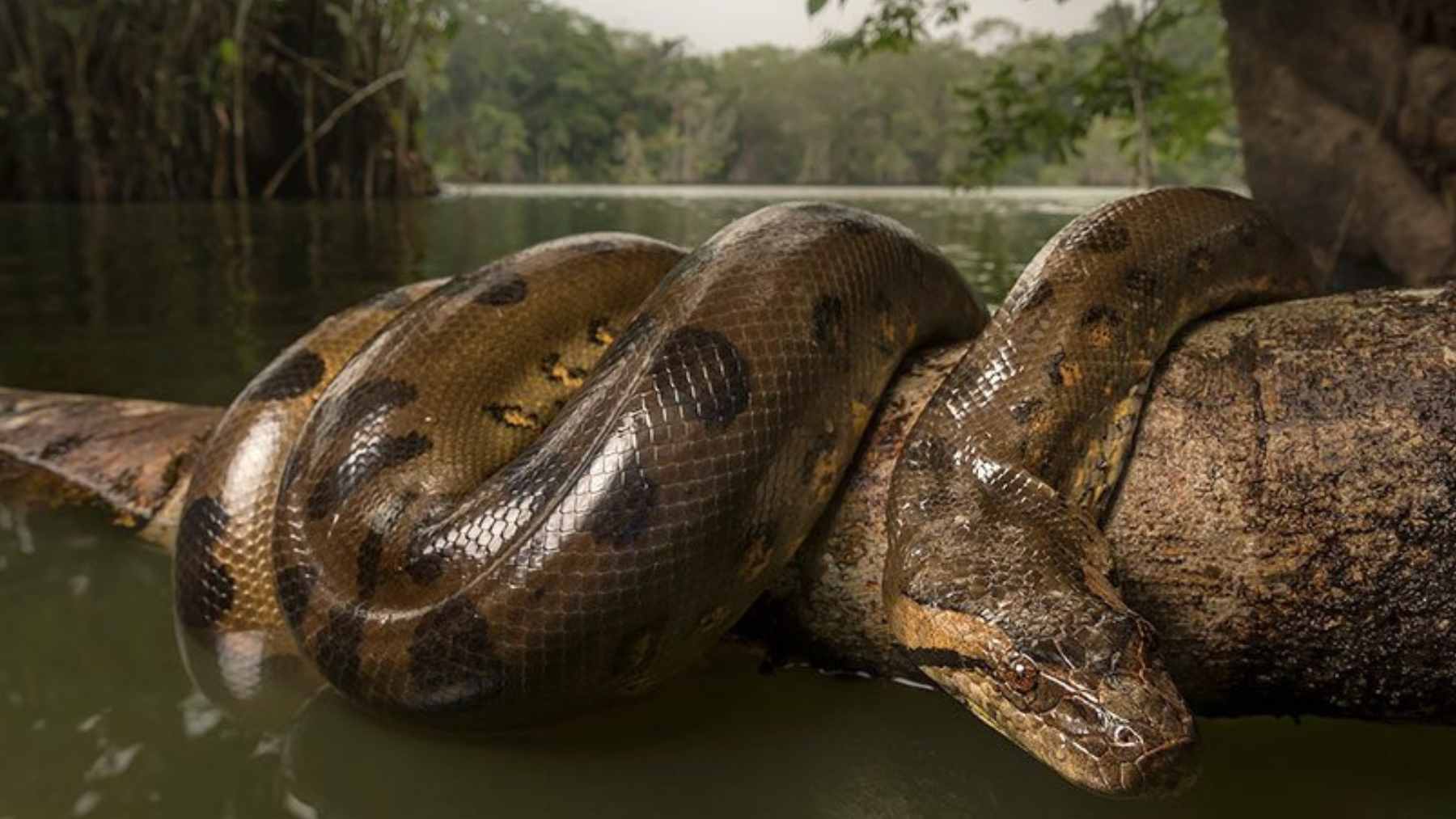
When people imagine the Amazon, they often picture a huge green anaconda sliding through dark water. A new study now shows that this mental image is not far from the deep past.
Fossils from northern South America reveal that anacondas reached their giant size about 12.4 million years ago and have stayed roughly the same ever since, even as the climate cooled and other megafauna disappeared.
Giant snakes in a world of giants
A team led by the University of Cambridge analyzed 183 fossilized anaconda backbones from at least 32 snakes found in Falcón State, Venezuela. By comparing the size of these vertebrae with those of living snakes, they estimated that Miocene anacondas were around four to five meters long, with some individuals reaching about 5.2 meters.
That is essentially the same size range seen in today’s green anacondas, which usually measure four to five meters, with rare records close to seven meters.
To make sure the fossils were not misleading, the researchers used a second technique called ancestral state reconstruction. They built a family tree of snakes and used it to estimate body length in ancient anacondas and their relatives, such as tree boas and rainbow boas.
The result lined up with the fossil data and confirmed that these snakes were already big when they first appear in the Miocene record.
The megafauna that vanished and the snake that stayed
During the Middle to Upper Miocene, between about 12.4 and 5.3 million years ago, warmer global temperatures, extensive wetlands, and plentiful prey allowed many animals to grow to impressive sizes.
Giant caimans like Purussaurus, which could reach around twelve meters, and freshwater turtles such as Stupendemys, with shells over three meters long, shared those wetlands with early anacondas.
Most of those giants are gone. Cooling climates and shrinking wetland habitats are thought to have pushed them to extinction. Yet anacondas held onto their bulk. Study lead Andrés Alfonso Rojas describes them as “super resilient” and notes that their size “hasn’t changed” since they appeared in tropical South America.
So what made the difference? The team points to the anaconda’s aquatic lifestyle and flexible diet. Then and now, these snakes live in swamps, marshes and large rivers, hunting everything from fish to capybaras. Even as global conditions shifted, enough humid, lowland habitat remained in places like the Amazon to keep supporting very large snakes.
What it means for today’s wetlands
For the most part, this work challenges a simple idea that bigger cold blooded animals always track warmer past climates. Here, a giant snake evolved early, rode out cooler periods and kept its size as long as its watery home and prey base were not completely lost. That is a subtle but important message for modern conservation.
In practical terms, protecting flooded forests, oxbow lakes and slow-moving rivers does more than safeguard scenery for eco tourists. It helps maintain top predators that keep food webs balanced and signal that wetland systems are still functioning.
If those areas dry up under deforestation and climate change, the Amazon’s famous “river monsters” could finally face the kind of pressure that wiped out other prehistoric giants.
The study was published in the Journal of Vertebrate Paleontology.