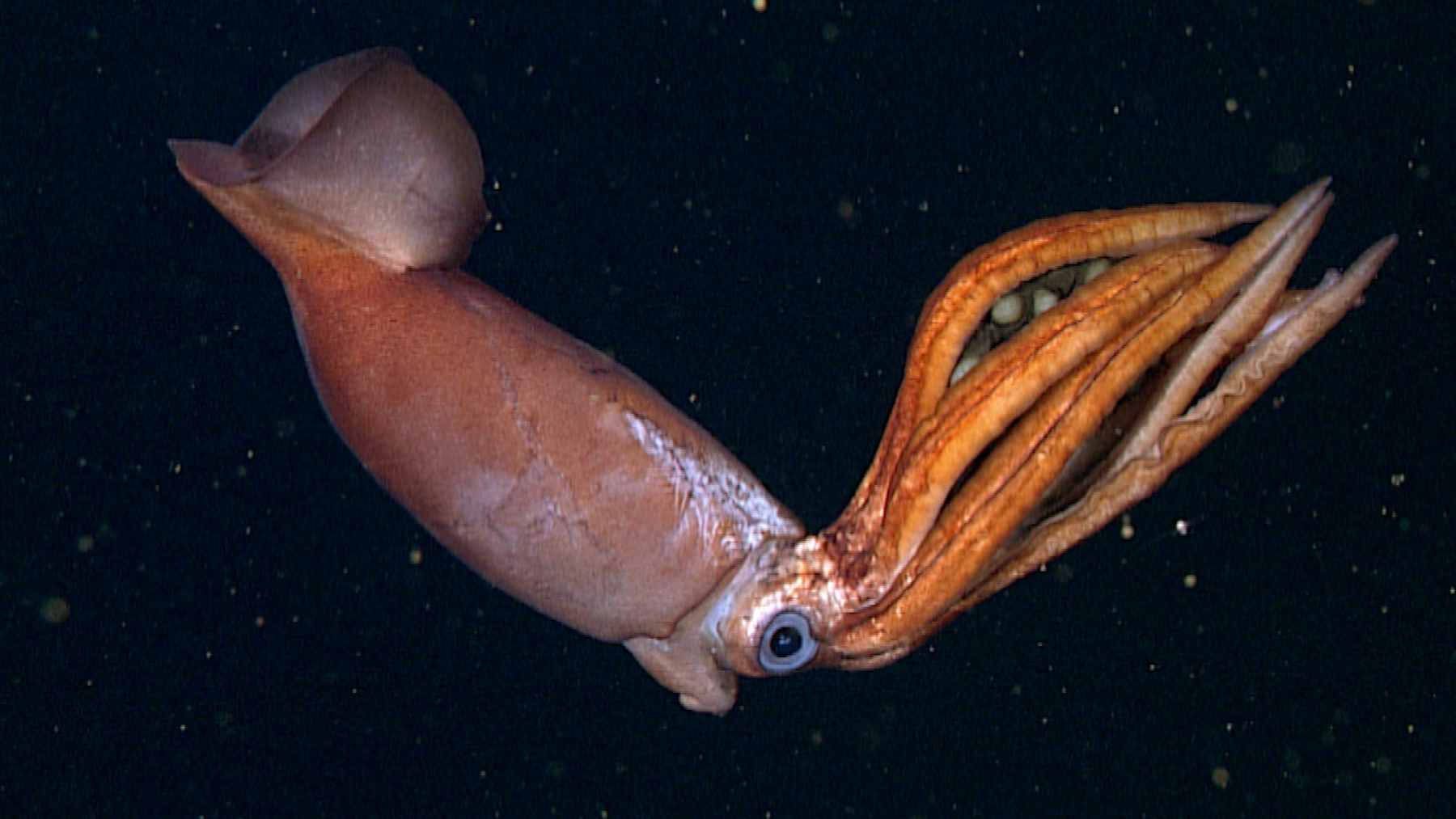
Far below the reach of sunlight, a silent contest has been running for tens of millions of years. A new scientific essay argues that the deep ocean hosts one of the planet’s biggest evolutionary arms races, pitting deep-diving toothed whales against the squids they hunt, with millions of encounters every day.
It all happens out of sight, yet it quietly shapes who survives in the sea. So what is going on down there.
Scientists studying sperm whales and deep sea squid
In the study, marine biologists Henk-Jan Hoving and Fleur Visser pull together tag records, whale stomach contents and rare deep sea footage.
Hoving works at GEOMAR Helmholtz Centre for Ocean Research Kiel in Germany, while Visser is based at the Royal Netherlands Institute for Sea Research. Their review shows that the circular scars on sperm and beaked whales and the piles of squid beaks in their stomachs are not curiosities but hard evidence of repeated battles.
If you have ever seen photos of a sperm whale’s head covered in pale rings, those marks almost certainly line up with the serrated suckers of giant or colossal squid.
Cephalopods and whale biosonar in evolutionary history
Cephalopods have been dodging visually hunting fish and other predators for more than 500 million years. Everything changed when toothed whales evolved biosonar around 34 million years ago and began diving below 200 meters into permanent night.
In their paper in Limnology and Oceanography Letters, published by the Association for the Sciences of Limnology and Oceanography, Hoving and Visser describe whale echolocation as an “unprecedented armament” that lets predators detect individual squids hundreds of meters away, well beyond the reach of even giant squid eyes.
How deep sea squid adapt to echolocation
For the squid, the odds are tough. Deep sea cephalopods are probably close to deaf to the high-frequency clicks whales use, so they may only sense an approaching predator when it is already tens of meters away.
The authors suggest several ways squids try to cope, including long, slender bodies and a vertical posture that shrink the surface that reflects sonar. Many species appear alone in camera footage and seem to move deeper as they grow, trading easier oxygen access for the acoustic shelter of greater depth and noisy seafloor echoes.
Whale hunting behavior and deep diving strategy
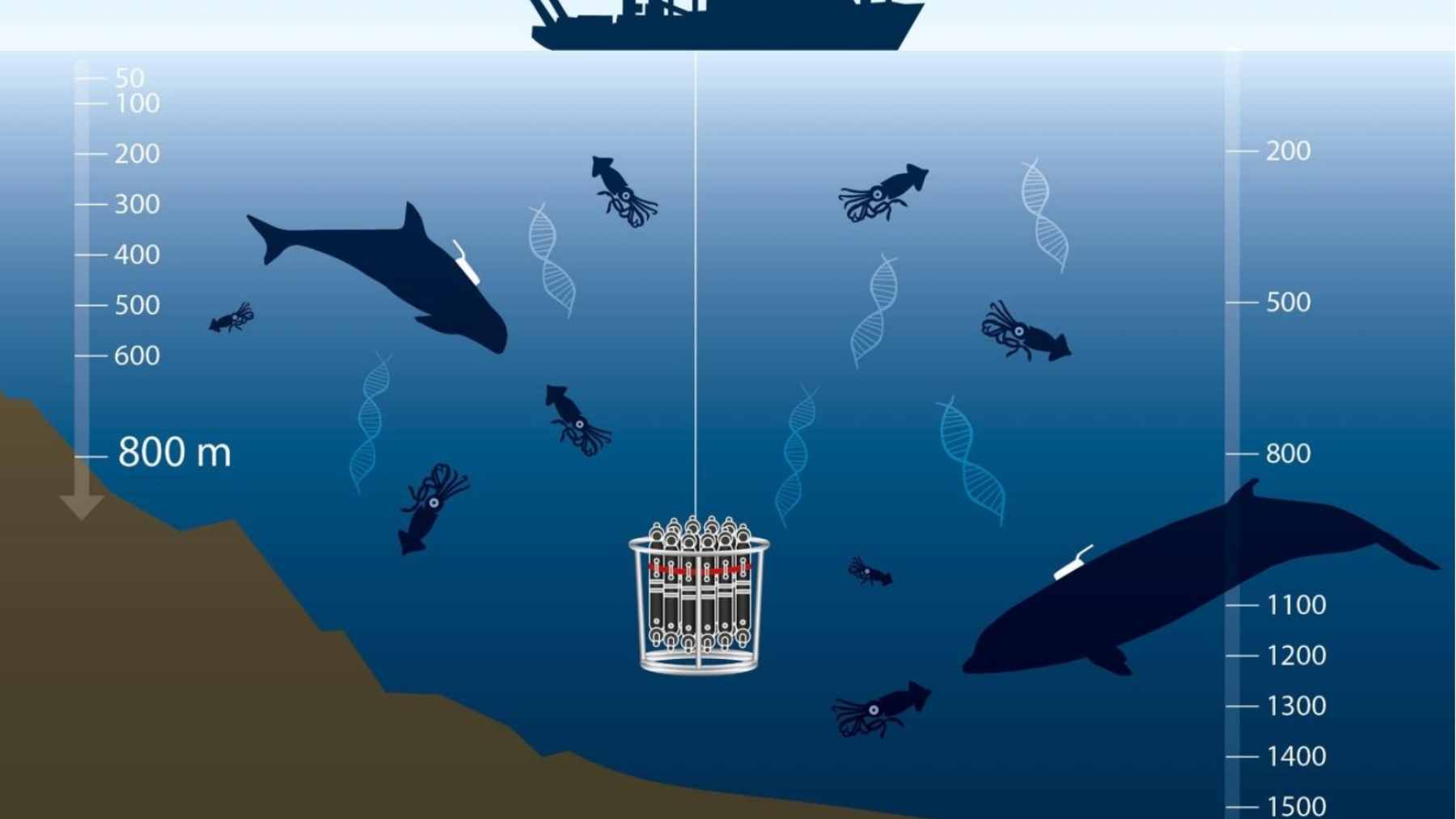
Whales have adjusted in turn. Tag records show that deep-diving toothed whales, including sperm whales and several beaked whale species, travel in tight social groups near the surface but fan out as they begin a foraging dive.
At depth, group members hunt at the same time yet cover different patches of water, likely sharing information through sound about where prey is most abundant. It is a little like several flashlights sweeping a dark room instead of a single beam.
What the research suggests about squid life cycles
The arms race has probably reshaped squid life cycles as well. Hoving and Visser argue that heavy predation by whales helped push many deep sea squids toward a “live fast die young” strategy, with rapid growth, a single burst of reproduction and then death.
That approach can produce vast numbers of offspring and may give cephalopods an edge in warming, heavily fished oceans. Yet no one has directly filmed a whale catching a squid in the deep, so many details remain hypotheses that future cameras, tags and robots still need to test.
The study was published in Limnology and Oceanography Letters.