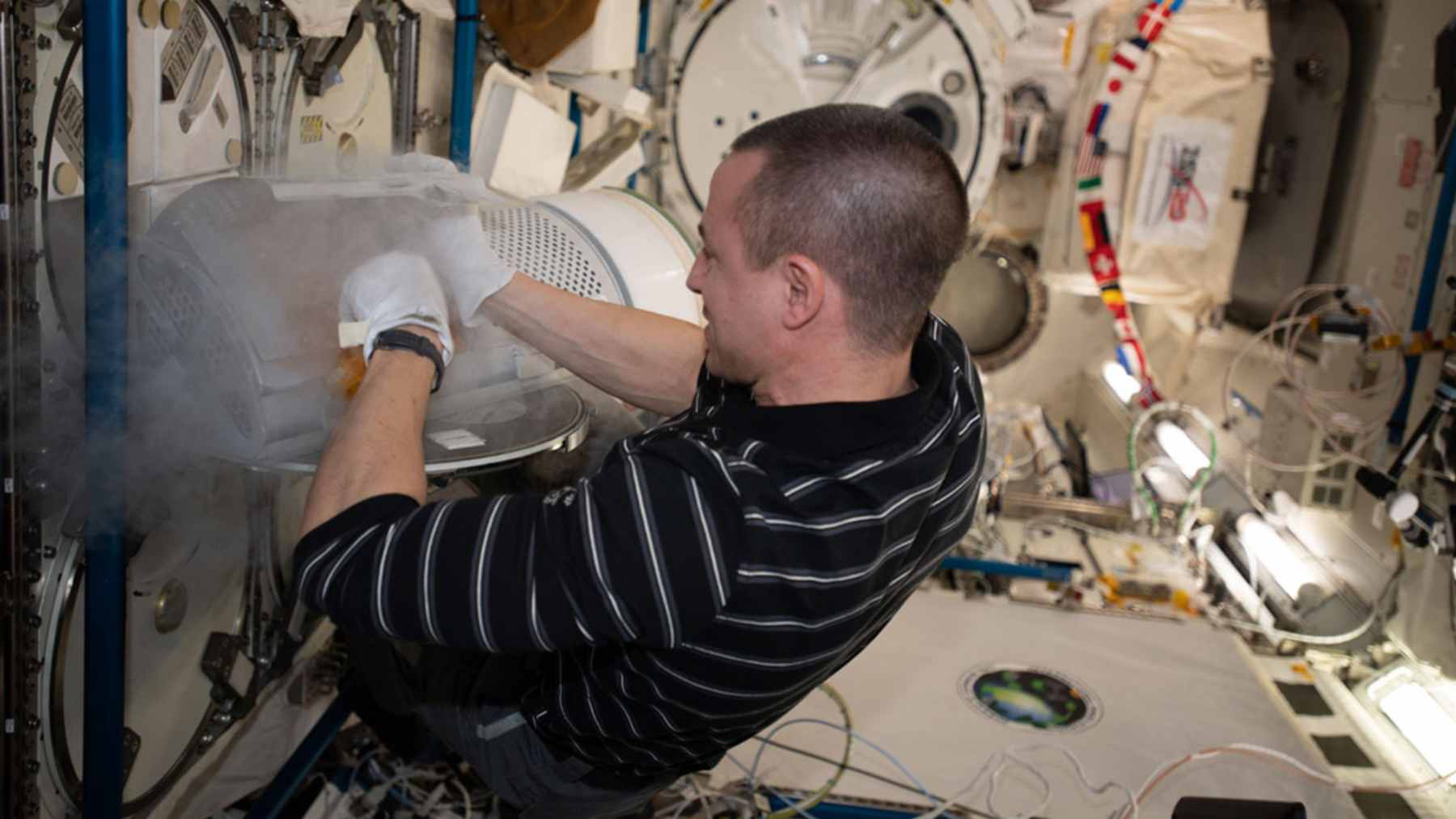
What if the next weapon against drug resistant infections is being trained hundreds of miles above your head, circling Earth on the hour. That is the tantalizing idea behind new research showing that viruses raised in microgravity aboard the International Space Station returned home better at killing bacteria than their Earth-bound counterparts.
At the heart of the work are bacteriophages, the tiny viruses that specialize in infecting bacteria. Scientists from University of Wisconsin–Madison and biotech partner Rhodium Scientific sent tubes of T7 phages and non-motile Escherichia coli to the station, while keeping identical samples in a lab on Earth.
In both places, the same virus and the same bacterium battled it out. The only big difference was gravity.
A slower infection in orbit
In normal gravity, warm and cool fluids circulate all the time, which keeps microbes bumping into each other.
In orbit, everything floats in place. That simple change made infection noticeably slower in space, just as the team had predicted in an earlier pilot study. “This new study validates our hypothesis and expectation,” said lead author Srivatsan Raman, a biochemist at Wisconsin.
Because encounters between phages and bacteria were rarer, evolution had to do extra work. Over hours and then 23 days of incubation, both organisms picked up new DNA mutations.
Whole genome sequencing showed that space grown phages accumulated changes in genes that shape their structure and how they latch onto bacterial surfaces, while the E coli altered outer membrane genes and stress response pathways to cope with microgravity and viral attack.
Space phages that hit tougher targets
Back on Earth, the team focused on the viral protein that actually grabs the bacterium, known as the receptor binding protein. Using deep mutational scanning, they mapped which space selected tweaks in that protein gave phages an edge.
When they built a library of those variants and tested them, the result surprised even the researchers.
“It was a serendipitous finding,” Raman said. “We were not expecting that the mutant phages that we identified on the ISS would kill pathogens on Earth.”
The space-informed variants showed markedly better activity against uropathogenic E coli strains that usually resist standard T7 phage, including strains linked to urinary tract infections. Similar phages selected only under Earth gravity did not show the same boost.
For patients and doctors who have watched routine infections drag on through second and third courses of antibiotics, that matters. According to the World Health Organization, bacterial antimicrobial resistance was directly responsible for about 1.27 million deaths in 2019 and associated with nearly 5 million in total.
Phage therapy, where tailored viruses help clear stubborn infections, is one of the more promising alternatives now on the table.
Promise for superbugs and for astronauts
Experts who were not involved in the work say these results hint that microgravity can act as a kind of extreme training ground for medical viruses. Space-driven mutations may help scientists design phages that grab bacterial cells more efficiently or bypass common resistance tricks, at least for some pathogens.
There are clear hurdles. Launching biological payloads through NASA and operating experiments on the station are expensive, and simulating microgravity at scale on Earth is still challenging.
Researchers also note that if helpful microbes can gain new powers in orbit, harmful ones might too, which is a concern for long missions where every cough and scrape happens in a closed cabin.
Still, the study suggests that space is more than a backdrop for science fiction. It is a real-world laboratory that can, to a large extent, reveal tricks evolution does not show us easily on Earth, with potential payoffs for crowded hospitals and future crews living off planet.
The study was published in PLOS Biology.