On August 2, 2027, the Sun will disappear in the middle of the day along a narrow path that runs from the Atlantic Ocean across southern Europe, North Africa and the Middle East. Near Luxor in Egypt, total darkness will last a little more than six minutes, an extraordinary stretch of time for a solar eclipse.
Astronomers already refer to it as an eclipse of the century for observers on land. While people inside the central path will see the sky turn to deep twilight, millions more across Europe and North Africa will watch a dramatic partial eclipse that makes the Sun look as if a huge bite has been taken out of it.
Where the 2027 eclipse will turn day into night
A total solar eclipse happens when the Moon moves directly between Earth and the Sun so that its disk fully hides the Sun for people standing in a specific corridor. Outside that corridor, the Moon only covers part of the Sun and the sky never goes completely dark.
For this eclipse, the shadow first touches Earth over the eastern Atlantic before sliding toward southern Spain and northern Morocco.
From there, the path of totality crosses Algeria, Tunisia, Libya and Egypt, then continues over Saudi Arabia, Yemen and a corner of Somalia before leaving Earth over the Indian Ocean.
People across most of Europe and North Africa will still see a partial eclipse, with the Sun partly covered. Farther north in Scandinavia and parts of northeastern Russia, the geometry does not line up and the event will not be visible at all.
Italy and Europe near the shadow
Italy sits just outside the narrow strip where the Sun vanishes completely, but the view will still be memorable. The eclipse reaches the country late in the morning, with the Sun already high, and the Moon will slowly slide across its face.
In northern regions a bit more than half of the Sun will be hidden, which should bring a gentle dimming and softer daylight.
Further south the show becomes more intense. Central and southern Italy will see the Sun shrink to a thin crescent at maximum, and along the southern coast of Sicily near towns such as Ragusa and Noto, projections indicate that up to 99 percent of the solar disk will be covered.
Beaches and streets there could take on an eerie metallic light, bright enough to walk around yet strange enough that streetlights might switch on and animals may behave as if evening has arrived.
Egypt’s record breaking minutes of darkness
The real headline moment unfolds over Egypt. Calculations from NASA and the National Solar Observatory show that near the desert region of Wadi al Jadid and close to Luxor, totality will last about six minutes and twenty three seconds, making this eclipse the second longest total event of the century and the longest whose peak can be watched from land until early June 2114.
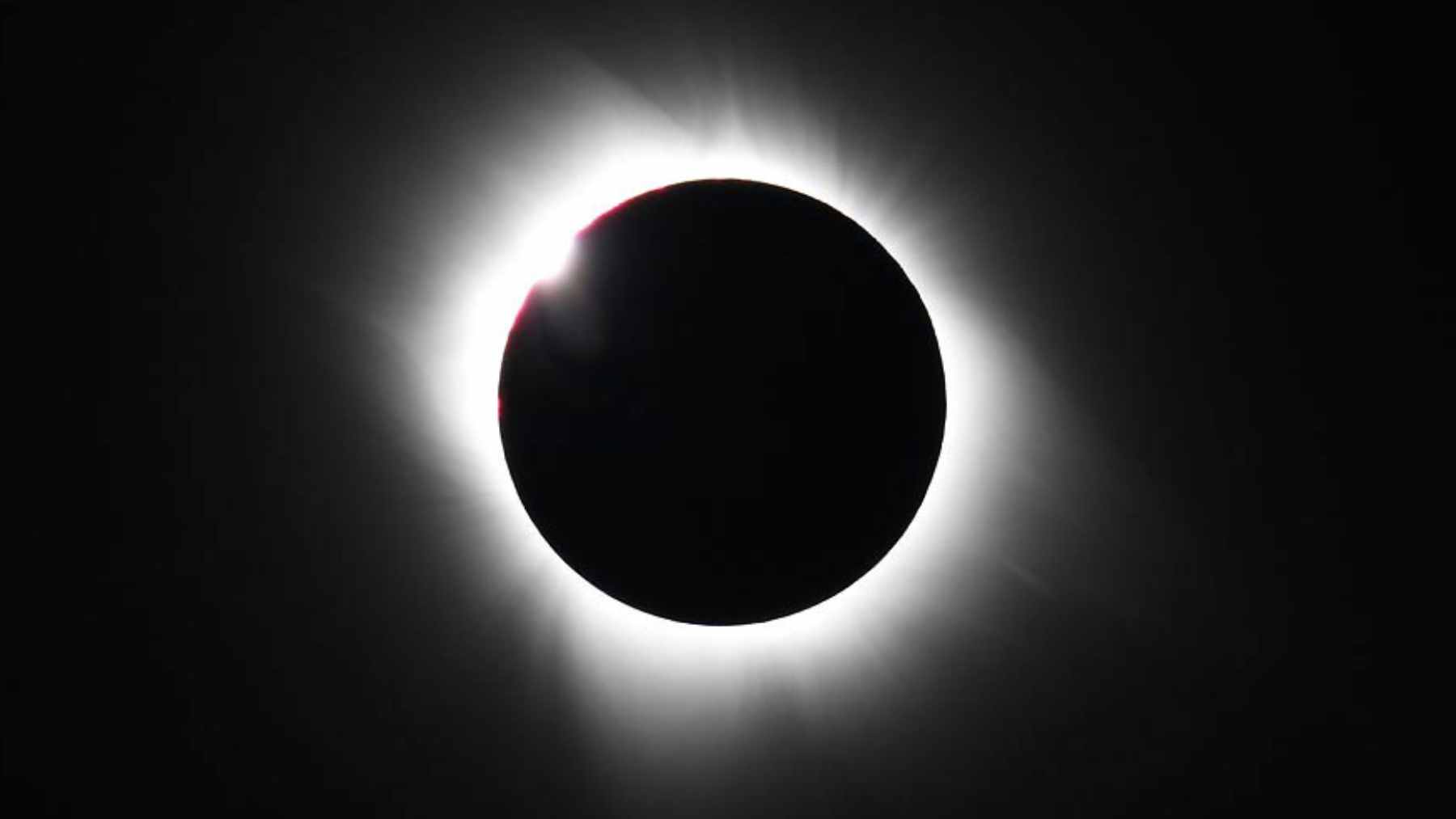
For people on the ground, those minutes will feel surreal. The Sun will first thin to a sharp crescent, then wink out as the last bright bead disappears, revealing the pale outer atmosphere of the Sun, known as the corona, stretching across a dark midday sky.
Stars and bright planets will appear overhead, the temperature will drop noticeably and the landscape will look like a deep twilight that arrived far too early.
Why this eclipse lasts so long
Not all total solar eclipses are created equal. Some plunge a region into darkness for less than a minute, while rare cases like the 2027 event linger for many minutes. The difference comes from a mix of distances and timing that change how big the Sun and Moon appear in our sky.
In early August, the Moon will be relatively close to Earth in its oval orbit, so it looks slightly larger than average, while Earth is a little farther from the Sun, which makes the Sun look slightly smaller. The shadow also crosses near Earth’s equator and moves in almost the same direction as the planet’s rotation.
In practical terms, that means the ground under the shadow is “keeping up” with it for a bit longer, stretching totality past six minutes in parts of Egypt and nearby regions.
What people will see and feel
Inside the path of totality, the change will be dramatic. Daylight will fade over several minutes until the sky looks like early dusk, the horizon glows in a ring and bright stars pop into view. Birds may fall silent, pets may look unsettled and many people will instinctively whisper as if they had stepped into a giant outdoor theater.
Near total partial zones, such as southern Sicily and parts of southern Spain, the experience will be different but still uncanny. The Sun will narrow to a razor-thin crescent, the light will turn cooler and shadow edges can appear unusually sharp, yet it will never become full night.
In areas where only half to three-quarters of the Sun is covered, people may simply notice that the day feels cooler and the glare weaker, a subtle strangeness that might be most obvious if you keep an eye on how bright building walls and sidewalks usually look at that hour.
How to watch safely and plan ahead
As with every solar eclipse, protecting your eyes matters more than anything. Looking directly at the Sun without proper filters can damage the retina without causing pain, even when only a thin crescent remains.
Safe options include certified eclipse glasses, handheld solar viewers or suitable grades of welding glass, along with simple projection methods such as letting sunlight pass through a small hole in a card onto the ground or a sheet of paper.
Regions along the central path are already expecting extra visitors, and local authorities in southern Spain, North Africa and the Middle East are likely to face heavy demand for hotels, transport and viewing sites as August 2027 approaches.
Scientists plan to use the unusually long darkness to study the solar corona and to track rapid changes in local weather as sunlight suddenly fades and returns. The official eclipse predictions for August 2, 2027 were published on the NASA Eclipse Web Site.
The official statement was published on the National Solar Observatory site.