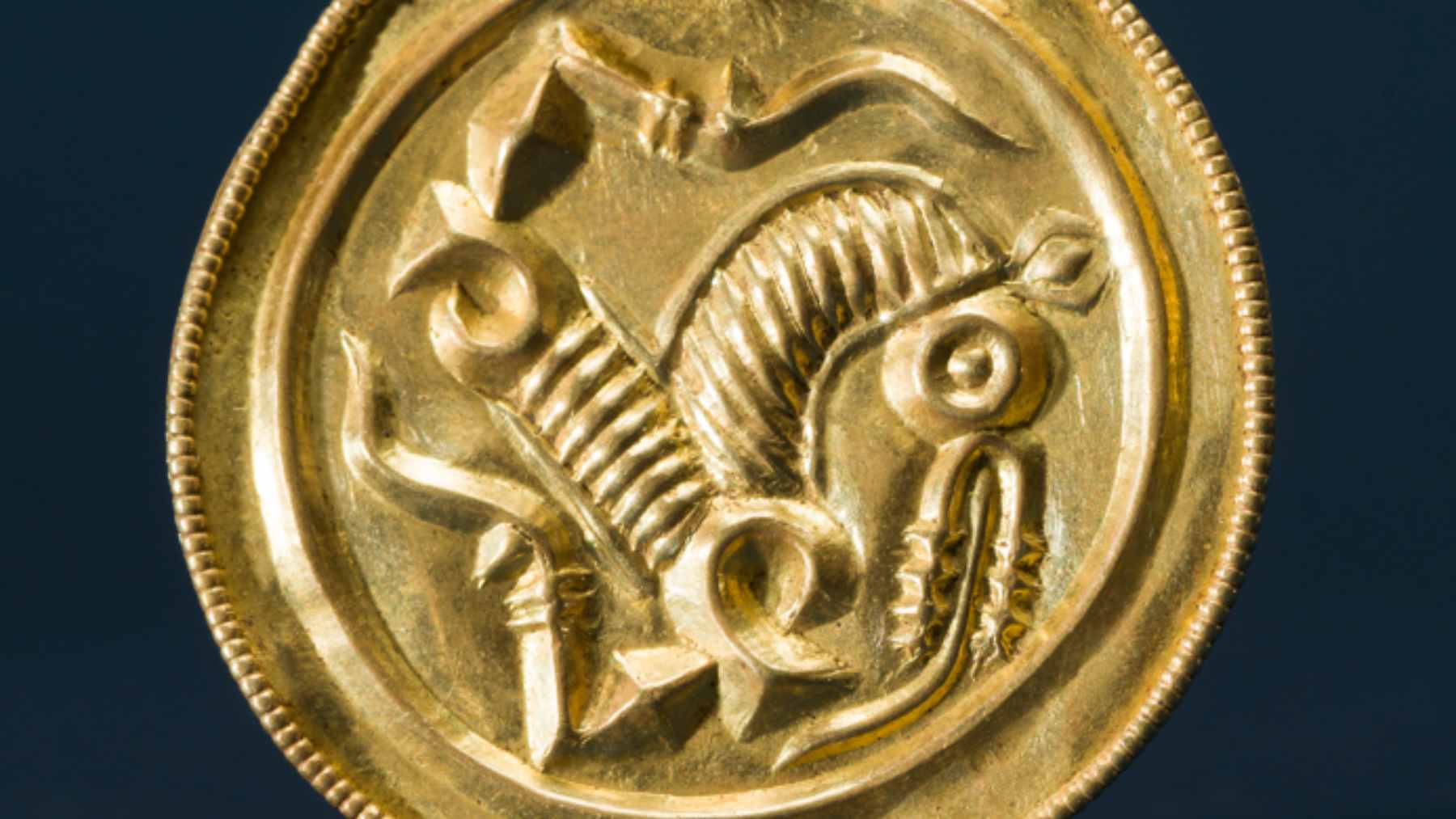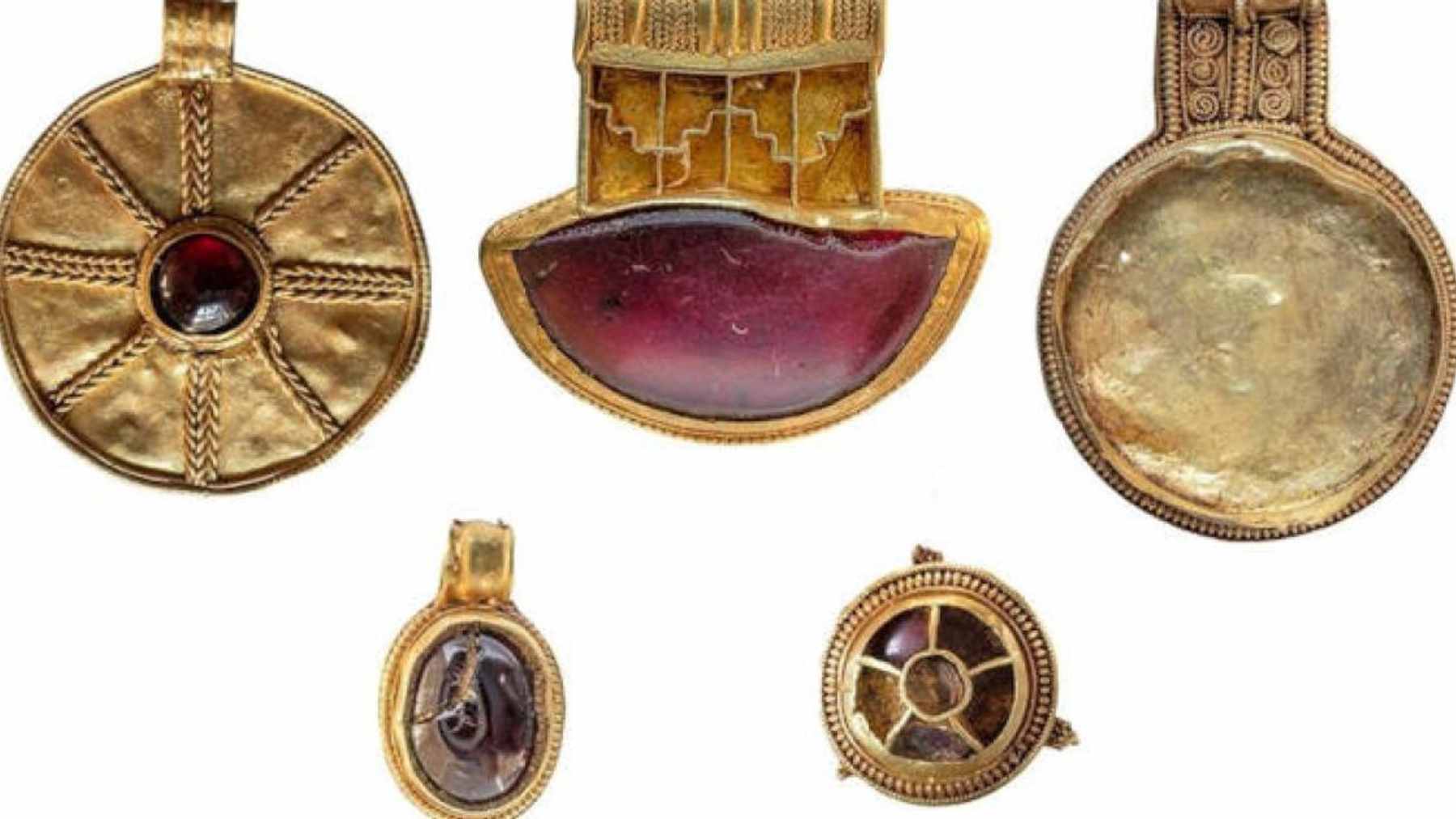
The Donington-on-Bain jewelry assemblage includes five Anglo-Saxon, seventh-century gold-and-garnet pieces found on a Lincolnshire hillside without a grave.
The odd location near, about 125 miles north of London, raises questions about recycling, ritual offerings, and hidden wealth.
Clues from careful recording
Field notes, soil clues, and old maps help archaeologists judge whether a stray find came from burial, loss, or intent.
The work was led by archaeologist Lisa Brundle at the Portable Antiquities Scheme, a national program that records chance archaeological finds.
Brundle studies how jewelry circulated across families, and PAS now holds more than 1.4 million recorded finds in a public database.
How the hillside find surfaced
Two metal detectorists reported the assemblage after finding pieces scattered near Donington-on-Bain on a hill slope in spring 2023.
Deep plowing can cut and drag metalwork, and the pieces lay within about 20-30 feet on a ridge about 820 feet high.
No human remains or other artifacts turned up, which makes later explanations rest on objects and landscape alone.
Why the setting puzzles
Why do so many seventh-century pendants in England come from well-furnished women’s burials, not isolated slopes or plowed fields?
Graves lock jewelry into a date and social setting, because bodies, other goods, and soil layers sit together.
Without that context, the assemblage could mark recycling or a ritual deposit, a deliberate placement of objects for social meaning.
Wear marks tell time
Scratches, bent loops, and worn edges show how long jewelry stayed in use before someone buried it.
Repeated rubbing can thin gold wire, and quick repairs can leave mismatched solder that later corrosion makes obvious.
Such traces suggest the pieces were already old when deposited, which fits reuse or recycling better than fresh burial.
A pendant with a scallop
One D-shaped pendant stands out because a large red stone sits in a scallop-like gold mount. The garnet, a deep red mineral used for jewelry inlays, sits in a cell that grips its edges.
Researchers linked the scallop form to fertility and early Christian ideas, but the shape alone cannot prove belief.
Stars and circles in gold
Three round pendants carry star motifs and beaded borders that craftsmen made by twisting and soldering fine gold.
Each loop shows stress where a chain pulled, and one small oval piece holds a cracked stone.
Those small differences matter because they hint at separate lives before the pieces ended up together.
A brooch piece repurposed
A fourth object is not a pendant at all but the domed center from a larger brooch. Someone pried it out, which frees decorative gold while leaving the rest behind for repair or melting.
Because archaeologists rarely find brooches taken apart, the fragment points to skilled hands and planned reuse.
Missing beads change the story
Necklaces usually include beads and spacers that separate pendants, yet none appeared with the assemblage.
That gap matters because a buried body often keeps a string’s full layout, even after centuries of decay.
The missing parts push interpreters toward a deposit made away from a person, rather than a disturbed grave.
Garnets, trade, and recycling
By the mid-seventh century, workshops faced a decline in fresh garnets reaching England through long-distance trade.
Goldsmiths could pop stones from older settings, which preserves the gem while letting them reshape the gold.
If recycling drove the burial, the assemblage might represent materials-in-waiting rather than personal keepsakes alone.
What grave robbing suggests
Reopened graves appear in some early medieval cemeteries, and thieves often targeted gold because it held portable value.
Robbing can leave ornaments without their full necklace strings, since thieves grab pendants and miss fragile beads.
Even so, the assemblage lacks clear cut marks on every piece, so robbery remains only one option.
Ritual deposits and deliberate damage
People sometimes damaged prized objects before placing them in the ground, changing who could use them afterward.
Breaking a brooch or removing a pendant loop blocks normal wear, which can turn status symbols into offerings.
Archaeologists call this object killing, deliberate damage that ends normal use, and the assemblage offers a rare early medieval example.
Hiding valuables during uncertainty
Households sometimes buried valuables for safekeeping, especially when raids or sudden rule changes made travel and trade risky.
A small stash on a slope can stay hidden under grass, and later plowing can pull it apart. Because no container survived, the assemblage cannot confirm intentional hiding, yet the idea fits its tight cluster.
What the find changes
Taken together, the evidence shows the assemblage as worn jewelry, gathered outside a grave, and then separated from everyday use.
Future work can compare stone chemistry and tool marks across other finds, but the missing owner’s story will stay unknown.
The study is published in the Oxford Journal of Archaeology.