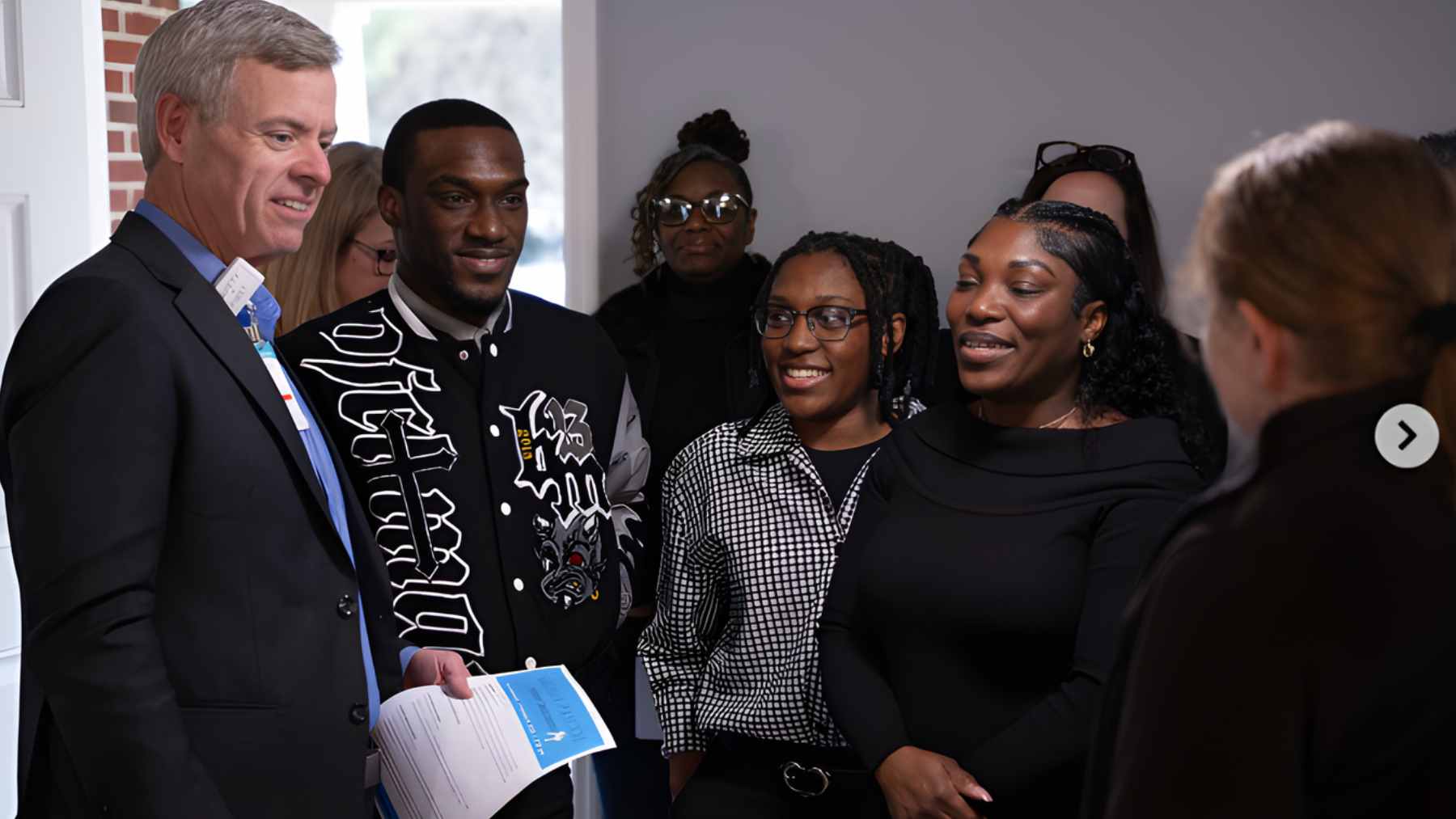
From long hauls to house keys, a single mother truck driver in Albany, Georgia just turned what felt like an impossible dream into an actual street address she can write on every form.
Earlier this month, Salisia Pascoe and her two teenage children moved into a newly-built $200,000 home through a partnership between Flint River Habitat for Humanity and Phoebe Medical Center on land owned by the hospital near its main campus.
In practical terms, that means a family that spent years juggling long shifts on the road, rent, and rising bills now has a stable mortgage at zero percent interest instead of a landlord and annual rent hikes.
Phoebe donated the lot, covered construction costs, and sent its own staff to swing hammers and paint walls alongside Habitat volunteers.
Single mother homeownership and financial stability
For Pascoe, homeownership always felt like something other people managed to pull off. She spends many hours driving trucks to keep the family afloat, and says a stable home for her kids has always been the priority even when it seemed out of reach.
She calls the moment she walked into the finished house something she “really could not have dreamed” only a few years ago.
Getting there was not a lottery win. Like other Habitat families, the Pascoes were selected based on need, willingness to partner, and ability to make affordable payments on a modest mortgage that does not charge interest.
Before they could move in, the family logged three hundred hours of what Habitat calls “sweat equity” by volunteering on Habitat projects and helping with their own build.
Similar requirements appear in affiliates across the country, where future homeowners often commit 200 to 300 hours of labor and homeownership classes before they ever receive keys.
Housing affordability and cost-burdened renters
Zoom out for a second and you can see why stories like this resonate far beyond one Georgia street. Nearly half of renter households in the United States spent more than thirty percent of their income on housing in 2023, according to federal data, a level economists call cost burdened.
At the same time, the average home value in Georgia sits around $326,000, well above the price of Pascoe’s new house and far out of reach for many working single parents in the open market.
So why would a health system step into the housing arena at all. For hospitals like Phoebe, safe housing is not just a feel good add on. It is part of the health equation.
Research has repeatedly linked unstable or poor quality housing to worse physical and mental health outcomes, especially for families living in poverty.
When basic shelter is uncertain, preventive care can slide to the bottom of the to do list, right next to that annual checkup everyone keeps postponing.
Hospital and community partnership for neighborhood revitalization
In a previous announcement on this partnership, executives described Habitat’s mission and the hospital’s mission as closely aligned and pointed to evidence that families in safe, stable homes are more likely to maintain good health over time.
That view is backed up by an impact study of Habitat homeowners in Georgia, conducted by researchers at Georgia Tech and Kennesaw State University, which found that most families reported feeling more positive about the future, saw children’s grades improve, and often reduced or even eliminated their need for public assistance after moving into a Habitat home.
What happens next for Flint River Habitat?
For Flint River Habitat, Pascoe’s house is not a one-off gesture. The nonprofit has already helped more than 160 families become homeowners since the 1980s and is working to close four more homes and approve four additional family applications this year, several of them on property donated by the hospital near its central Albany campus.
At the end of the day, though, the policy talk comes back to small things. Two teenagers will do homework in their own rooms instead of on a couch.
A truck driver will come home from long shifts to a house she helped build instead of another rent payment that never turns into equity. For one family and for a neighborhood that has seen little residential investment in years, a front door that finally locks behind you can feel like the start of a different story.
The official statement was published by the Phoebe Putney Health System.