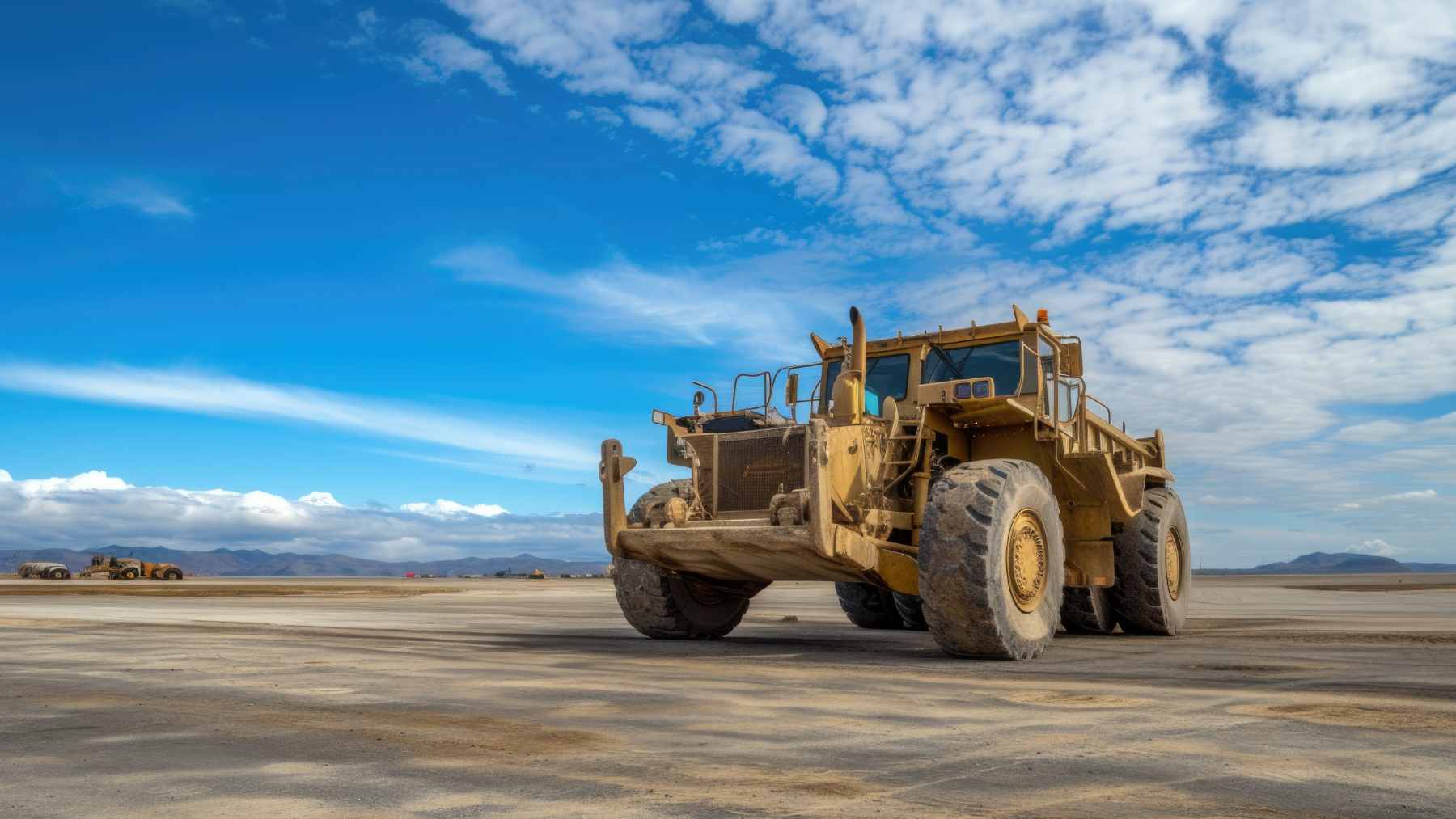
Over the past few weeks, viral clips have shown a long convoy of yellow trucks crawling across a pale desert, stirring up dust like a slow‑motion traffic jam. Some captions claim they are digging up a secret treasure buried under China’s sands.
The truth is far more ordinary, and in some ways more unsettling. These machines are hauling coal.
Technology company CHC Navigation reports that more than 200 autonomous haul trucks, each weighing over 100 tons, are working at a large mining site in the Zhundong region of Xinjiang. They use satellite navigation, onboard sensors, and remote control centers to move rock and coal around the clock with no drivers in the cabs.
A coal basin the size of a small country
The trucks are only the most visible part of a much bigger story. Zhundong is not just another mine on the map. Scientific and government sources estimate that the coalfield holds roughly 390 billion tons of coal resources, making it the largest integrated coalfield in China and one of the largest anywhere.
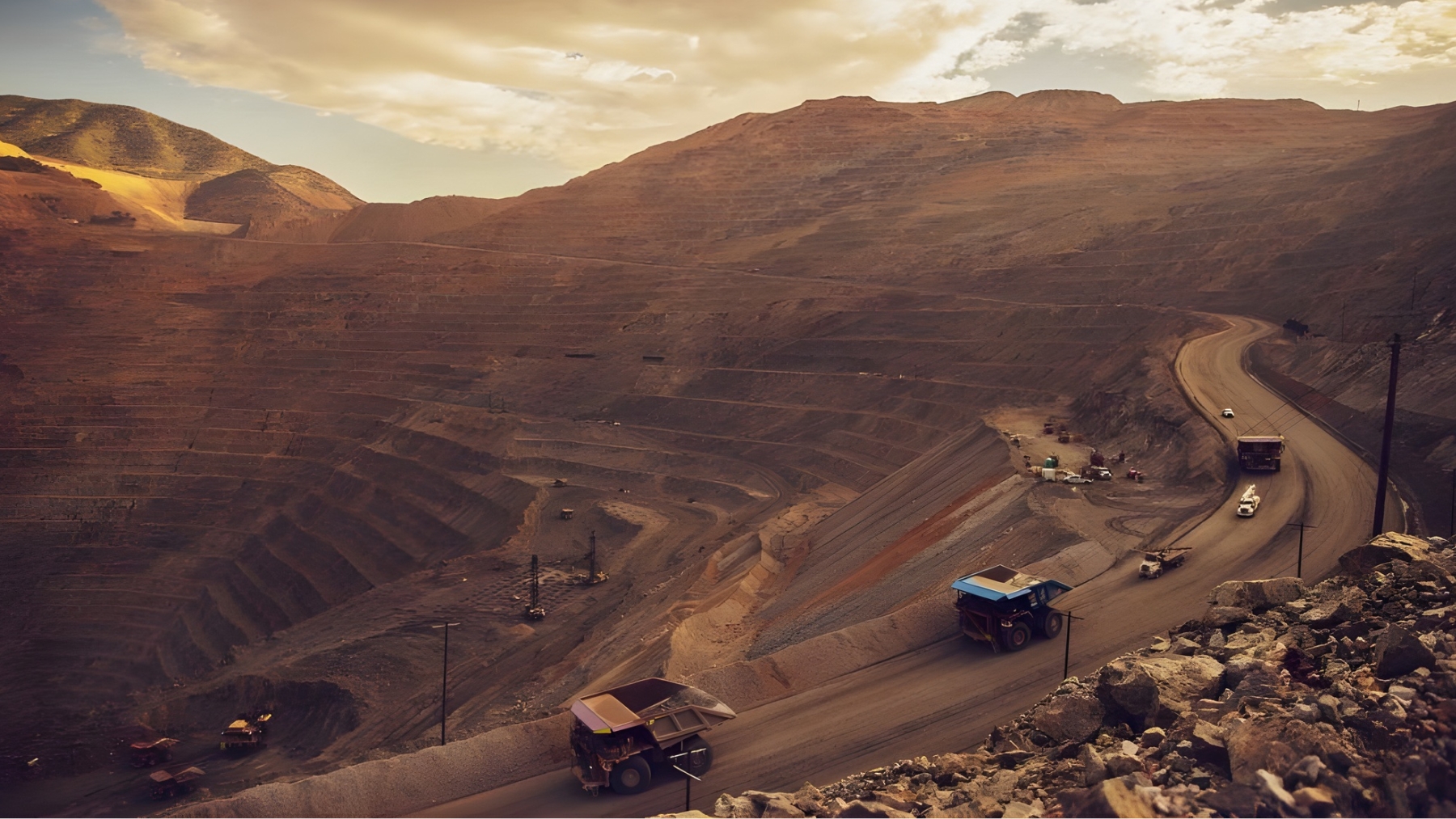
Within this basin, Xinjiang Tianchi Energy operates two giant open pit mines. The Dajingnan South open pit covers about 45.8 square kilometers, roughly equal to 6,400 soccer fields placed side by side.
Company and industry documents put its coal resources at about 3.38 billion tons, with an approved production capacity of 40 million tons per year in recent years.
Right next door, the General Gobi Number 2 open pit stretches across about 87 square kilometers, which is on the order of 12,700 soccer fields. Its resource base is estimated at around 4.57 billion tons, and it has been running with an approved capacity of 30 million tons per year. Some coal seams are thicker than 40 meters, about the height of a 13‑story building.
Local authorities in the Zhundong Economic and Technological Development Zone say they are processing scale changes that would lift both Dajingnan and General Gobi Number 2 to 80 million tons of annual capacity each.
If fully realized, that would place these pits among the largest, single coal operations on the planet, in the same league as giant surface mines in Wyoming that have produced on the order of 90 to 100 million tons a year.
How the robot convoys actually work
Automation at Zhundong did not appear overnight. In 2020, Beijing issued national guidance that set a clear target for large open pit coal mines to achieve autonomous haulage by the middle of this decade. Tianchi Energy’s South open pit mine was an early test bed.
By early 2023, autonomy specialist EACON had 31 driverless trucks running there, supported by a 5G network, an industrial internet platform, and a central dispatch system that tracks every load in real time.
The newer CHC Navigation project in Zhundong scales that idea up dramatically. Its account describes more than 200 driverless haul trucks equipped with high precision GNSS and inertial sensors so they can find their way even in deep pits with poor satellite visibility, heavy dust, and constant vibration.
The trucks follow planned routes, dock precisely at shovels and dumping points, and send a stream of data back to operators, who sit in a control room rather than inside the machinery.
For miners, the appeal is obvious. Fewer people have to work long shifts in remote pits with bitter winters and scorching summers. Machines do not ask for overtime, and they can keep your conveyor belts and railcars supplied all night, which helps keep power plants running and, in theory, keeps a lid on the electric bill during heat waves.
Xinjiang’s coal boom
Behind the viral videos sits a regional boom in coal. According to Xinjiang’s own statistical bulletin and reports from China’s major coal information services, raw coal output in the region reached about 541 million tons in 2024. That marked an increase of 17.5% compared with the previous year and pushed Xinjiang’s share of national coal production to roughly one tenth.
At the national level, China’s statistics bureau reports that the country produced about 4.76 billion tons of coal in 2024, a new record and a reminder that coal still sits at the core of the power system.
Academic work on China’s energy mix suggests that coal has continued to account for a bit more than half of primary energy use in recent years, even as renewables expand quickly.
In practical terms, Zhundong is designed as a strategic energy base. Official descriptions highlight its role in feeding long-distance power lines and coal‑to‑gas projects that send energy from this remote corner of Xinjiang to factories and cities in eastern China.
A fragile desert landscape under pressure
On maps, Zhundong looks like an ideal coal basin. Thick seams. Shallow depths. Low mining costs. On the ground, the picture is more complicated.
Researchers from Xinjiang University describe the coalfield as resource-rich but ecologically fragile, with a particularly dry climate and very limited water. A 2023 study in the journal Sustainability used two decades of satellite‑based land use data for the Zhundong development zone.
It found that large areas of grassland have been converted into construction land and disturbed surfaces as mining expanded, and that much of the area falls into high or higher ecological risk categories, even after some recent improvements.
In plain language, the smart mine is still carving deep scars into a desert landscape that struggles to heal after heavy machinery moves on. Automation can make that pressure greater by making it cheaper and easier to dig more coal, more quickly.
Human rights shadows
There is another layer that sets Zhundong apart from a coal mine in Wyoming or Queensland. These projects sit inside the Xinjiang Uyghur Autonomous Region, where the United Nations human rights office has documented serious concerns about arbitrary and discriminatory detention of Uyghurs and other predominantly Muslim communities.
In a 2022 assessment, the Office of the High Commissioner for Human Rights concluded that such detention practices may amount to crimes against humanity, findings that China firmly rejects.
Coal from Zhundong is mostly burned inside China, so there is no simple import label that foreign consumers can check. Even so, the debate over forced labor risks and the lack of independent oversight in the region now hangs over many large industrial projects there, including those marketed as cutting edge or green.
A glimpse of mining’s future, with an old fuel at the center
Viewed from a distance, the Zhundong convoys look like a preview of the mine of the future. Control rooms instead of crowded truck cabs. Sensors instead of clipboards. Algorithms keeping everything moving with the regularity of a conveyor belt.
The open question is what that future serves. Will similar systems one day move only rock for metals, cement, and renewable energy projects, with coal fading into history? Or will the combination of artificial intelligence, satellite guidance, and huge open pits simply lock in more decades of high-carbon fuel because it is so easy to dig up?
For now, the driverless trucks in Xinjiang show that “smart” technology can coexist very comfortably with a coal boom in a fragile desert region. The climate, the land, and the people who live around the pits will help decide whether that counts as progress.
The press release was published on CHC Navigation.