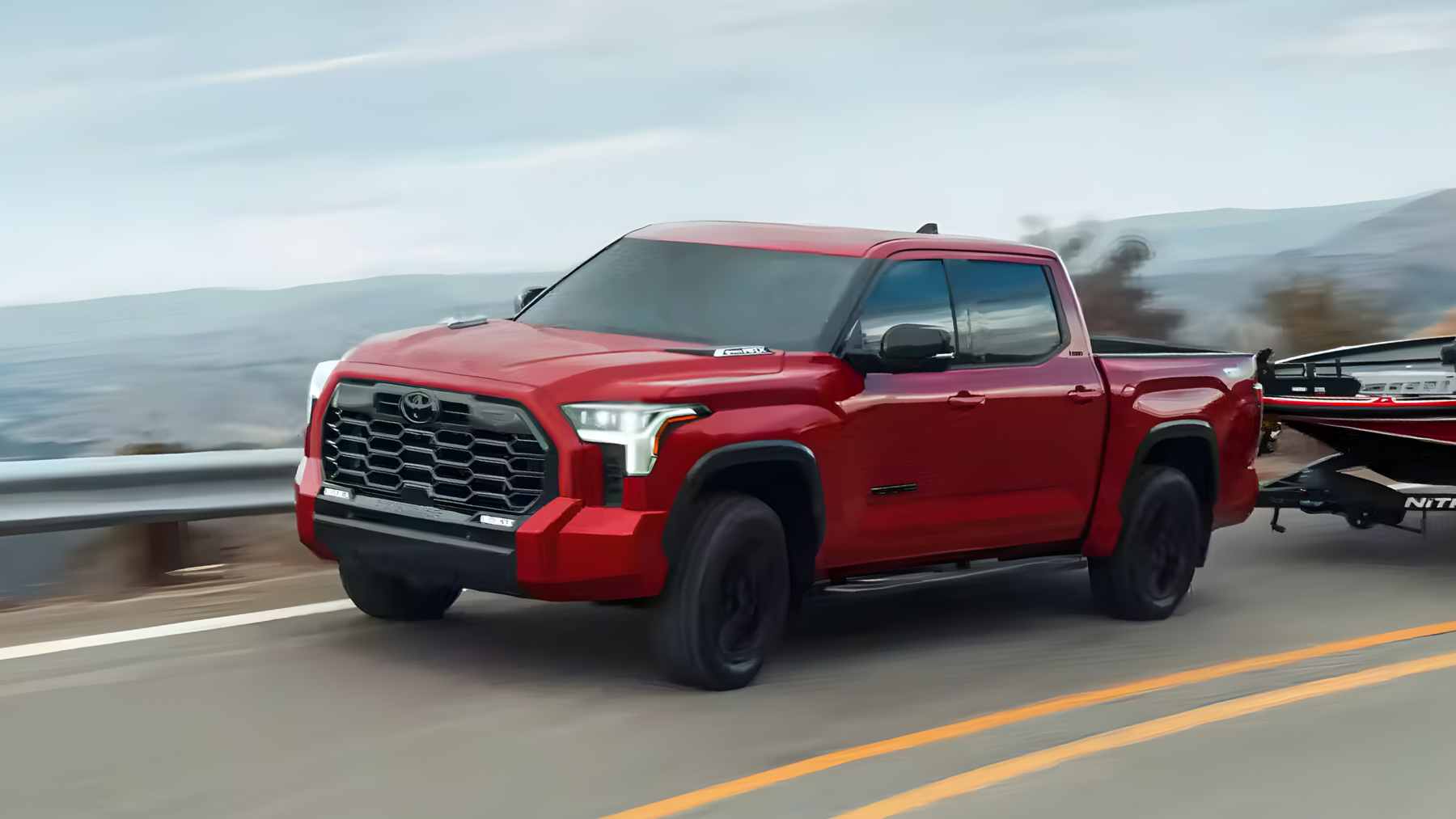
On paper, a heated steering wheel sounds like the simplest winter luxury. Press a button, warm hands, happy commute. Yet a 2024 Toyota Tundra owner has turned that cozy picture on its head after sharing thermal images that show the top of his wheel reaching about 114 degrees Fahrenheit while another reading near the inner underside appears close to freezing.
His summary felt familiar to anyone who has gripped a half-warm wheel on a cold morning. His words were blunt. “My fingertips freeze while the palm of my hand cooks.”
That one post in a 2023 to 2026 Tundra owner group quickly snowballed into a wider conversation about how heated wheels are actually built, what drivers expect, and where automakers quietly draw the line between comfort, cost, and efficiency.
Hot at the top, cool underneath
According to the Torque News report, the owner used a thermal camera to scan the steering wheel and captured hot spots above 100 degrees Fahrenheit along the upper outer rim.
A much cooler reading near the lower inner section was flagged at around 35 degrees, although several commenters later argued that particular point looked more like the floor than the rim itself and that other shots showed mid 50s to 100 degree readings on the wheel.
Even with that nuance, the pattern most owners recognized was clear. The warmest areas tended to be where hands usually rest on long drives, while sections near the bottom and inner underside stayed noticeably cooler. Similar complaints appear in Toyota discussions for models like the RAV4, where drivers say only the zones around nine and three o’clock feel properly heated, with the rest of the wheel left lukewarm.
So is the Tundra’s wheel broken, or is this simply how many modern heated wheels work?
Why most heated wheels do not warm every inch
Owners and technicians who weighed in pointed to a familiar explanation. Many manufacturers, including Toyota, tend to concentrate heating elements around the recommended hand positions near nine and three. A popular technical explainer on Toyota wheel design notes that this focused layout can cut electrical load and help long-term reliability, instead of running heating elements around the full circumference.
Outside the Tundra world, measurements for factory heated steering wheels in other vehicles usually land between the mid 90s and roughly 105 degrees Fahrenheit at the surface, sometimes peaking a bit higher at the edges during warm up. The Tundra owner’s hottest readings fall in that general range, which suggests the system is working, just not uniformly.
In other words, the partial warmth many drivers feel is often a design choice rather than a malfunction. That choice aims to heat where most hands are supposed to be while saving some energy and parts cost.
The energy angle that hides in the background
On a freezing day, it is easy to forget that every comfort feature is tapping the vehicle’s electrical system. Studies and real-world tests on electric and hybrid cars show that a steering wheel heater usually draws on the order of a few dozen watts, while a full cabin heater can demand several thousand watts.
That gap matters, especially for drivers concerned about fuel economy or battery range. Automakers increasingly promote heated seats and heated wheels as efficient ways to keep people warm without blasting the cabin heater at full power. From that perspective, limiting the heated area to where hands are expected to rest can look like a smart compromise on the engineering whiteboard.
Inside a cold truck on a dark winter morning, it can feel very different.
When real driving habits collide with lab assumptions
Drivers do not keep their hands locked at textbook positions all day. In traffic, on tight turns, backing out of a cramped driveway, or just cruising with one hand after a long shift, people slide around the rim constantly. That is when the cold patches on a partly heated wheel become obvious.
The Tundra discussion captured that small mismatch perfectly. Many owners agreed that nothing was technically broken and that the steering wheel behaved just like theirs. Others admitted that the on-and-off cycling of heat or the sharp difference between hot palm zones and chilly fingertips still felt frustrating, especially after paying extra for a winter package.
At the end of the day, the thread landed on a pragmatic conclusion. For most Tundra drivers, uneven warmth is normal rather than a warranty problem. Gloves, adjusted air vents, or simply moving hands to the hotter spots are the everyday fixes, even if they are not as elegant as a fully-heated rim.
What Tundra owners should keep in mind
For current or future Tundra owners, the key takeaway is simple. A heated wheel that is hottest around the upper outer rim and cooler near the bottom is, to a large extent, behaving as the engineers intended. If those main grip areas never warm up, that is when a dealer visit makes sense.
The larger story goes beyond one truck. It shows how even a comfort feature as small as a heated steering wheel carries hidden trade offs in design, energy use, and driver experience. Features that look straightforward from the outside often reflect quiet decisions about where comfort ends and efficiency begins.
The full article was published by Torque News.