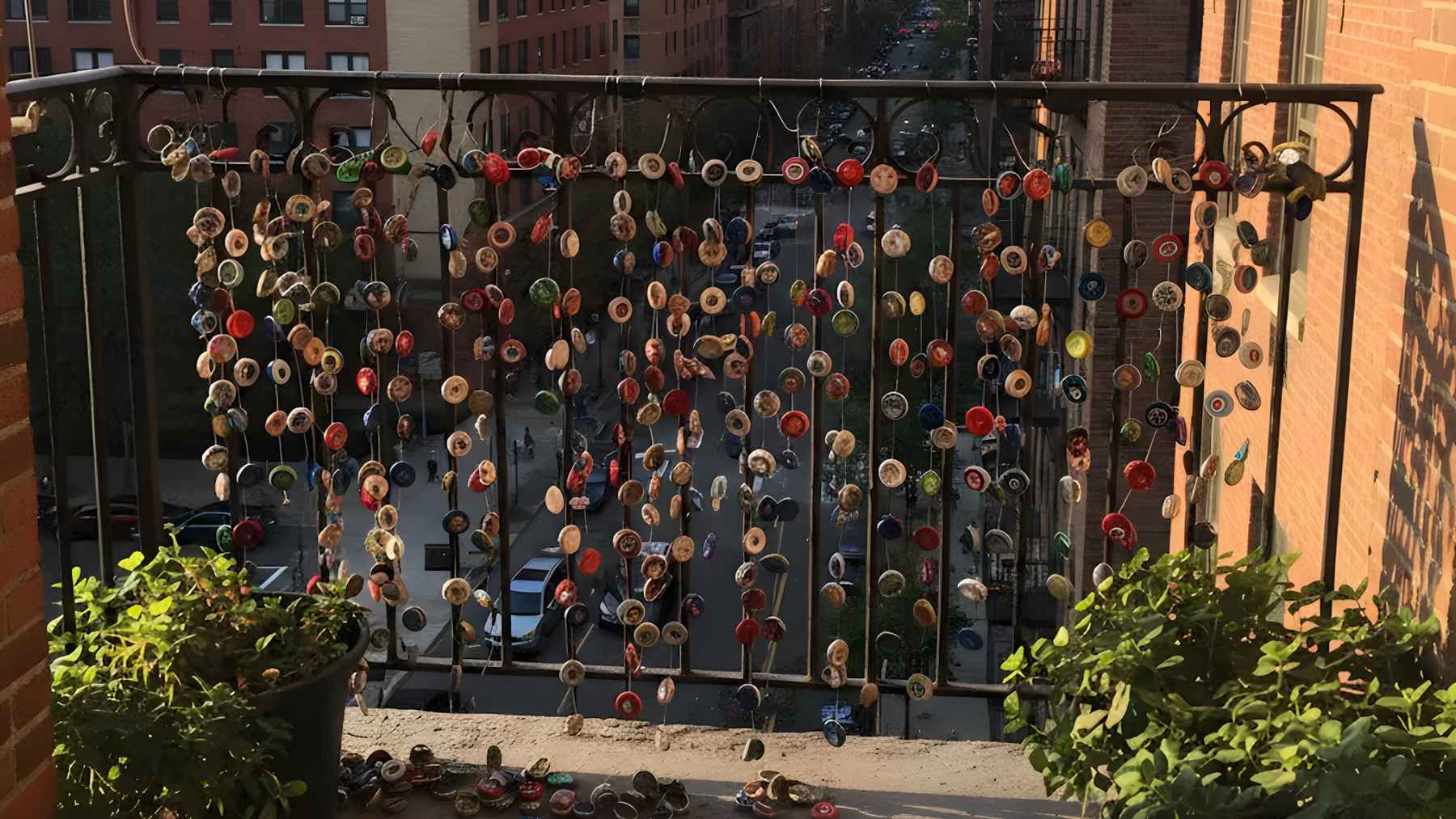
Look up at a balcony in Buenos Aires or Bogotá and you might spot a string of bright soda bottle caps spinning in the breeze. It looks like quirky decor. In reality, it is a homemade defense system for plants that is suddenly getting a lot of attention.
Recent reports in Spanish language outlets describe how hanging plastic soda caps on balconies, terraces, and garden fences can help scare away birds and some insects that nibble on flowers, herbs, and vegetables.
The idea is simple, costs almost nothing, and turns trash into a tiny shield for your plants at a time when many families are already worrying about grocery bills and that monthly electric bill.
How the soda cap trick works
The basic setup is straightforward. You make a small hole in each cap, thread them on a strong string or thin wire, and hang the line near the plants you want to protect. You leave a little space between the caps so they can move freely.
Once the wind picks up, the caps start to sway and spin. Sunlight bounces off the curved plastic and creates irregular flashes. When the caps bump into each other, they produce a light clacking sound.
Together, those visual and acoustic signals create an environment that many birds and flying insects find uncomfortable. Articles explaining the trend describe birds simply choosing another perch or feeding spot once they encounter the constant glitter and noise.
Color matters too. Guides aimed at home gardeners highlight bright white or silver caps for strong reflections, along with yellow, red, and orange caps that many pests associate with warning cues.
Mixed strings of different colors seem to work better because animals have a harder time getting used to a pattern that is always changing.
What science says about flashing and reflective deterrents
So far, no controlled lab study has tested soda caps specifically. Still, researchers have looked closely at the same ingredients that make this trick appealing, mainly moving reflective surfaces and light flashes.
In a recent study from Malaysia, scientists at Universiti Sains Malaysia evaluated nine different bird deterrent tools at a large semiconductor factory. Among the most effective were reflective compact discs and high visibility reflective tape, which reduced the number of pest birds perching on key structures compared with untreated areas.
Those devices use the same principle as the caps on a string, a combination of motion, bright reflections, and a low level of unpredictable disturbance.
For insects, decades of work on reflective mulches point in the same direction. A review in the journal HortTechnology found that aluminum foil and aluminum painted mulches often reduced aphid numbers by 50 to 70 percent on crops such as squash and peppers and delayed virus symptoms by about two weeks.
Extension guidance from the Integrated Pest Management program at the University of California notes that reflective mulches can repel invading insect populations on seedlings and small plants and help limit aphid-transmitted viruses when used early in the season.
Of course, a few soda caps do not create the same wall of light as a full reflective mulch or a professional scare device. Scientists also warn that visual deterrents can lose power over time as birds learn that the shiny objects pose no real threat.
That is why many experts treat them as one tool within a broader pest-management strategy rather than a magic fix.
How to try it at home and what to watch out for
For balcony gardeners, the appeal is clear. You reuse plastic that would normally end up in the trash, avoid chemical sprays on herbs or salad greens, and can set up a line of caps in a quiet half hour after work.
The trick works best when the caps hang where they can move freely in the wind yet stay close enough to the plants to create a curtain of light and sound.
Common sense safety still matters. Articles that promote the method recommend keeping very small caps away from young children and pets, placing the strings out of reach, and avoiding loose wires that could snag animals.
It is also wise to check the lines every few weeks since sun and rain can fade and crack the plastic, which reduces the reflective effect and creates more litter in the yard if pieces break off.
If you want to boost the effect without buying new gadgets, you can combine caps with other reused materials. Old compact discs, strips of aluminum foil, or reflective gift wrap all create strong glints when they move in the wind.
For insect heavy beds, laying reflective foil or silver painted cardboard between rows follows the same logic that commercial reflective mulches use and has documented benefits for some crops.
A tiny hack with a bigger meaning
At the end of the day, a string of soda caps will not replace sturdy netting, careful plant selection, or a fully integrated pest-management plan. What it does show is how quickly everyday gardeners are reaching for low-cost, low-impact ideas that protect their plants without adding more chemicals to the air, soil, or that salad on the dinner table.
For anyone curious about the science behind those glittering lines on the balcony next door, the most detailed recent data on reflective bird deterrents and their limits comes from a study of multiple scare devices at an industrial site.
The study was published in Tropical Life Sciences Research.