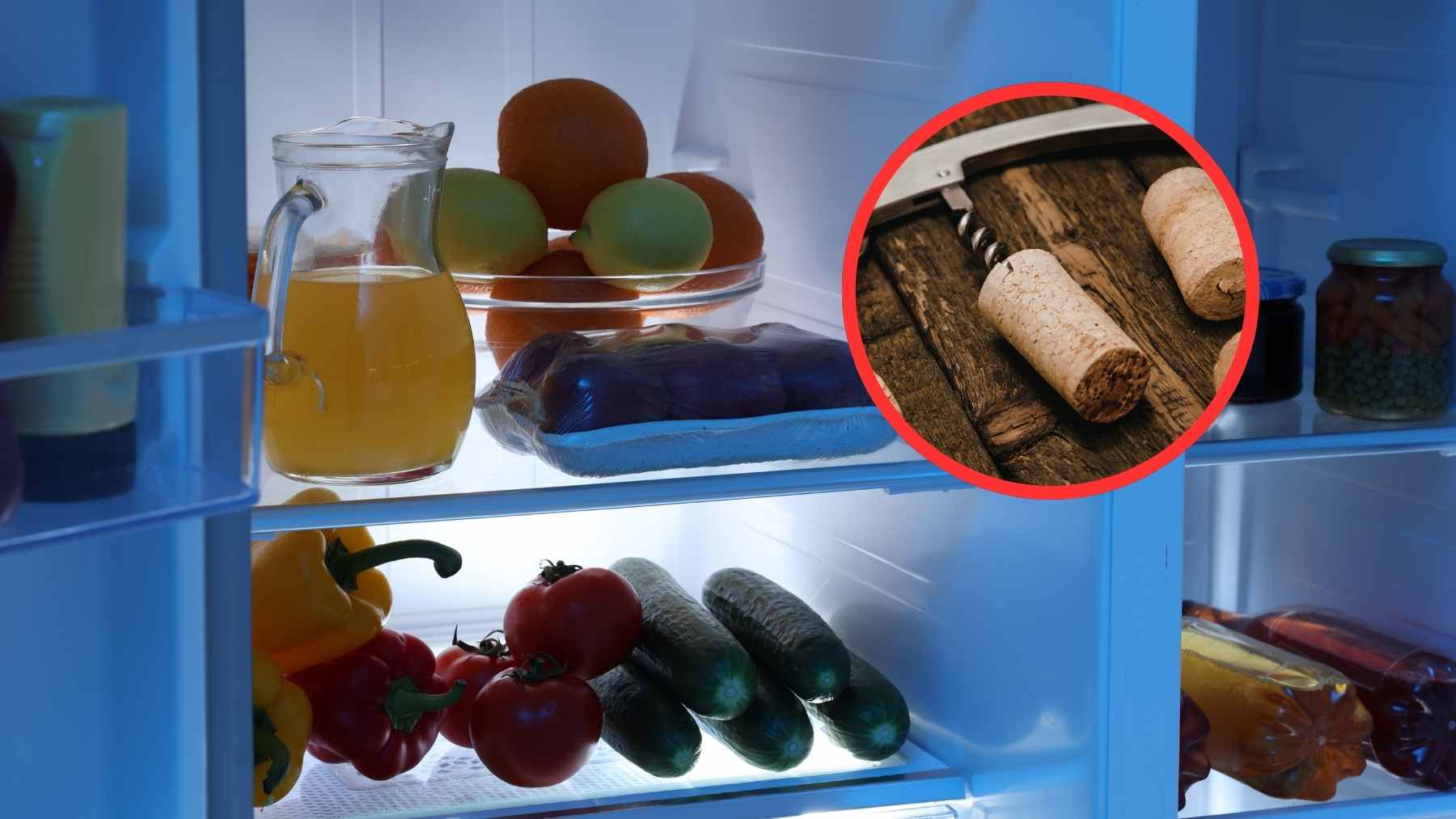
Can a tiny wine cork on a fridge shelf really help with bad smells and even shave a bit off the electric bill? That is the promise behind a home hack that has gone viral across Spanish-speaking lifestyle sites and social media.
Household columns describe the same move. After opening a bottle, you save the natural cork and place one or several pieces on shelves or in drawers, taking care not to block the cold air vents.
Supporters say the corks help distribute cold air more evenly, absorb moisture and trap odors, which should ease the workload on the refrigerator and keep food fresher a little longer.
Energy experts are more skeptical about the savings side. Refrigerators already account for a noticeable slice of household electricity, often around mid single digits of total use in the United States.
Studies and utility guides show that a reasonably full fridge runs more steadily because the food and drinks inside act as thermal mass and soften temperature swings each time you open the door.
Many energy saving tips even suggest filling empty space with containers of water. Compared with that, a few light corks displace very little cold air, so any direct impact on electricity use is likely to be small.
Where cork clearly has science on its side is its structure. Cork comes from the bark of cork oak trees and is packed with millions of tiny, air-filled cells. Laboratory work on wine closures has shown that natural cork can absorb volatile organic compounds and interact strongly with aroma molecules in liquids and in the gas phase.
More recent analysis in the open-access journal Processes has mapped a rich mix of aromatic compounds in cork, confirming that the material is highly porous and chemically active.
That makes the deodorizing claim more plausible. If cork can pull unwanted aromas out of wine, it is reasonable to think it can also capture some smelly molecules drifting around inside a cold, humid fridge.
Lifestyle tests are still informal rather than controlled experiments, yet outlets from Spanish home blogs to wine producers such as Bodem Bodegas report that dry cork pieces placed near pungent foods noticeably soften strong odors for a few days before they need to be swapped out.
If you want to try the trick, the practical guidance is simple. Use clean, natural corks, not synthetic versions that lack the same porous structure.
Cut them in half to expose more surface. Place two or three pieces on shelves or in drawers near onions, strong cheeses or leftovers, keeping them away from the cold air outlets so you do not block circulation. Replace them once they look damp, stained or tired, instead of leaving them inside for months.
For cutting energy waste, though, the heavy hitters are still the boring habits. Energy agencies and appliance specialists emphasize keeping the door closed as much as possible, setting the thermostat to the safe but not excessive range around a few degrees above freezing, cleaning door seals and coils and avoiding hot dishes straight from the stove into the fridge.
Those steps have a far larger effect on your monthly bill than any one cork.
So the cork hack is best viewed as a small, low-cost extra. It can give a second life to something you might otherwise throw away, may help with mild smells and fits neatly into a broader push to keep food fresh and avoid waste.
The study was published in Processes (MDPI).