For everyday life, this might feel far away from the grocery bill or the morning commute. In strategic terms, it signals that Spain is betting heavily on the sea at a time when Europe is rearming and maritime routes are growing more tense.
Analysts estimate the naval package at around €5.5 billion, nested inside a wider industrial and defense push that adds more than €10.4 billion in extra spending through the new Industrial and Technological Plan for Security and Defense.
What the 37 ships actually mean
The numbers can sound abstract. In practical terms, the plan combines 23 new builds with 14 deep upgrades for ships already in service.
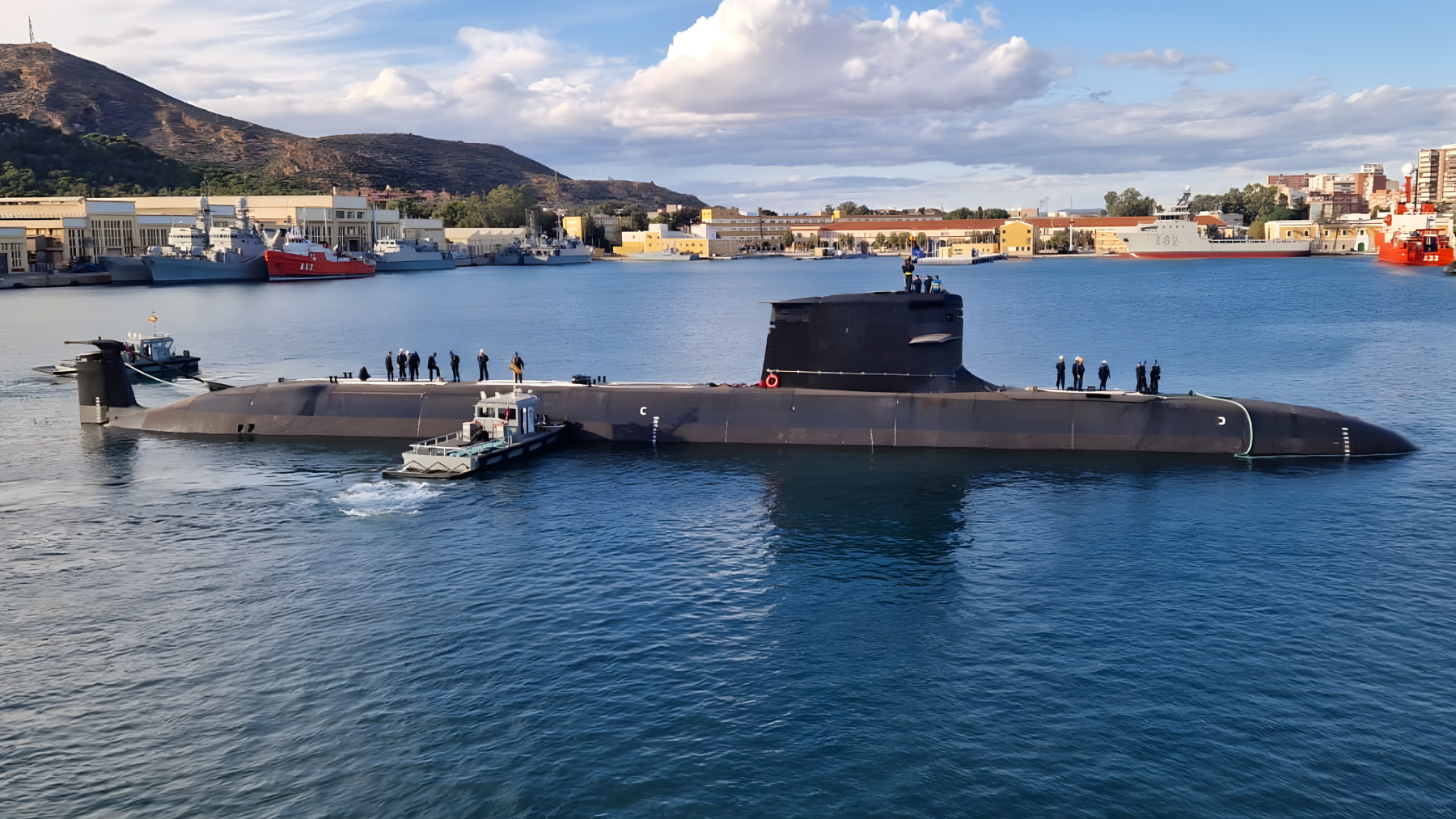
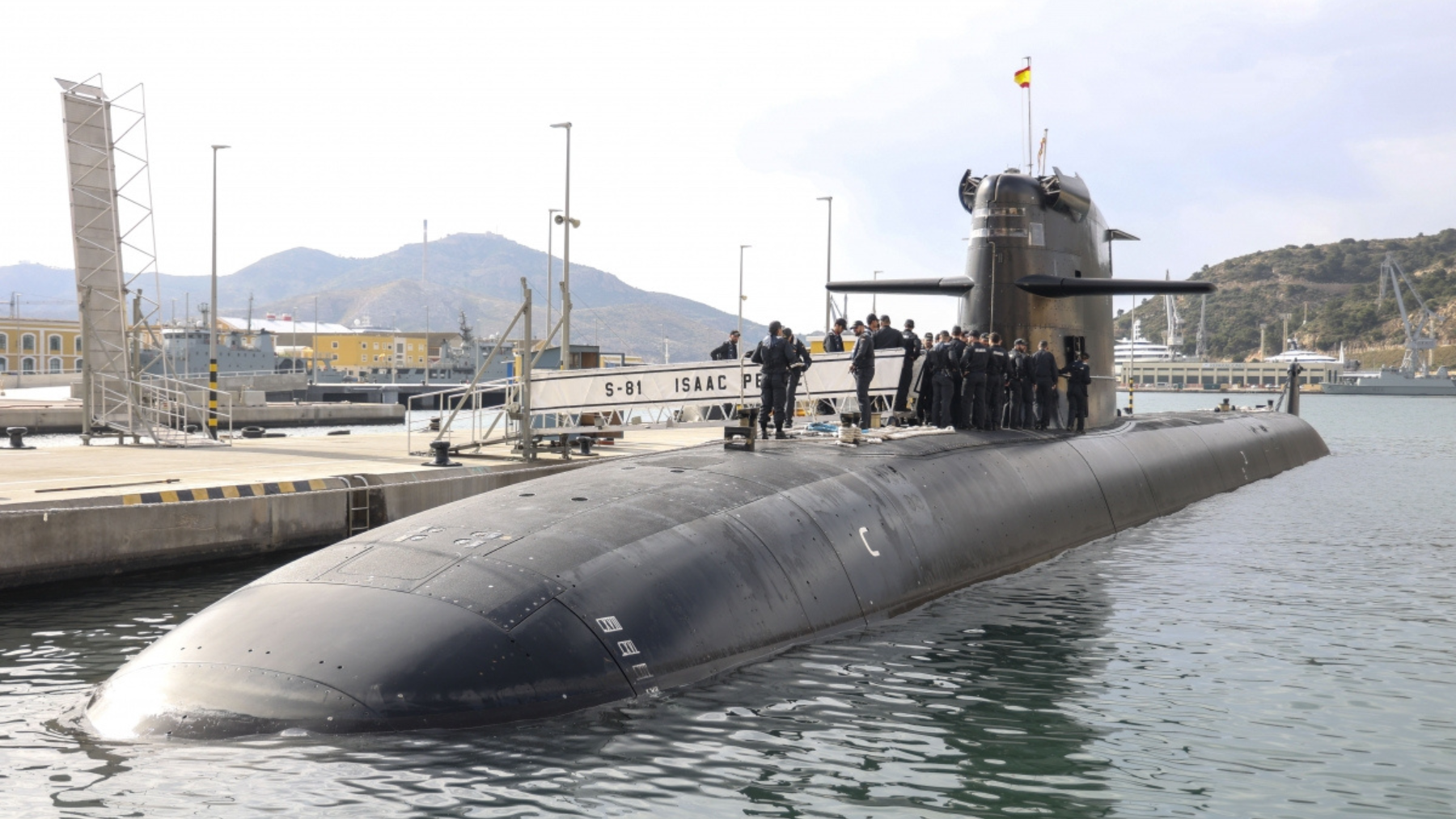
On the new side, one of the most visible pillars is the S 80 submarine program. Four boats built by Navantia will replace older models and restore a full submarine force.
The first unit, S 81 Isaac Peral, was delivered to the navy in late 2023 and is already operating at sea. The second, S 82 Narciso Monturiol, was launched in Cartagena in 2025 and is slated for handover in 2026. Two more, S 83 Cosme García and S 84 Mateo García de los Reyes, are scheduled around 2028 and 2030.
Alongside the submarines, five F 110 frigates will act as multi-mission workhorses. They are designed for anti-air, anti-submarine and surface warfare, but can also handle tasks such as maritime security, convoy escort or support to civil authorities.
The first hull is planned for delivery in 2028, with one ship per year until 2032, while the existing five F 100 frigates will be modernized to stay in service into the late 2040s.
Two new maritime action ships with anti-submarine capabilities are also on the way, backed by a budget of €550 million. They will join six similar patrol ships already in service, giving the navy more flexible platforms for routine patrols, anti-submarine screening and low intensity missions that free up high-end escorts.
Submarines that sip bioethanol
The S 80 series is not just a replacement on paper. It is one of the few fully national submarine designs in the world, and it carries a propulsion system that blends chemistry and stealth in an unusual way.
Instead of relying only on batteries and diesel engines that need to snorkel near the surface, the class uses a third-generation, air-independent propulsion system called BEST, short for Bio Ethanol Stealth Technology.
Bioethanol is reformed on board to produce hydrogen, which then feeds fuel cells that generate electricity. According to Navantia, this lets the submarine remain submerged for up to three weeks while cutting its acoustic and infrared signature, a big help in avoiding detection.
For a non-expert, the idea is simple. Less time near the surface means less noise, fewer exhaust fumes and fewer chances of being spotted, whether by radar, thermal sensors or a rival periscope. It also turns a defense program into a rolling test bed for cleaner fuels and advanced fuel cell technology, fields that spill over into civilian research.
Smart frigates and a new lifeline at sea
On the surface, the F 110 frigates are being pitched as the first truly “smart” ships in the fleet of the Spanish Navy. Each hull is built from the start around a digital twin, essentially a full virtual copy of the ship that receives data from thousands of sensors on board.
The twin helps plan maintenance, simulate failures before they happen and train crews without taking the real ship off patrol, all part of Navantia’s Shipyard 4.0 model in its Ferrol yard.
Logistics, often the least glamorous part of any fleet, also gets a major upgrade. A new combat support ship, known as BAC II, will be built in Ferrol for around €650 million, replacing the veteran Patiño and joining the Cantabria around 2030.
Official estimates suggest the project will generate roughly 1,800 direct and indirect jobs in the region during construction.
The support block of the plan adds two coastal hydrographic vessels and one oceanic unit for nautical charting, modernization of six minehunters, a dedicated electronic warfare ship and at least one more multipurpose vessel like the Cartagena, already adapted for surveillance, mine countermeasures and diver support.
More than warships
Viewed from a distance, this could look like a simple case of more steel and bigger guns. The context is broader. The naval program sits inside a national Industrial and Technological Plan for Security and Defense that adds €10.47 billion in extra spending and aims to lift defense outlays to about 2 percent of GDP, in line with commitments inside NATO and the European Union (EU).
For shipyard towns such as Ferrol or Cartagena, that translates into long order books, apprenticeships and highly-specialized engineering jobs rather than just abstract billions. For the navy, it means fewer blind spots, from deep-sea rescue to electronic warfare and everyday patrols in crowded shipping lanes.
For the wider economy, the use of digital twins, bioethanol-based fuel cells and advanced sensors turns defense into a driver for industrial innovation that can, at least in part, spill beyond the military world.
Whether citizens see it as necessary insurance or as an expensive luxury will depend on how the next decade unfolds. What is clear for now is that this naval plan will shape Spain’s role at sea long after the current headlines fade.
The official statement was published on La Moncloa.