Japan just did something no other country has pulled off, it lifted rare-earth-rich mud from nearly 6,000 meters below the Pacific and brought it safely onto a ship.
The deep sea test near Minamitorishima Island is a world first and a clear attempt to loosen China’s tight grip on the minerals that keep electric cars, smartphones, and wind turbines running.
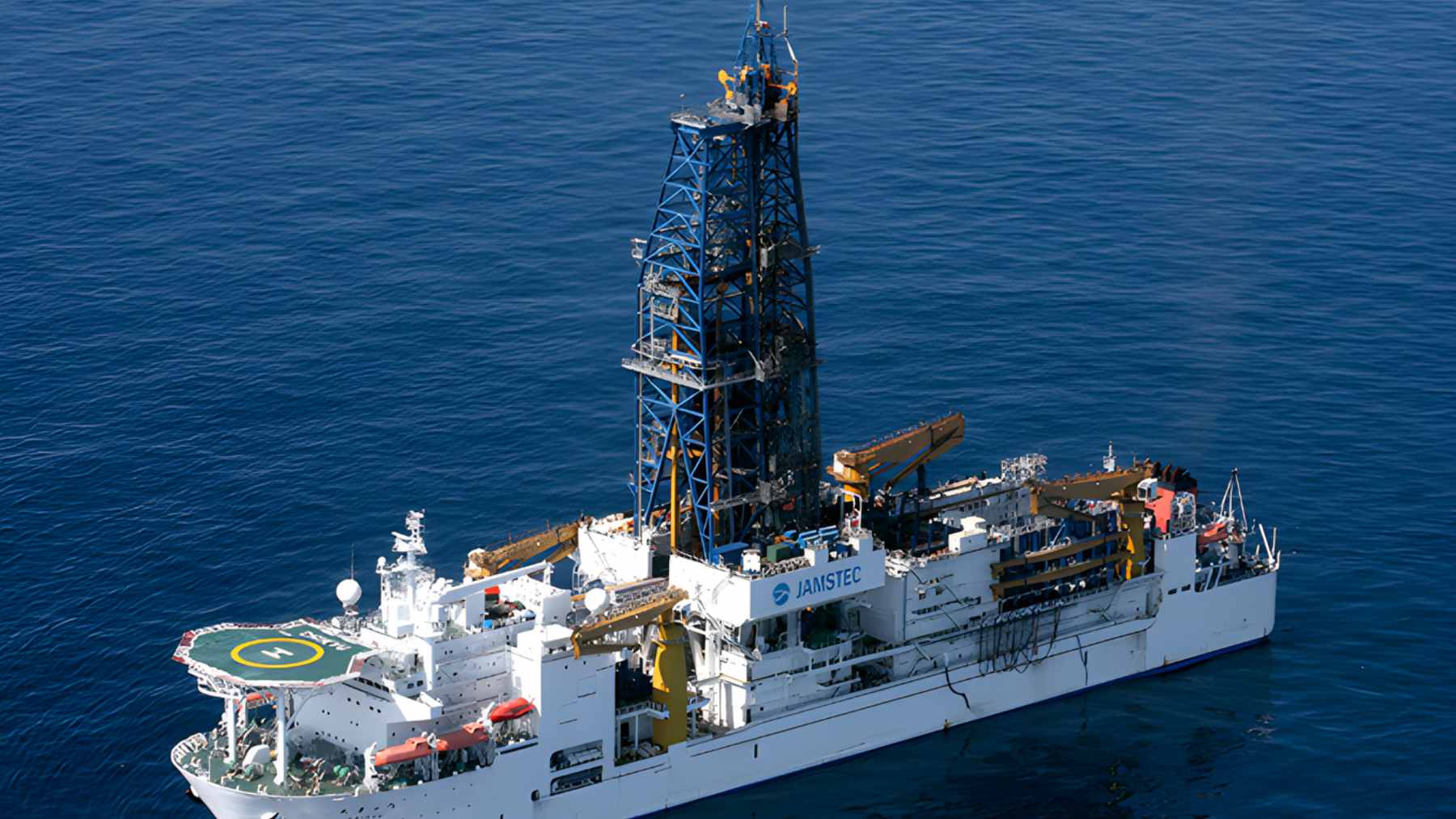
The Chikyu vessel and JAMSTEC’s role
At the center of the operation is the drilling vessel Chikyu research vessel, operated by the Japan Agency for Marine-Earth Science and Technology (JAMSTEC). The ship left Shimizu port on January 12, reached the test site on January 17, and began pumping mud on January 30.
In the early hours of February 1, crews confirmed that rare-earth-bearing mud from roughly 6 kilometers, about 4 miles, below the surface had reached the deck.
Why heavy rare earths matter for EVs and electronics
This mud is not ordinary seafloor sludge. It is believed to hold heavy rare earth elements such as dysprosium and neodymium, vital for permanent magnets in electric vehicle motors, along with gadolinium and terbium used in medical imaging, electronics, and other high-tech gear.
Without them, everything from EV drivetrains to the little vibration motor in your phone gets a lot harder to build.
The China supply risk and Japan’s long game
For years, Japan has worried about depending too heavily on a single supplier. China accounts for roughly 70% of global rare earth production and more than 90% of refining, while Japan still imports around 60% of its rare earths from Chinese producers.
Recent export restrictions on dual-use items that include some rare earth products have underlined how quickly politics can ripple into factory floors and even car showrooms.
The Minamitorishima project has been built as a long game. Since 2018 the government has poured about 40 billion yen, roughly $250 million, into a national program called the Strategic Innovation Promotion Program (SIP) to develop technology that can lift mud from depths of 5,000 to 6,000 meters, separate out seawater, and eventually refine the metals.
If the current trial checks out, officials aim to run a larger test by 2027 that could move around 350 tons of seabed mud per day and test whether the whole chain is technically and economically realistic.
Engineering at 6,000 meters under pressure
The engineering is extreme. Hundreds of connected pipe segments form a riser system that works like a giant vacuum, mixing mud and seawater into a slurry and pushing it up from under crushing pressure, in the dark, far beyond where most crewed subs ever go.
In practical terms, it is an experiment in turning a patch of abyssal plain into something closer to an underwater factory line.
Environmental risks and what happens next
There is a catch, and experts keep coming back to it, the environment. Marine scientists and advocacy groups warn that deep-sea mining could stir up plumes of sediment, smother fragile seafloor habitats, and harm ecosystems that we barely understand.
Project leaders say the system uses a closed-circulation design and is paired with environmental impact studies based on newly developed ISO style standards, attempts to keep sediment clouds and local damage as low as possible.
So can mud from the bottom of the Pacific really reshape the rare earth market? To a large extent, that depends on what laboratory tests now reveal about metal grades, future prices, and how much the public will accept industrial activity in deep oceans.
For now, the trial signals that Japan is willing to spend serious money and take serious technical risk so that future supply shocks do not instantly threaten its car plants, chip makers, or even the batteries behind your monthly electric bill.
The press release was published on JAMSTEC.