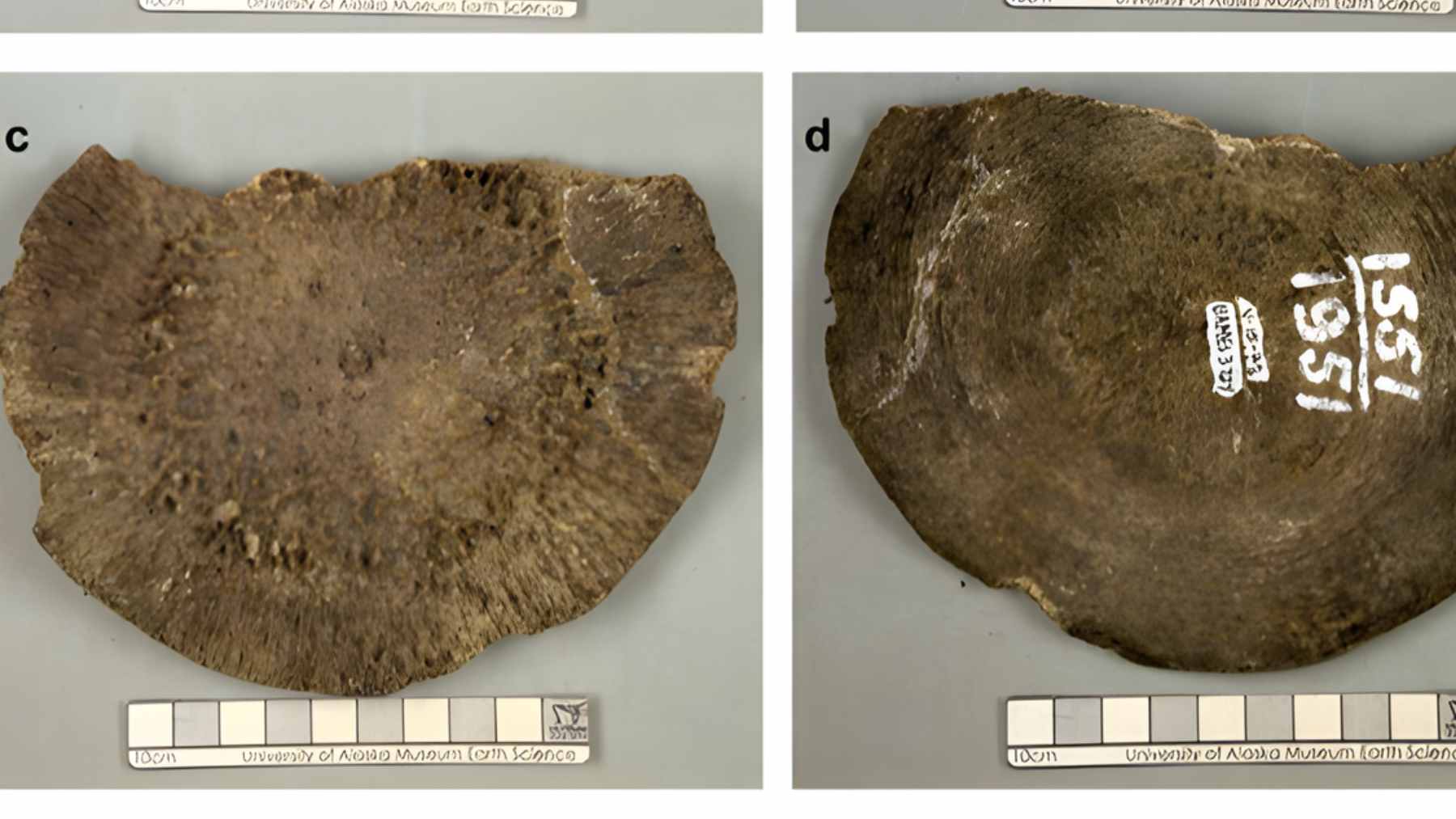
For more than 70 years, two hefty fossil discs in a museum drawer in Fairbanks were tagged as woolly mammoth bones from Alaska’s interior. New research now shows they belonged to whales that swam the North Pacific only a couple of thousand years ago, not mammoths that trudged across Ice Age tundra.
That single correction quietly preserves the timeline of mammoth extinction and turns a museum mix up into a scientific opportunity.
Radiocarbon dating and the Adopt a Mammoth project
The mystery surfaced when the University of Alaska Museum of the North launched its Adopt a Mammoth project, a crowdfunding effort that pays for radiocarbon dating of the roughly fifteen hundred mammoth fossils in its collection.
Two supposed backbone pieces came back with ages between about 1,900 and 2,700, far younger than any known mammoth from mainland Alaska, where the last individuals are thought to have vanished around 13,000 years ago.
Lead author Matthew Wooller recalls his reaction as a mix of excitement and doubt. “I was pretty much gobsmacked,” he said, before deciding that the team needed “more forensic work” rather than a headline about record-breaking mammoths.
Isotopes and ancient DNA confirm minke whale and right whale
That extra work started with chemistry. The bones carried unusually high levels of certain nitrogen and carbon isotopes that are typical of marine food webs, not of plant-eating land mammals that graze ancient steppe grasses.
In practical terms that means whatever animal owned these bones spent its life in salt water, not on the Alaskan uplands. Ancient DNA then delivered the final twist.
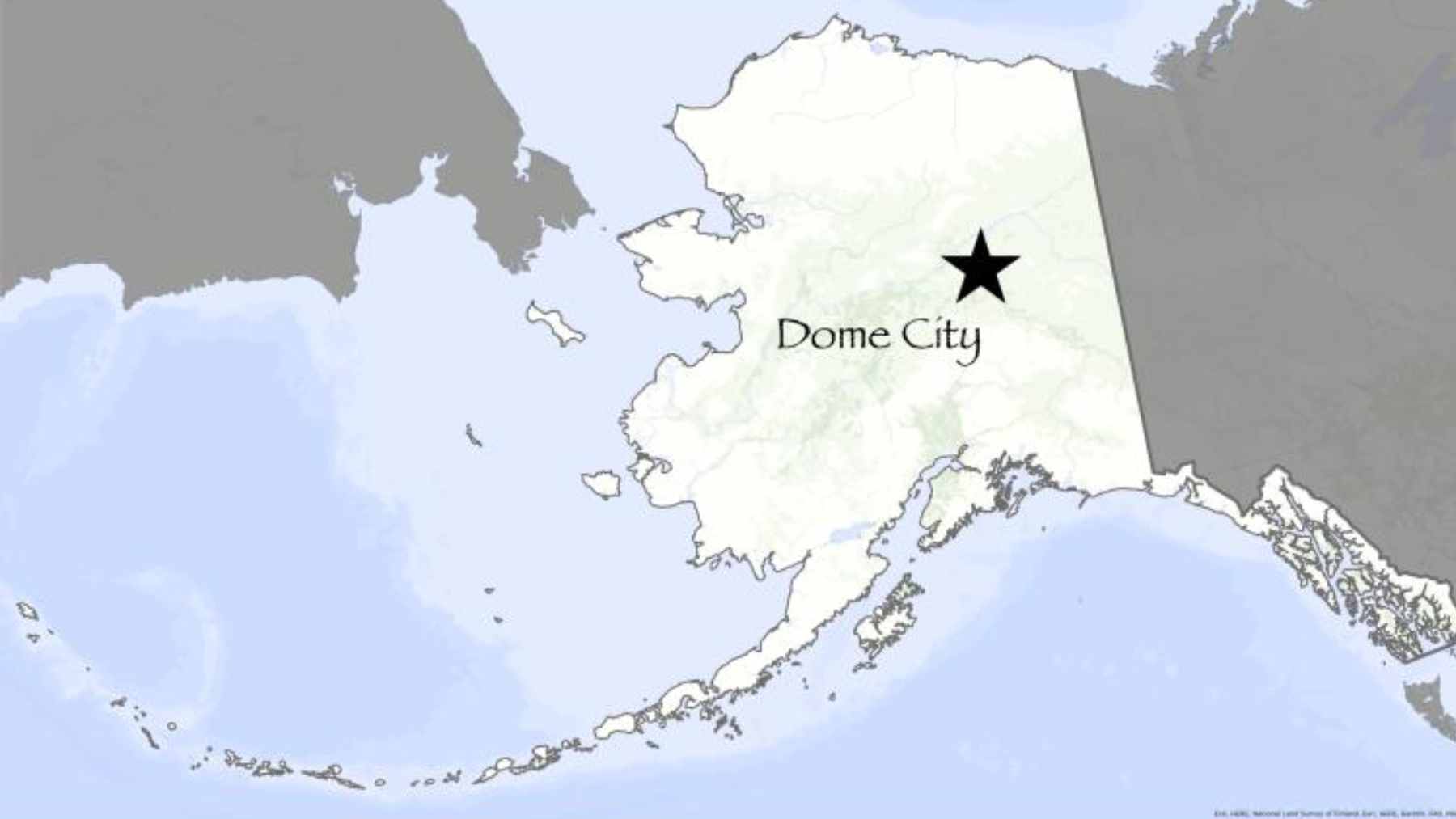
One fossil came from a common minke whale and the other from a North Pacific right whale, even though the labeled find spot sits roughly four hundred kilometers from the modern coastline near the old gold camp of Dome City.
How whale fossils ended up 400 kilometers inland
So how did whale backbones end up in the middle of Alaska, at a place where you would sooner expect dust and spruce needles than ocean spray? Every possibility has drawbacks.
The study team briefly considered wandering whales pushing far inland along ancient river systems, or hungry carnivores dragging chunks of carcass upstream. Both scenarios seem unlikely for animals this large and waterways that small.
Archaeological work in other regions shows that coastal peoples sometimes carried whale bones far from shore for tools or trade, and the authors note that human transport into the interior is at least possible, although there is no direct proof yet.
The most down to earth explanation might feel familiar to anyone who has ever misfiled paperwork at home. Otto Geist, the naturalist who collected the fossils in the early 1950s, worked at both coastal and inland sites.
Archival notes show that bones from a coastal area and from Dome Creek were processed at the museum on the very same summer day. A simple labeling error could have shuffled whale vertebrae into a mammoth drawer, where they quietly influenced assumptions for decades until the new dating project forced a second look.
At the end of the day, this “whale of a mammoth tale” is less about a single spectacular fossil and more about how science corrects itself. By retesting old specimens instead of trusting aging labels, researchers avoided rewriting mammoth history on the basis of two misidentified bones and added well-documented whale fossils that may help future studies of endangered marine species.
The hunt for the true last mammoths in Alaska goes on, but with sturdier evidence underfoot.
The study was published in the Journal of Quaternary Science.