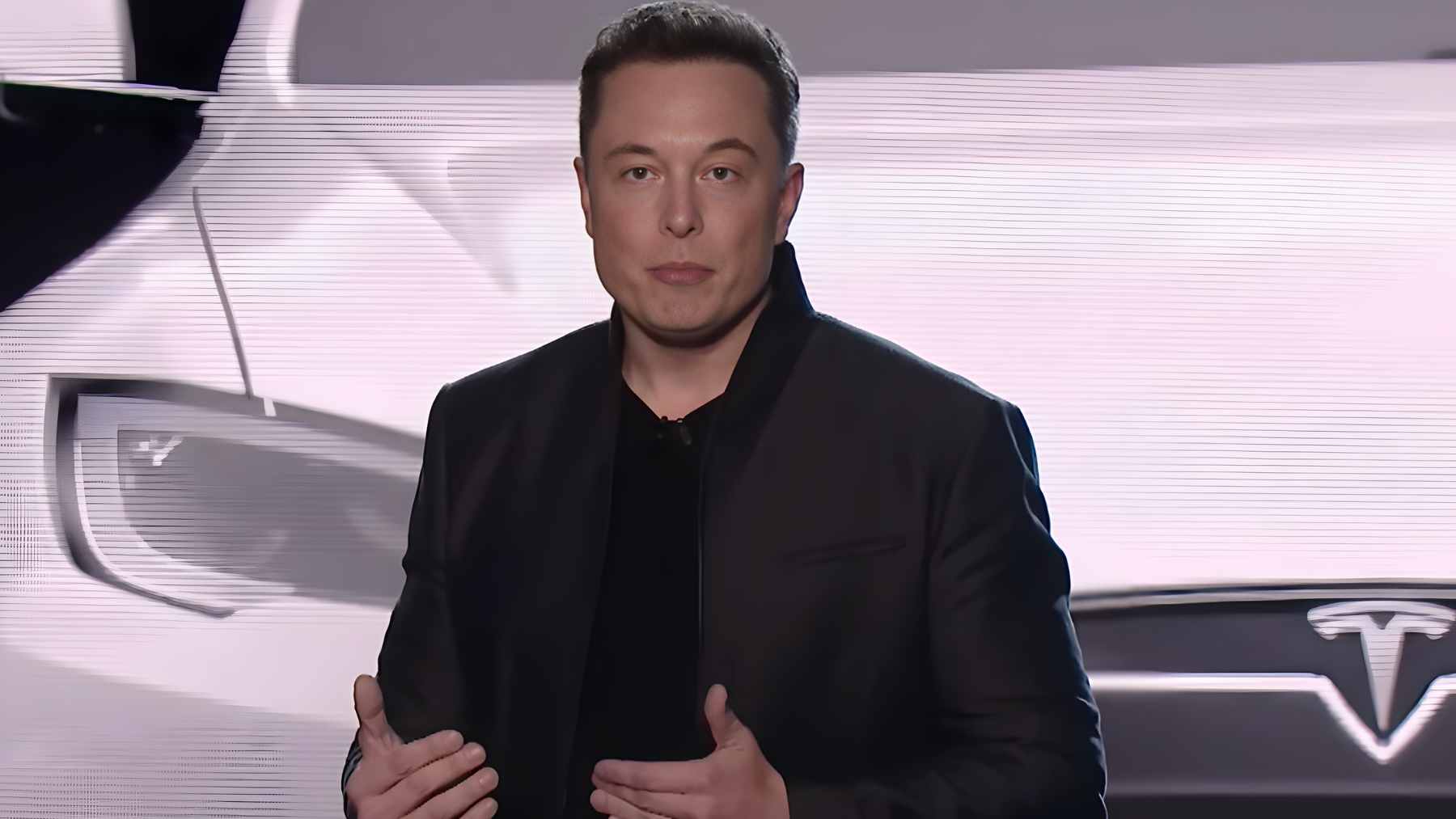
After a year of telling investors that the future of Tesla lies in robotaxis and humanoid robots, Elon Musk is now asking for patience.
In a recent post on his platform X, Musk said that for the Cybercab robotaxi and the Optimus humanoid robot, “almost everything is new, so the early production rate will be agonizingly slow” before it speeds up over time.
For a company whose stock market value sits near one and a half trillion dollars and whose electric cars are still its main source of profit, that single phrase is more than a casual aside. It is a rare public reset of expectations around the products investors are counting on to rescue a slowing core business.
From big promises to a slower reality
Musk’s new tone contrasts sharply with the show he put on at Tesla’s “We, Robot” event in 2024, where he unveiled the Cybercab. At the time, Tesla said the sleek two-seat robotaxi with no steering wheel or pedals would enter volume production in 2026, cost under thirty thousand dollars, and eventually ferry passengers for about twenty cents per mile.
For anyone stuck in city traffic or watching their ride share bill climb at midnight, that sounded almost too good to pass up.
The Optimus robot came with even bolder claims. Musk has talked about Optimus as a long-term revenue engine worth more than ten trillion dollars, and Tesla has told staff it aimed to build around five thousand robots in 2025 with a rapid ramp after that.
At various events, Optimus has appeared folding laundry, walking through labs, and even jogging in a test facility. In clips, it looks impressive. In day to day factory work, however, the robots are still performing only simple tasks under close supervision.
A company leaning hard on future tech
Why does the new “agonizingly slow” message matter so much? Because Tesla’s traditional car business is no longer growing the way it once did. In 2025, global deliveries fell about eight and a half percent compared with the previous year, and Chinese rival BYD Auto overtook Tesla as the world’s top electric vehicle seller.
At the same time, Reuters reports that much of Tesla’s roughly $1.39 trillion valuation now depends on expectations for its self-driving software and humanoid robots, even though almost all current revenue still comes from selling cars and batteries.
In practical terms, that means many small investors checking their stock app are betting that fleets of Cybercabs and legions of Optimus robots will eventually make up for weaker electric car sales.
From a climate perspective, this matters too. If Tesla’s pivot stalls, the burden of cleaning up transport falls more heavily on public transit, simpler electric models from other automakers, and the policies that shape your next car purchase or monthly electric bill.
Self driving still trails its main rival
Musk’s promise of a robotaxi network hinges on Tesla’s Full Self Driving software, which still requires human supervision. Independent critics say the system remains far behind competitor Waymo on reliability.
One safety group, The Dawn Project, has claimed that a recent Tesla system managed only about 71 miles between serious disengagements in its tests, while Waymo vehicles went more than 17,000 miles between similar interventions.
Tesla has launched a limited robotaxi service in Austin using Model Y vehicles, but those rides began with human safety monitors in the front seat and operate within geo-fenced areas.
The dedicated Cybercab, a new vehicle with no manual controls, still has to make the leap from concept car and pilot programs to a regulated service that ordinary riders can hail with confidence. That is a long road for any company, and regulators move at their own pace.
Humanoid robots and real-world limits
The Optimus project faces even more basic engineering hurdles. Musk has described Optimus as an “infinite money glitch” that could one day perform everything from factory work to delicate surgery.
Yet reports suggest Tesla has already scaled back internal production goals, and even Musk has admitted that building reliable hands and arms is proving especially difficult.
Anyone who has watched a home robot vacuum choke on a sock can imagine the challenge of sending a human-shaped robot into a busy factory full of cables, stairs, slippery spots, and moving forklifts.
That is why many robotics experts see humanoid machines as a long game, useful first for repetitive, tightly-controlled tasks before they ever walk through a supermarket or a hospital ward.
What Musk’s admission means now
Taken together, the slower outlook for Cybercab and Optimus does not mean Tesla’s bets on robotics are doomed. It does suggest that timelines will likely stretch, and that investors as well as city planners should be careful about assuming fleets of driverless taxis or fully capable humanoid helpers in the near term.
For the most part, the climate gains from cleaner transport still depend on plain electric cars, better public transit, and the policies that support them.
To a large extent, Musk’s phrase about an “agonizingly slow” start reads like a rare dose of realism after years of aggressive promises.
Whether financial markets are willing to give him the extra time he is asking for is a question that will play out far from the neon lights of product launches, in quarterly earnings, delivery reports, and the everyday experience of riders who still see human drivers behind the wheel.
The official statement was published on X.