What does it take to survive an Arctic winter with almost no food, no ship, and no way home? In 1630, eight English sailors found out the hard way on Spitsbergen, when a simple hunting trip turned into the first successful winter spent there by Europeans.
Most of the time, when we picture the Arctic, we think of satellite images, climate graphs, and supply ships packed with diesel and Wi-Fi routers. Four centuries ago, survival looked very different. No GPS. No rescue helicopters.
Just a nine-meter open boat, a few muskets, some whale blubber, and a lot of bad luck.
The story of these eight men sat mostly forgotten for centuries, buried in a long-winded pamphlet written by Edward Pellham, one of the castaways.
Their ordeal is resurfacing now thanks to historians and polar researchers who see it as a classic survival narrative, sitting next to famous tales like that of Dutch navigator Willem Barentsz.
At the same time, modern science shows this same region is now one of the fastest-warming places on Earth, which gives this old story a new kind of urgency.
A hunting errand that became a nine-month prison
The eight men were part of the English Muscovy Company’s whaling fleet, which headed north each summer to hunt whales around Spitsbergen and trade with Russia. That alone was a brutal business. Lines could tangle, boats could flip, and crews sometimes vanished under the icy swell.
In August 1630, their commander, William Goodlad, sent a small team ashore in a nine-meter shallop to hunt reindeer. It was supposed to be a quick errand to top up fresh meat before the fleet sailed home.
The men carried spears, a primitive snaphance firearm, a tinderbox, and a pair of hunting dogs. Not exactly a full survival kit.
Then the weather did what Arctic weather still loves to do. The wind shifted. Ice and rocks threatened the ship, so Goodlad took the main vessel back out to safer water. By the time the hunters woke up, their ride had vanished into the fog.
They tried to chase the fleet along the coast, rowing and sailing south toward the agreed rendezvous at Bell Sound. Fog, bad navigation, and one overconfident gunner combined into a nightmare loop of wrong turns.
When they finally reached Bell Sound on August 21, the water was empty. The last ships had already turned south for England. The men were alone, in a place no one intended to occupy in winter.
Building a livable pocket in a place meant to kill you
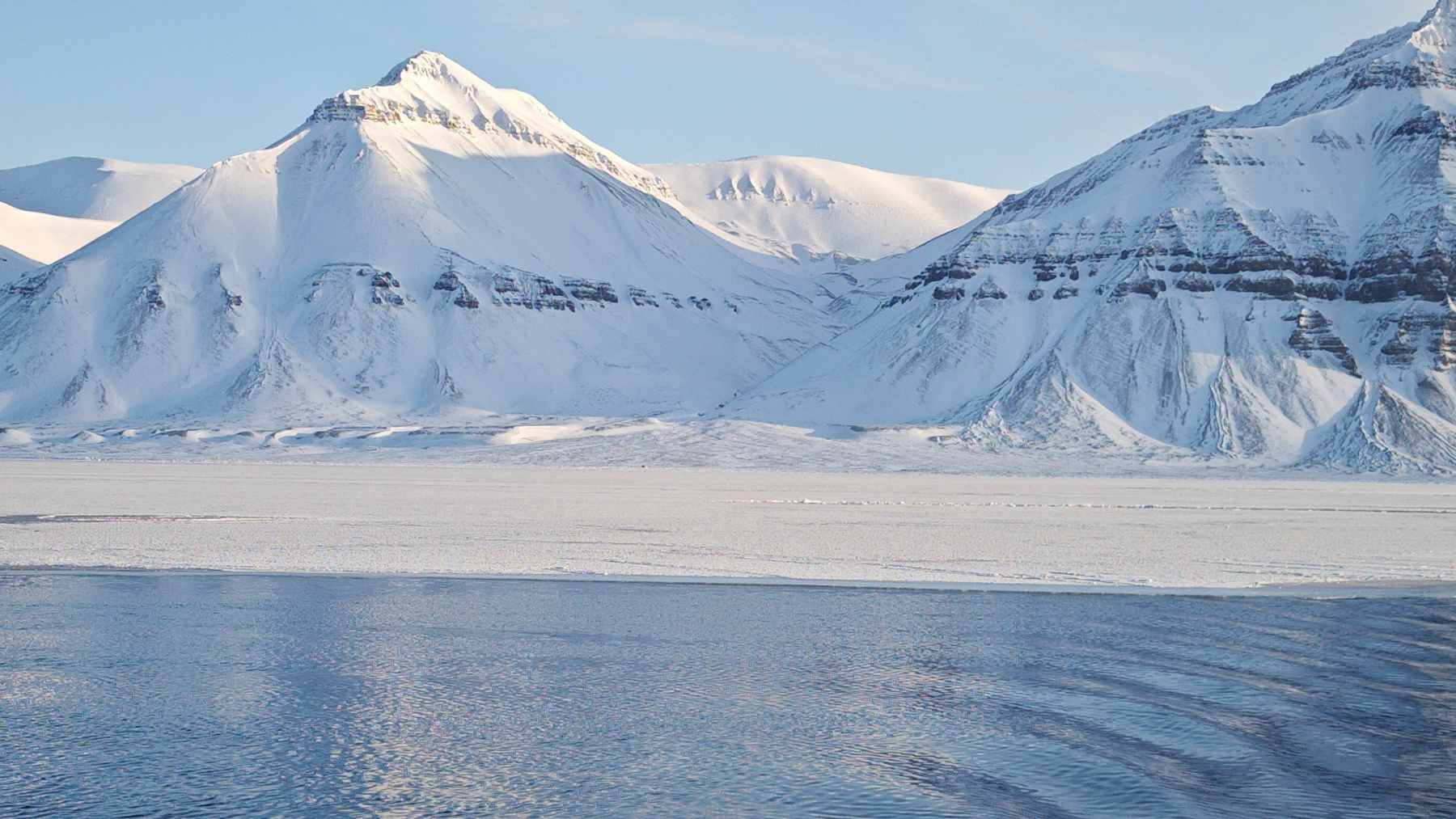
Arctic summer does a decent job of hiding what is coming. There are bright nights, open water, reindeer on the hills. By October, that illusion collapses. Sea ice locks the bays, the sun disappears, and temperatures drop to the kind of cold that makes metal burn your skin.
The eight stranded Englishmen knew two things. First, Spitsbergen’s whaling stations were meant for summer only. Second, an earlier group of nine men who had tried to winter there had already died. If they stayed, they were basically betting against history.
So they improvised. Using the wreckage and brick ovens of an abandoned whaling station at Green Harbor, they built a smaller brick house inside a larger wooden shell, like putting one box inside another for extra insulation.
They carried bricks by hand, dismantling whale oil furnaces and rebuilding them as walls.
To keep the mortar from freezing, they had to keep fires burning while they worked. They scavenged wood from broken barrels and old boats.
They stockpiled venison and blubber. Eventually, storms flipped their little boat and washed away precious supplies, forcing them to start again. Winter was not just coming. It was already knocking at the door.
Hunger, darkness, and the slow war on their minds
By October 10, the sea around them was frozen, the sun was barely brushing the horizon, and the psychological grind was in full swing. Pellham wrote that their heads were “troubled with a thousand imaginations” as they sat cramped in their smoke-blackened shelter.
They rationed hard. One meal a day. Voluntary fasts on several days each week. On fast days, they choked down improvised “dumplings” made from rancid whale fat scraped from old tryworks, the industrial ovens used to render oil from blubber. That is not exactly comfort food, even if you have spent your life in rough ports.
The darkness hit almost as hard as the hunger. Months without real daylight are disorienting even for today’s polar researchers with LED lamps and internet calls home. The eight Englishmen tried to push back the night with small homemade lamps and prayer, but Pellham was honest. None of them truly believed they would live to see England again.
When the rescuers might also eat you
If starvation did not kill them, predators might. As the sun finally crept back in late January, polar bears began to appear around their camp. To the sailors, they were both a threat and a lifeline. “It was much in doubt which should eat the other first, we them, or they us,” Pellham wrote.
They managed to shoot several bears, solving their protein problem in the short term and stacking up meat in a landscape where nothing grows in winter. But they also learned a lesson modern toxicologists could have warned them about.
The liver of a polar bear packs a dangerously high dose of vitamin A and has poisoned many polar explorers over the centuries. After eating bear liver, Pellham and his companions fell violently ill and their skin peeled away.
They were lucky. Hypervitaminosis A (vitamin A poisoning) can be fatal. The men recovered and kept hunting. Over the course of the winter, nearly 40 curious bears came close enough to test the camp’s defenses. The sailors killed seven and scared off the rest.
When one of their two dogs disappeared in March, Pellham dryly noted that the bears had probably evened the score.
Survival as a mix of discipline, luck, and timing
By late winter, their food tally looked grim again. Even with extreme rationing, they calculated they only had about six weeks of supplies left. Physically, they were weakened. Fingers were frostbitten. Muscles ached from short trips outside to fetch snow for drinking water.
And yet, quietly, the balance was shifting. Days were getting longer. Birds, foxes, and reindeer began to reappear. The men could not be sure they were going to make it, but for the first time, survival was not a fantasy. It was a realistic possibility.
What finally saved them was a twist of geopolitics and timing. The Muscovy Company tried to push rival English ports out of “its” Arctic whaling grounds. A few years earlier, Goodlad had literally fired on whalers from Hull to keep them away. In 1631, Hull ships showed up anyway.
Those “illicit” whalers had heard rumors that men had been left behind the previous year. When they sailed into Green Harbor on May 25, they found eight smoke-blackened, half-starved figures stumbling out of a brick hut inside an old station.
The Hull captains took them aboard, fed them, and waited until Goodlad’s fleet returned so the men could be formally handed back.
From forgotten pamphlet to climate-era cautionary tale
Back in England, Pellham turned the whole ordeal into a breathless pamphlet with a title so long it barely fits on a modern screen. In it, he described the nine months and twelve days the men spent in “Green-land” and framed their escape as proof of divine providence.
Pellham later published his account under the title “God’s Power and Providence,” praising what he saw as divine intervention in their escape. Modern historians class his pamphlet as a classic Arctic survival narrative from the early whaling era.
Today, scientists study that same region as a climate hotspot. The wider Arctic has warmed nearly four times faster than the global average in recent decades, with the Svalbard archipelago among the most rapidly changing areas anywhere on the planet.
What was once a place so hostile that eight men barely clung to life for a single winter is now seeing shrinking sea ice, thawing permafrost, and rapid shifts in wildlife habitat.
What this 1630 ordeal still says to us today
So why drag a 17th century survival story into today’s news feed? Partly because it reminds us how quickly the Arctic can turn deadly when planning fails and conditions change. The sailors’ fate hinged on small decisions: underestimating the hunt, misreading the fog, trusting the wrong person’s sense of direction.
In a warmer Arctic, modern communities, scientists, and even tourists face their own version of those choices. Do you assume the ice will hold like it always has? Count on a supply ship that might not be able to push through? Treat extreme weather as a fluke instead of a pattern?
Pellham’s account also shows how survival depended on cooperation. The men had ugly arguments, but they also moved bricks together, shared precious fuel, and enforced rationing rules that nobody liked. At the end of the day, those unglamorous decisions probably mattered as much as any act of courage.
Finally, there is the humility factor. For all their prayers and talk of miracles, the castaways owed their lives to something as mundane as rival whalers ignoring a monopoly and sailing north out of stubbornness and economic self interest.
The Arctic did not bend to their will. It just happened to give them one narrow window, and they squeezed through it.
As the climate continues to reshape the far north, this forgotten episode is less of a romantic adventure and more of a warning label. Extreme cold, food insecurity, and isolation remain part of Arctic life, especially for small communities far from major hubs.
The men of 1630 survived with scavenged bricks, whale blubber, and a few lucky breaks. In an era of thinning sea ice and destabilized weather, relying on improvisation alone would be a dangerous bet.
Long-term planning, careful logistics, and respect for the environment’s limits are no longer optional in the high north. They are the modern equivalent of that double-walled brick hut in the polar night.
The article was published on ExplorersWeb.