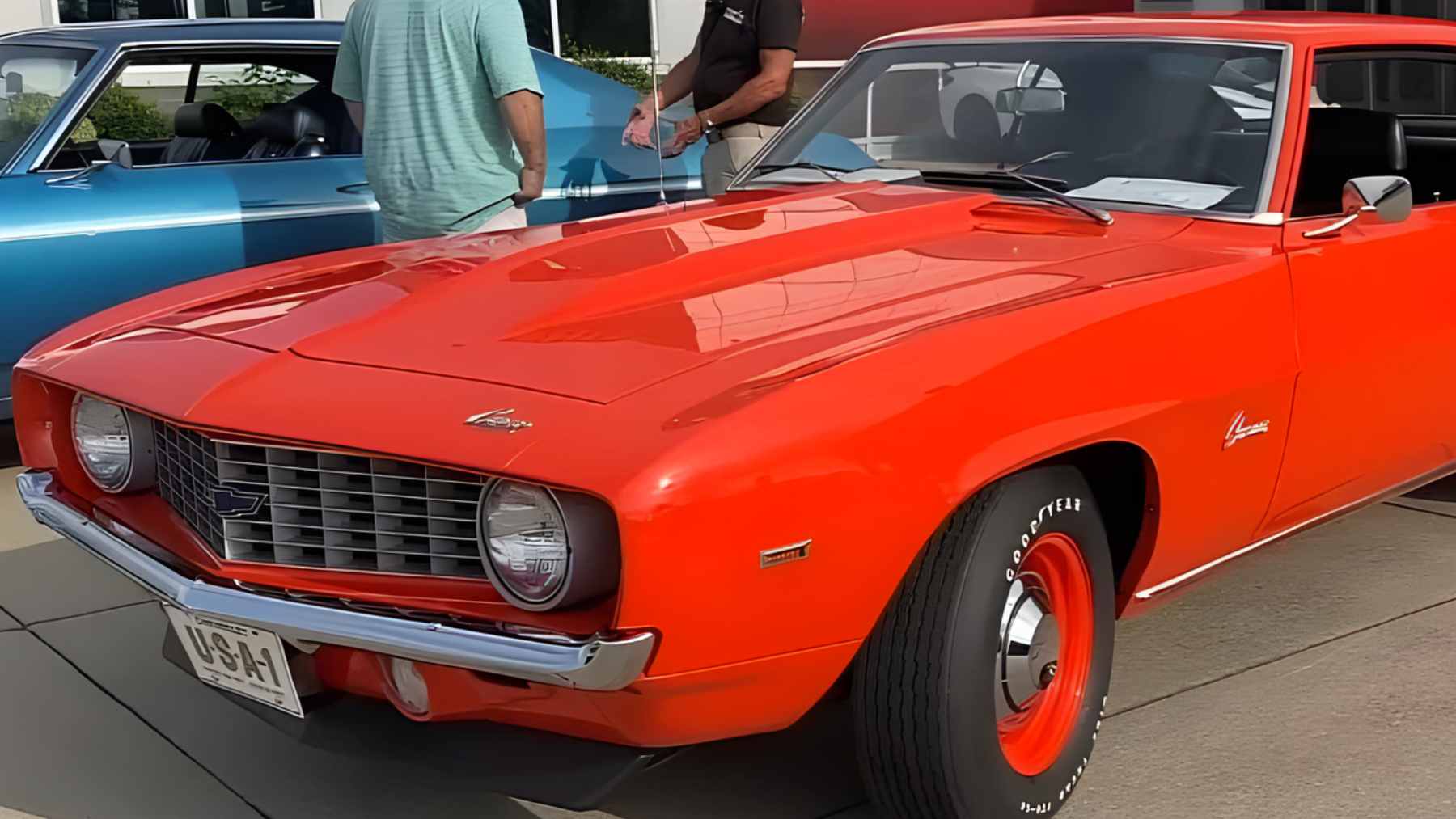
A Vietnam‑era COPO Camaro that slept in a garage for 40 years is now one of the brightest stars in the muscle‑car world, after restorer Verlin Hale turned it into a gold‑winning show car at the Muscle Car and Corvette Nationals.
The Hugger Orange 1969 Chevrolet Camaro was bought new in Ohio, thrashed on drag strips, forgotten, then painstakingly rebuilt to factory specification and scored an almost perfect 992 out of 1000 points on the concours judging sheet.
For a lot of people who grew up around quiet crossovers and fuel‑efficient compacts, that story sounds almost like a movie plot. Yet every piece of it is documented, from old window stickers to modern judging sheets.
From daily driver to decades in the dark
The COPO Camaro started life as a road car ordered by a young buyer from Dayton, Ohio. He wanted a daily driver with serious punch, and he got it. Under the hood sat a 427 cubic inch big‑block rated at about 425 horsepower with 460 pound feet of torque, one of the strongest factory V8s you could get in a pony car at the time.
Then history intervened. As the Vietnam War escalated, the owner left for Vietnam and let the Camaro go. The next driver used the car the way the engine builders probably imagined, making repeated quarter‑mile runs, legal and otherwise.
Years of hard launches took a toll, and by 1981 the Chevy was parked with roughly 24,000 miles showing on the odometer. It stayed there, untouched, until 2021.
Four decades of dust is a long time for any machine. For a low‑production COPO, it turned the car into something close to a time capsule.
What made COPO Camaros so different
In the late 1960s, corporate rules inside General Motors tried to keep midsize and smaller cars from getting engines larger than 400 cubic inches. Dealers who catered to racers saw a way around that rule using the Central Office Production Order system, or COPO, which was originally built for special fleet orders.
High‑performance dealer Don Yenko in Pennsylvania and Illinois dealer Fred Gibb pushed Chevrolet to let them specify a 427 cubic inch L72 engine in otherwise ordinary Camaros.
The result was COPO 9561, a package that quietly dropped a drag‑strip level engine into a relatively plain body. Contemporary records and later research suggest that about 1,015 Camaros received 427 COPO engines for the 1969 model year, the majority with four-speed manual transmissions.
Engines like the L72 were built for high compression and high-octane fuel. At the time that meant gasoline treated with tetraethyl lead, which raised octane but spread a potent neurotoxin into city air and highway exhaust.
Thirteen months of surgery on a Hugger Orange relic
During the Covid years, Hale heard from a friend about an old COPO Camaro sitting in storage. He bought the car and committed more than 13 months and roughly 2,000 hours to a nut‑and‑bolt restoration, taking the car back to the exact configuration it left the factory with, including its vivid Hugger Orange paint.
A previous owner had resprayed it black. Hale stripped that away and returned the body to the original color and trim combination.
A reproduction window sticker helps fill in the picture. The COPO 9561 option, which added the 427 engine, carried a listed cost just under $490. The close ratio M22 four speed added a bit over $320. After special gauges, power steering, and other options, the extras totaled about $1,346 on top of a base price near $2,727.
For a young buyer in the late 1960s, that meant serious money and serious performance in the same monthly payment.
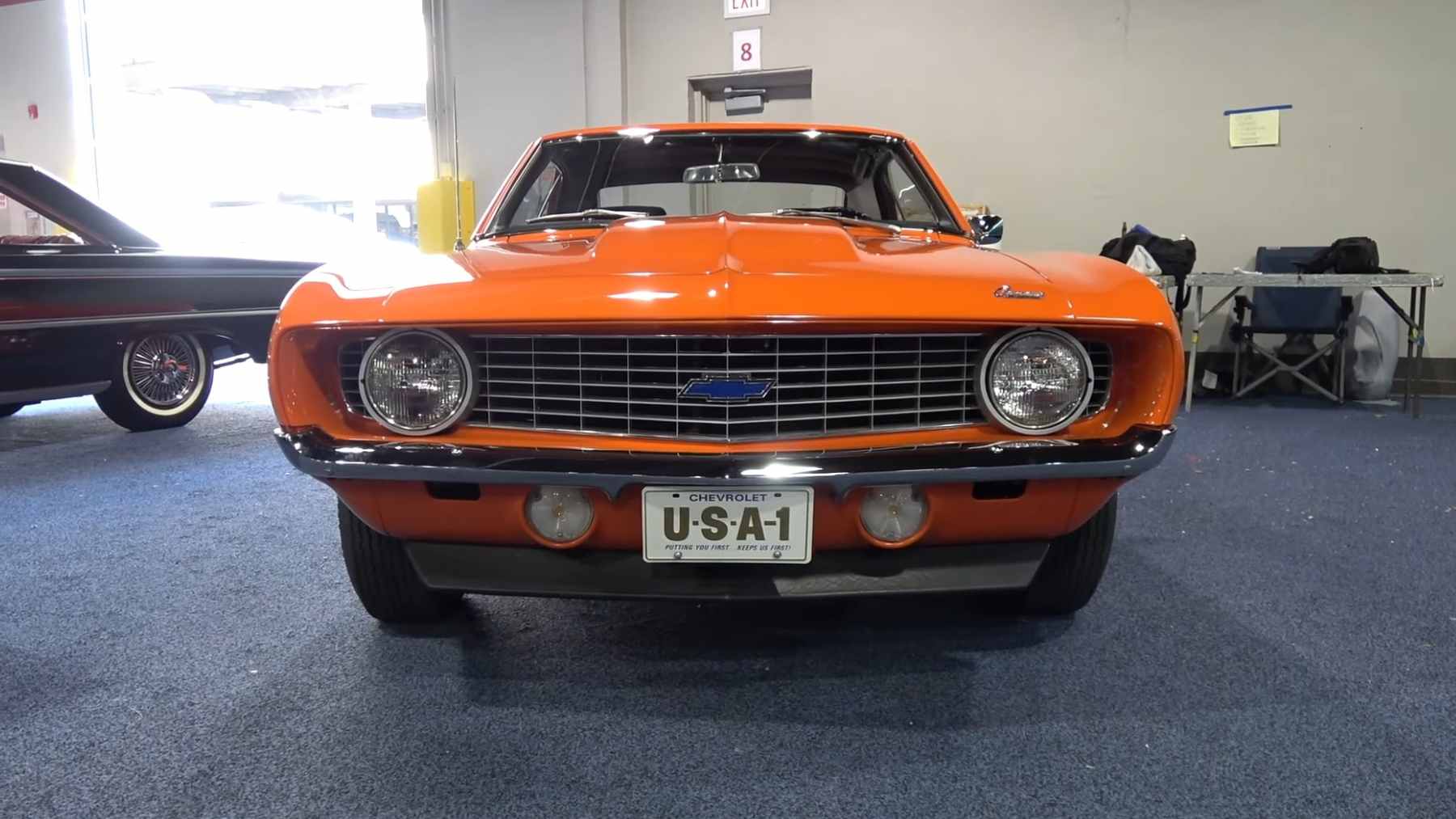
Today, the same spec sheet makes restorers obsess over correct fasteners and ink colors on paper copies. The car hobby has become as much archaeology as it is horsepower.
Gold scores and a changing view of power
Once the restoration was finished in 2024, the car left the garage and went straight into the show circuit. Hale’s short social posts chart its rise, with notes like “Proud to win the NHRA US Nationals HOT ROD trophy” and “Car won Best of Show in Camaro class” at the Bowtie Nationals in Indianapolis.
The highlight came in Chicago at the Muscle Car and Corvette Nationals. The Camaro received a concours score of 992 points out of 1000 and a Gold Concours award. Official show records list Hale and his 1969 Chevrolet Camaro COPO among the gold level winners.
The car returned for Camaro Legends judging in 2025, a sign that even in a sea of rare metal it stands out.
All of this plays out while the world that created cars like this has largely vanished.
The high-octane leaded fuel that once fed big blocks has been banned from road use in the United States since 1996 and phased out for cars worldwide in 2021, after work by scientists such as Clair Patterson and regulators at the United States Environmental Protection Agency and the United Nations Environment Programme showed just how damaging lead was to human health and the wider environment.
What survives is a much smaller number of cars, usually trailered to events, idling indoors just long enough for judges to listen to the camshaft lope. In a way, the COPO now tells two stories at once. One is about clever dealers and a secret order code that created street legal drag machines.
The other is about how far society has moved on from casually spraying toxic particles out of tailpipes in exchange for a little extra speed on Saturday night.
For enthusiasts walking past the orange Camaro on the show floor, those threads all come together. A young driver drafted into war, a car forgotten for decades, a restorer with thousands of patient hours, and a judging sheet with almost no deductions.
At the end of the day, the car is history on four wheels, and its journey mirrors the broader arc of American muscle and environmental awareness.
The official awards list was published on MCACN.