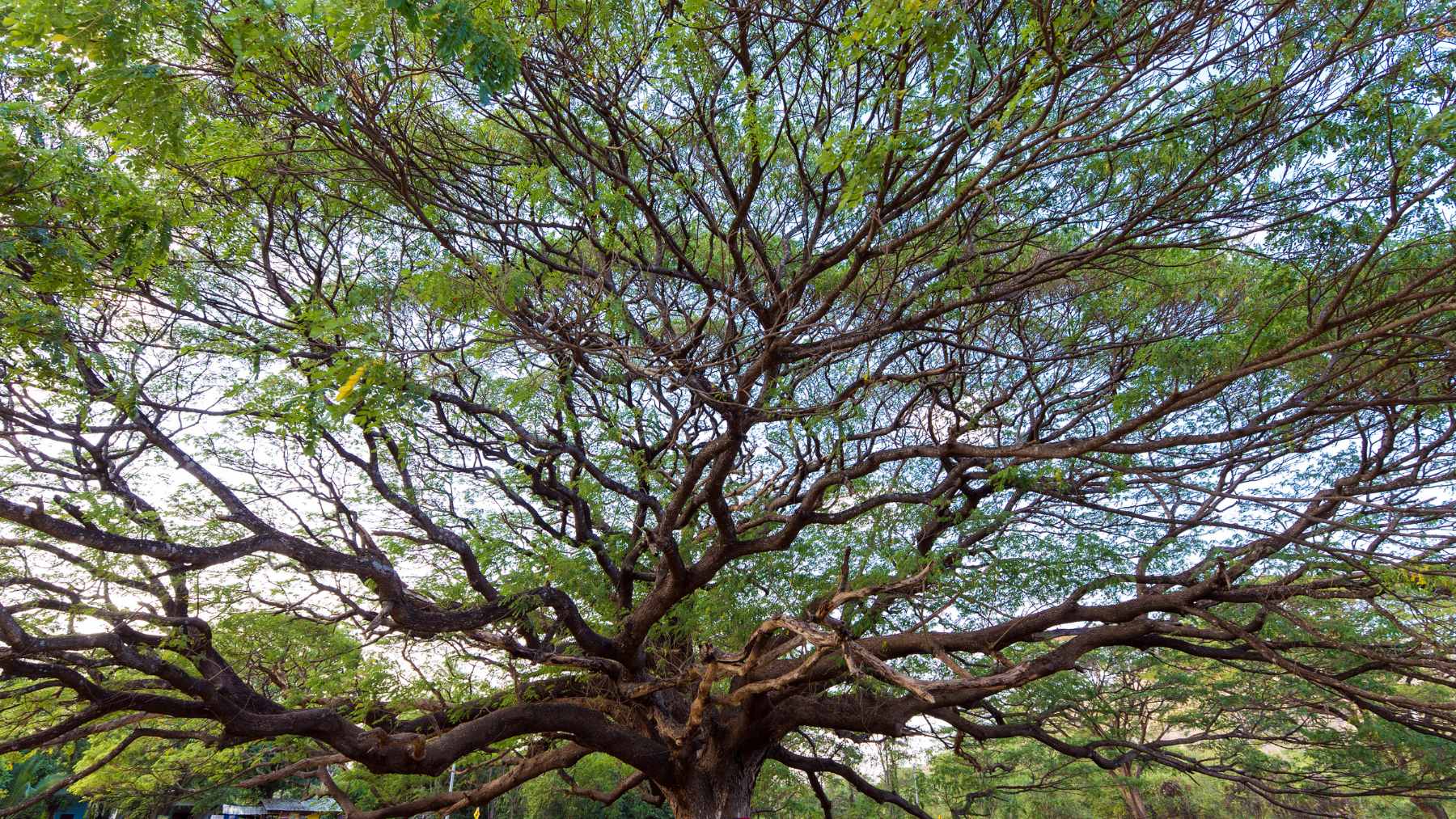
From the ground, it looks like a low forest spreading across streets and yards in a beach town in northeast Brazil. In reality it is a single cashew tree called Cajueiro de Pirangi, growing in Pirangi do Norte near the city of Natal. Its canopy covers about 8,500 square meters, close to the area of two soccer fields.
Recognized by Guinness World Records as the largest cashew tree on the planet since the mid-1990s, the tree has become both a regional landmark and a scientific curiosity. Its twisted branches keep crawling outward while its fruits can reach tens of thousands each season. At the same time, that lush, green roof is slowly pressing against streets, houses, and city plans.
A single tree the size of two soccer fields
According to Guinness World Records, the cashew tree in Pirangi do Norte covers around 8,500 square meters, with branches stretching about 50 meters out from the central trunk. That footprint is roughly equal to 70 ordinary cashew trees planted side by side. Local tourism guide Vive Pipa puts it more simply and says visitors are walking under the shade of an area similar to two full soccer pitches.
The tree stands close to 20 meters high and its canopy from above looks like a green carpet swallowing the surrounding block. Spanish language reports, including Venerables Árboles and Okdiario, point to 1888 as the most likely planting date, which would make the tree roughly 120 to 130 years old.
WorldAtlas notes local stories that credit either a fisherman named Luiz Inacio de Oliveira or a former mayor with planting the original tree, a detail that remains part of regional folklore.
How one cashew tree spread like a small forest
The secret behind this giant is a rare genetic quirk. Instead of reaching straight up, most of its main branches grow sideways until their weight forces them down to the ground. Once they touch the soil, they send out new roots and thicken into what looks like a separate trunk, even though the entire structure is still a single organism.
Over decades, this self cloning process has repeated again and again, turning one tree into a living maze of intertwined limbs. Guides at the site often challenge visitors to find the original trunk hidden among the many secondary stems.
Reports that cite Gps Television Online describe the phenomenon as extremely rare among cashew trees, which makes Cajueiro de Pirangi a kind of botanical exception.
A harvest of up to 80,000 cashew fruits each season
Cajueiro de Pirangi is not just huge, it is also productive. Tourism guide Vive Pipa estimates that in a good year the tree can yield around 80,000 cashew fruits between September and December, roughly 2.5 metric tons of food. WorldAtlas and other sources place the typical harvest in the same range, although they note that the exact output changes from season to season.
For people strolling under the canopy, those numbers translate into clusters of bright yellow and orange cashew apples hanging overhead. The fleshy part that many Brazilians eat fresh or turn into juice is actually the swollen stalk of the flower, while the true fruit is the hard kidney-shaped nut at the tip that must be roasted before eating.
Agricultural researchers describe the cashew apple as a swollen peduncle that grows beside the nut, rich in vitamin C and other nutrients even if it is less famous than the snack in the shell.
Tourist magnet and urban headache at the same time
Because of its size and unusual form, the tree has been turned into a protected park that charges a small entry fee. Visitors walk along raised wooden boardwalks that keep feet away from fragile roots and can climb an observation platform to see the canopy stretching over roofs, streets, and the nearby beach at Pirangi do Norte.
Regional tourism bodies and guides highlight the cashew tree as one of the main attractions around Natal, drawing thousands of visitors every year.
Growth on this scale does not come without problems. As Guinness World Records notes, the tree is already pushing against the fences of the park that surrounds it, and unchecked growth would send branches over one of the main local roads.
Recent coverage in outlets such as Radio Mitre and Okdiario also describes how branches are edging toward neighboring streets and private plots, forcing authorities and residents to debate how much pruning is acceptable for such a unique natural monument.
At the end of the day, Cajueiro de Pirangi is a powerful symbol of how nature can surprise us, even in the middle of a busy coastal town. What looks like a tangled forest from the sidewalk is, to a large extent, one stubborn tree that keeps finding new ways to spread.
The main official description of the tree has been published in Guinness World Records.