In the middle of the Saudi desert, an artificial river almost one hundred kilometers long now winds away from Riyadh. Instead of snowmelt or mountain springs, it starts at a wastewater treatment plant on the edge of the city. The flow is steady and strong enough to reshape the dry landscape around it.
The project shows how a megacity with no natural rivers can turn used water into a new resource. Riyadh residents consume roughly 320 liters per person every day, which adds up to nearly two million cubic meters of wastewater that once posed a disposal problem.
Spanish science outlet Okdiario recently highlighted how channeling that treated water into a single open course has created wetlands, farms, and a surprising oasis for wildlife.
How Riyadh turned sewage into a permanent flow
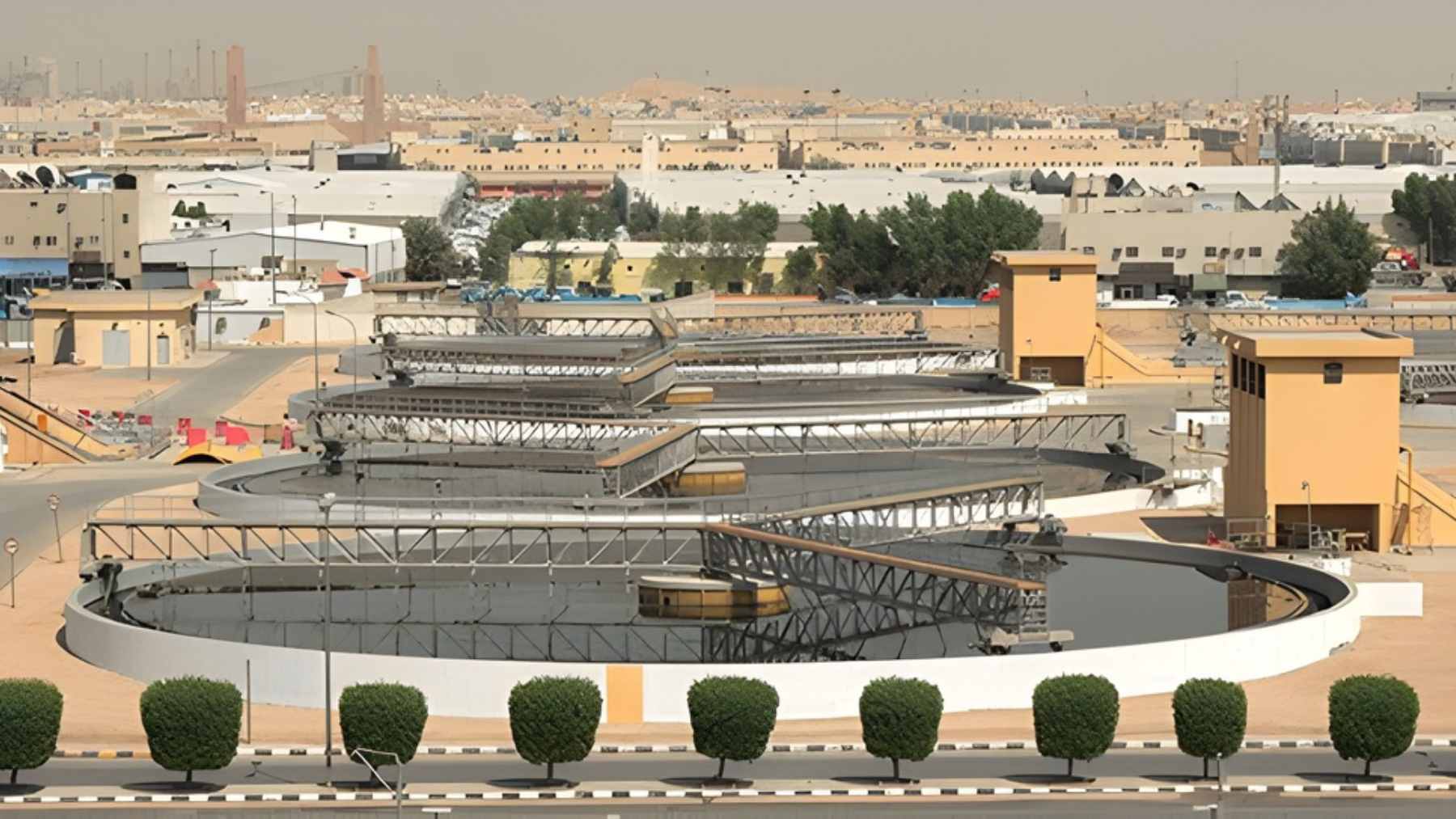
The river begins at the Manfouha wastewater treatment plant on the southern side of Riyadh, a facility that started operating in the early-1980s when the city was far smaller.
At that time the capital had about one million inhabitants so the outflow was modest. As the population climbed into the millions, the volume of treated water rose and the trickle became a continuous stream.
Specialist water engineers writing on the portal Hidrojing estimate that the plant now returns an average of about twenty cubic meters of treated water to the environment every second. With no nearby sea or large lake where this water could be released, authorities chose to guide it into an engineered channel that runs into open desert.
The result is a man made river that carries the city’s cleaned wastewater for around one hundred kilometers through an otherwise dry landscape.
New ecosystems growing along a man-made river
Along this long channel, permanent water has triggered the growth of reeds, grasses, and other plants on its banks. Fish such as catfish and tilapia now live in the water, showing how quickly aquatic life can adapt when given stable conditions. What began as a simple discharge route has turned into a string of wetlands with real ecological value in a place that used to be bare sand.
The river has also become an important stopover for migratory birds that follow routes between Africa, the Middle East, and Eurasia. As the birds travel, they carry seeds that fall into the moist soil and help new plants colonize the shoreline, thickening the green corridor step by step.
Scientists describe this nutrient-fueled process as eutrophication, which usually raises alarms because too many nutrients can choke lakes and rivers, but in this controlled desert channel those nutrients feed a flourishing food web.
From waste stream to water for fields
Beyond the wild plants and animals, the artificial river brings practical benefits for people living near its course. Farmers can tap the flow for irrigation, turning what used to be barren land into small fields and orchards that have a guaranteed supply of water all year. In a region where rain is scarce and groundwater is limited, having a constant, predictable flow can be the difference between bare soil and a harvest.
A recent study led by Ahmed Elfeky at King Saud University, published in the journal Water, examined treated wastewater from plants across Riyadh and found that its quality is generally suitable for irrigation when carefully managed. The team used international water quality indices and still detected slight contamination in some samples, so they called for continued monitoring while stressing that this resource is essential for agriculture and for projects such as the Green Riyadh initiative.
An experiment in desert water management
Riyadh already has experience turning polluted flows into healthier landscapes through the long-running restoration of the Wadi Hanifah valley. In that project, the Arriyadh Development Authority worked with planning firm Moriyama and Teshima and engineering company Buro Happold to clean an urban river, reshape its channel, and use natural bio-remediation processes to improve water quality along about seventy kilometers.
Their work showed that carefully designed channels and wetlands can transform what was once seen as a sewer into a celebrated city park.
The National Water Company now oversees upgrades to the Manfouha treatment complex under a long-term contract with Alkhorayef Water and Power Technologies, bringing the plant’s total treatment capacity to around seven hundred thousand cubic meters per day. Investment on this scale signals that the wastewater river is not a temporary accident but part of Saudi Arabia’s wider push for more sustainable water management.
At the same time, experts warn that any reuse scheme built on wastewater needs strict oversight so that chemicals, salts, or invasive species do not quietly build up in the very ecosystems and farms it has helped create.
The main scientific study on Riyadh’s treated wastewater used in projects like this has been published in the journal Water.