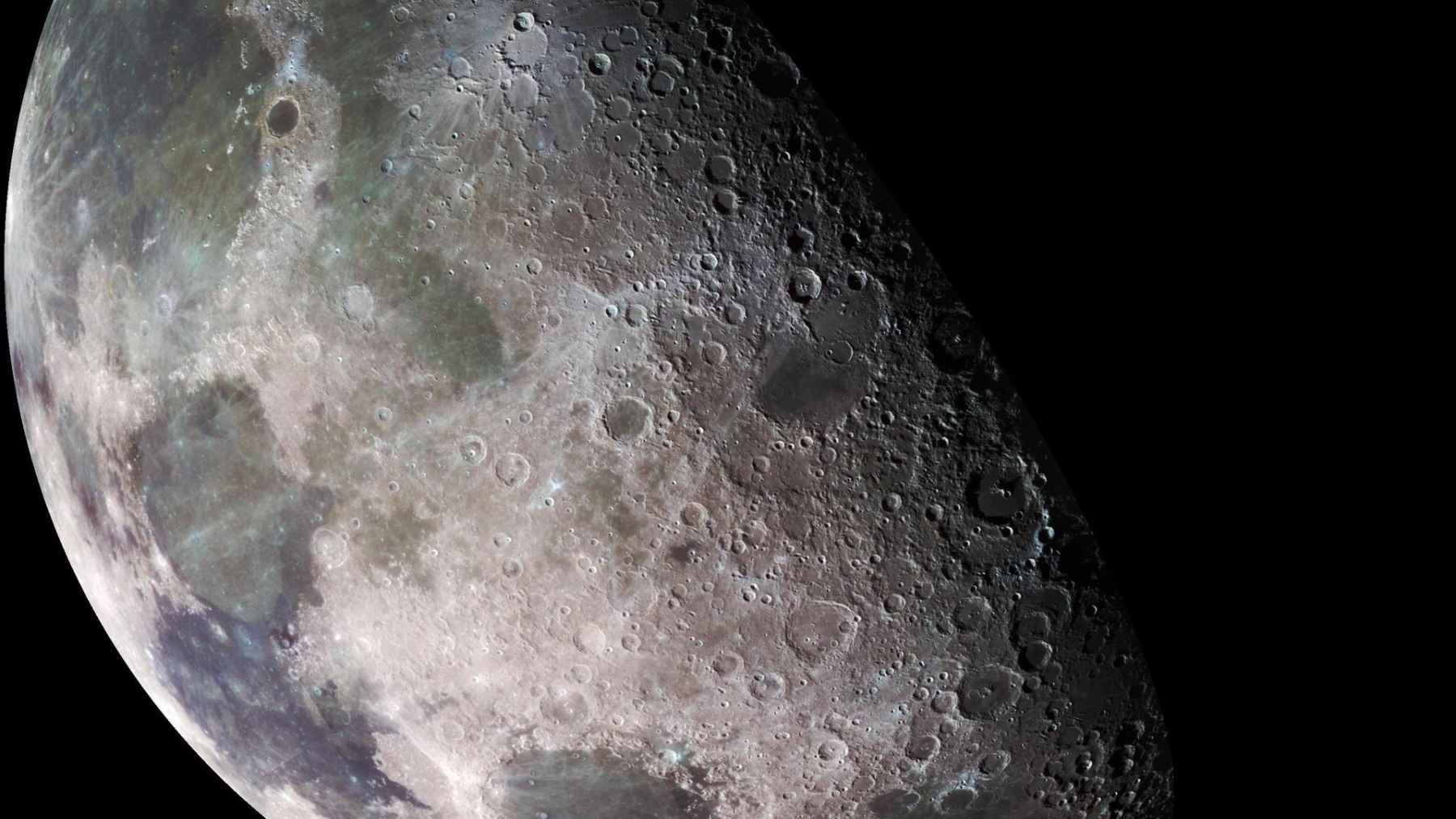
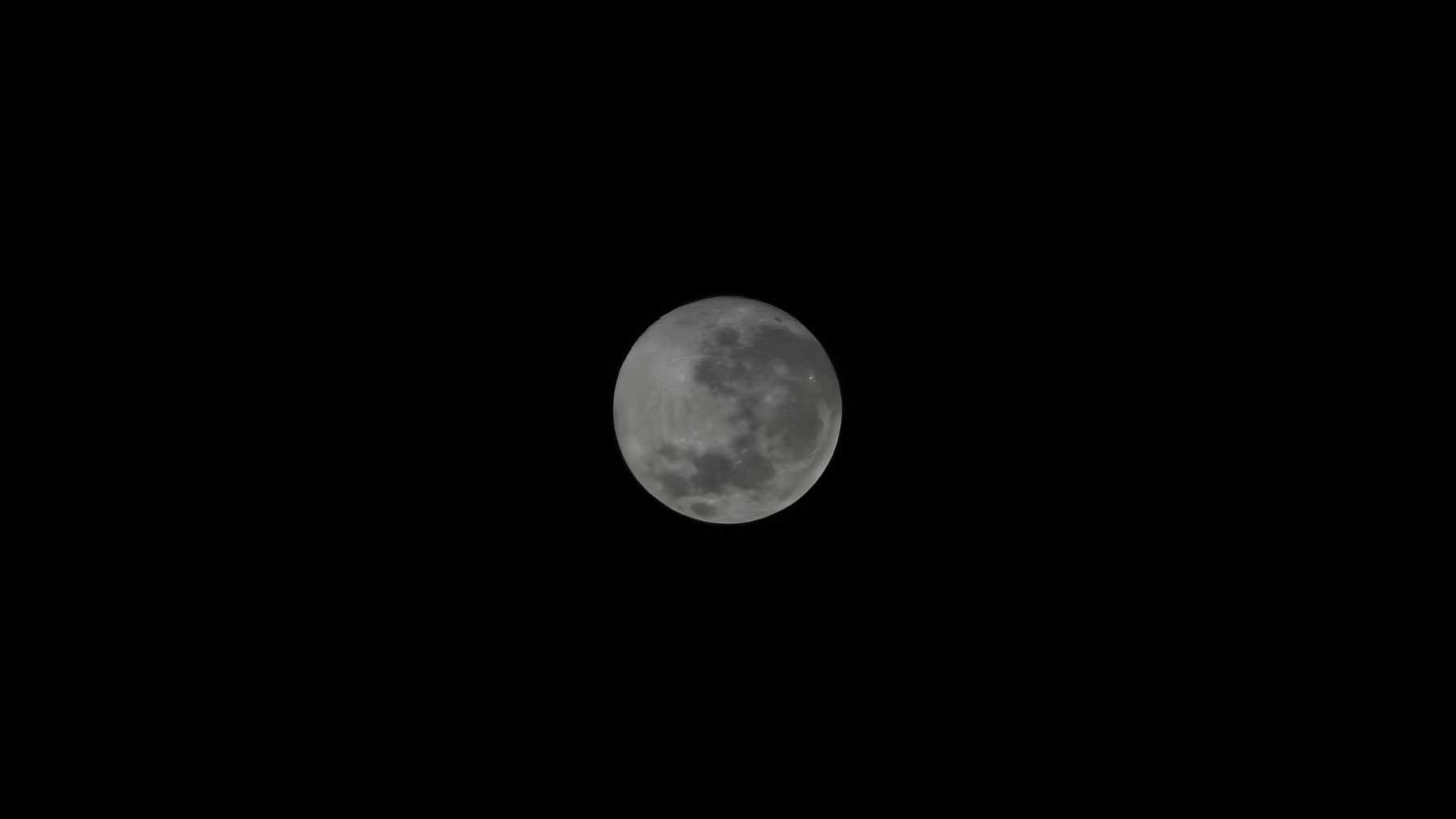
In late 2032, a building-sized asteroid may slam into the Moon. If that happens, the impact would light up the lunar surface, shake the Moon with a global “moonquake,” and spray debris across space that could eventually reach Earth.
The rock in question is asteroid 2024 YR4, a near-Earth object about 60 meters wide, roughly the size of a 15-story building. New observations show it poses no significant danger to our planet, but it still holds around a 4% chance of hitting the Moon on December 22, 2032.
That sounds small, yet for asteroid work it is a serious number. The object even reached level 3 on the Torino impact hazard scale before additional tracking removed the Earth threat and shifted attention to the Moon instead.
A lunar impact that behaves like a nuclear test in space
Researchers at Tsinghua University modeled what would happen if 2024 YR4 actually hits. Their calculations suggest an energy release of about 6.5 megatons of TNT, similar to a medium-yield thermonuclear weapon, and enough to carve a crater roughly one kilometer wide in the lunar surface.
The first moments would be dramatic. The team predicts a bright optical flash that could reach naked eye brightness and last several minutes, followed by hours of infrared “afterglow” as a pool of molten rock around 100 meters across cools from about 2,000 Kelvin to only a few hundred.
In practical terms, that means telescopes from backyard-size instruments to the James Webb Space Telescope could watch a fresh lunar crater form almost in real time. A global magnitude 5 “moonquake” would then rattle the entire Moon, giving seismometers near future missions placed on the surface a rare chance to probe the interior without any artificial explosions.
For scientists, this is close to a dream experiment. For everyone else, it is a reminder that even our quiet Moon still lives in a shooting gallery.
From meteor show to satellite headache
What about the debris? The Tsinghua study estimates that about one hundred million kilograms of material would be blasted fast enough to escape lunar gravity, though only a small fraction would eventually intersect Earth and produce a long-lasting outburst of lunar meteors over the following century.
Separate modeling by Canadian researchers, published in Astrophysical Journal Letters, zooms in on the first days after a possible impact.
Their simulations show that sand-grain-sized fragments could flood near Earth space at rates ten to one thousand times above normal background levels if the impact geometry is just right, and the results are summarized for the public by Canadian researchers themselves.
For people on the ground, that would likely translate into a spectacular meteor shower rather than a disaster. Most of those tiny particles would burn up high in the atmosphere, far above airplanes and city lights. The science team notes there is “no danger to the surface of the Earth” in their scenarios.
Orbit is a different story. The same fragments that make pretty shooting stars can punch holes in satellites. With tens of thousands of spacecraft expected in low-Earth orbit by the early 2030s, a spike in high-speed dust could mean hundreds or even thousands of small impacts on satellite hardware over just a few days.
That is where things start to touch everyday life. Navigation apps, weather forecasts, credit card payments, crop monitoring, even that video call with family all lean heavily on fleets of satellites that most of us never see.
Some analysts, warn that in a worst-case scenario such a debris surge could push orbital traffic toward “Kessler syndrome,” a runaway chain of collisions that fills low-Earth orbit with shrapnel and makes launches far more difficult.
A cosmic lab or a mission to nudge the rock away
None of this is guaranteed. The current impact probability is only a few percent, and it will not stay fixed. 2024 YR4 has slipped behind the Sun from our point of view, which means astronomers cannot track it again until a new close pass in 2028.
Those observations should sharply refine its path and either push the Moon strike risk toward zero or confirm that the chance is still real.
If the risk remains, space agencies will face a tricky choice. Allow a rare natural “experiment” that could revolutionize our understanding of impacts and the lunar interior, or launch a deflection mission to steer the asteroid away and preserve satellite infrastructure that modern economies depend on.
Early discussions of possible deflection concepts are already under way, although nothing has been approved.
For now, experts advise curiosity rather than panic. Earth is safe from this particular rock, and the most likely outcome is still that nothing hits the Moon at all.
Yet the 2024 YR4 story shows how even a relatively small asteroid can force us to think about planetary defense, fragile orbits full of satellites, and the surprising ways a flash on the Moon might ripple into life down here, from your GPS route to your nightly streaming.
The study was published on arXiv.