In 1972, technicians checking uranium shipments for the French nuclear industry noticed something that made no sense. Ore from the mines around Oklo did not have the usual mix of uranium isotopes. It looked as if part of the fuel had already been burned inside a reactor, even though no reactor was anywhere near the site.
Further checks showed that the fissile isotope uranium 235, which normally makes up about 0.72 percent of natural uranium, was significantly depleted in some samples, down to roughly 0.60 percent and even lower in certain pockets.
That missing slice could not be explained by normal geology. It matched what you would expect if a chain reaction had quietly run for a long time and consumed the fuel.
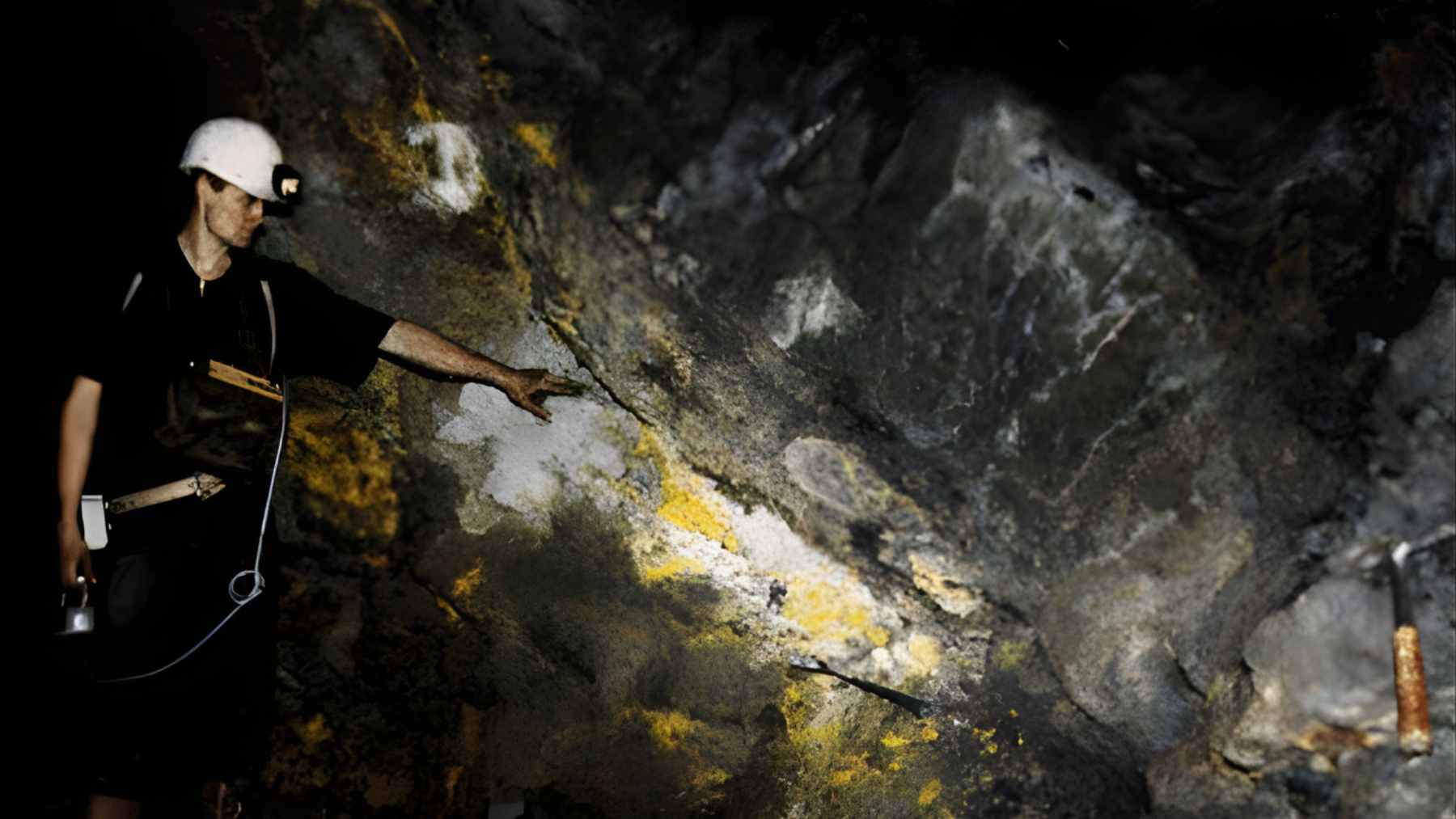
A team from the French Atomic Energy Commission (CEA) and physicist Francis Perrin traced the anomaly back to the mine itself. In the rock around Oklo they found not only depleted uranium, but also unusual patterns of elements like neodymium and ruthenium, classic fingerprints of nuclear fission.
Those clues led to a striking conclusion. Around 1.7 to 2 billion years ago, long before complex life crawled onto land, a set of underground ore bodies had gone critical and sustained natural nuclear chain reactions for hundreds of thousands of years.
Uranium isotopes and the missing U 235 clue
So how did Earth pull off this trick that engineers only rediscovered in the 20th century? Several things lined up at just the right moment in deep time. Two billion years ago, the fraction of uranium 235 in natural uranium was close to 3 percent, because this isotope decays faster than uranium 238 and was therefore more abundant in the distant past.
That level is similar to the fuel enrichment used in many modern power reactors. In the Francevillian basin of what is now Gabon, uranium-rich layers settled into sandstone, forming concentrated pockets of ore. Groundwater then seeped through these rocks and filled pore spaces.
Groundwater moderator and self-regulating nuclear fission cycles
That water mattered. In a reactor, neutrons produced by each fission event need to be slowed so they can trigger more fissions instead of just zipping away. At Oklo, groundwater played the role of moderator, much like the water in many of today’s commercial plants.
When enough water surrounded the ore, the chain reaction started and produced heat. As temperatures rose, the water boiled away, the neutrons lost their moderator, and the reaction faded.
Once the rocks cooled, water flowed back in and the cycle started again. Modeling and gas measurements suggest these pulses may have lasted about half an hour, followed by a couple of hours of quiet.
On average, each reactor zone probably produced less than 100 kilowatts of thermal power. That is similar to a small research reactor or a handful of neighborhood fast chargers humming away in the background. Not huge by modern grid standards, but steady.
Across at least 16 identified zones in the Oklo region and nearby Bangombé, this slow burn continued on and off for hundreds of thousands of years.
New mass spectrometry research on Oklo reactor zones
New work is now peeling back even finer details of how those fossil reactors operated. A team led by geochemist H. Hidaka has revisited Oklo samples with state of the art mass spectrometry, tracking tiny shifts in krypton, xenon, and rare earth elements.
Their analysis shows that most reactor zones were dominated by thermal neutron fission of uranium 235, with more than 90 percent of fission events fitting that pattern. One zone, labeled RZ13, behaved differently and seems to have partially operated like a fast neutron reactor, with a higher role for uranium 238 and a shorter lifetime.
To get those answers, researchers now laser heat individual mineral grains and measure the trapped gases atom by atom. Xenon isotopes in particular record the on-off cycling of the chain reaction, in effect acting like a time stamped logbook left in the rock.
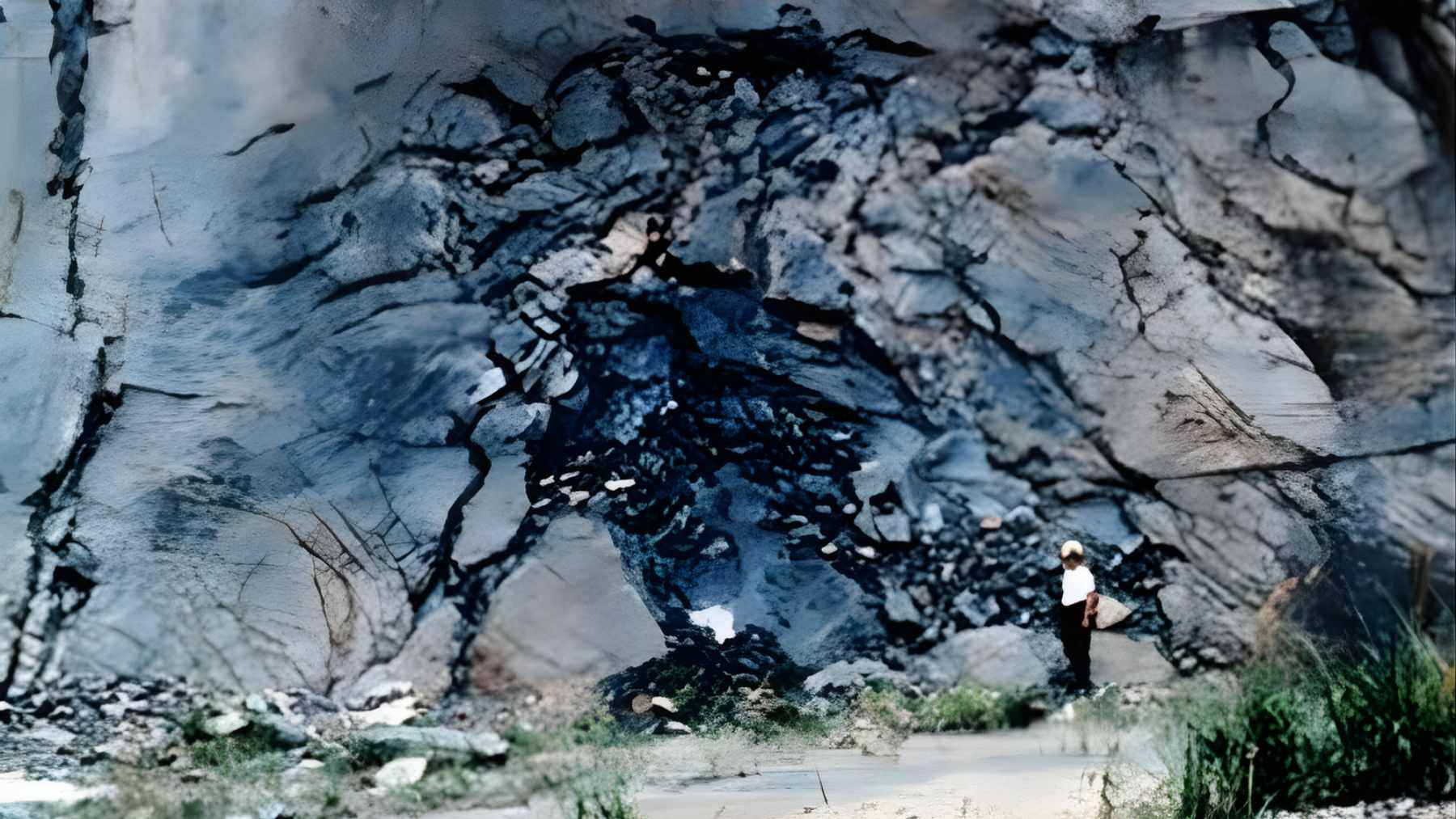
The new study argues that such noble gas and rare earth signatures can map the neutron energy spectrum in each zone and reveal how compositions and water content shaped the ancient cores.
Nuclear waste disposal lessons and physics constants from Oklo
Why does this two billion year old curiosity matter for life in the 21st century, beyond being a good story to share over coffee?
For one thing, Oklo has become a real-world stress test for nuclear waste concepts. Fission products and heavy elements created in the ancient reactors have barely moved more than a few centimeters in the host rock, despite unimaginable spans of time.
That confinement supports the idea that carefully chosen deep geological repositories can keep modern waste isolated far longer than any human structure on the surface. As geologist François Gauthier Lafaye put it, these reactors are “a good natural analogue for nuclear waste disposal”.
Oklo has also been used to test whether the fundamental constants of physics have drifted over cosmic time. Ratios of samarium isotopes that soaked up neutrons during reactor operation let physicists infer the value of the electromagnetic fine structure constant two billion years ago. The result, within tight uncertainties, matches today’s value, suggesting any change has been extremely small.
Finally, the way the Oklo reactors turned themselves on and off as water came and went highlights a built-in safety feature called a negative void coefficient. When water boiled away, reactivity dropped and the system calmed down.
Modern designers look closely at this same behavior when they argue that advanced reactors can self-regulate and avoid runaway scenarios, even as they promise low-carbon electricity and more stable electric bills in a warming world.
At the end of the day, a rocky hillside in central Africa has turned into a natural laboratory for nuclear physics, geology, and even cosmology. Two billion years before humans split the atom, Earth had already done the experiment and filed the results in stone.
The study was published in Radiation Protection and Dosimetry.