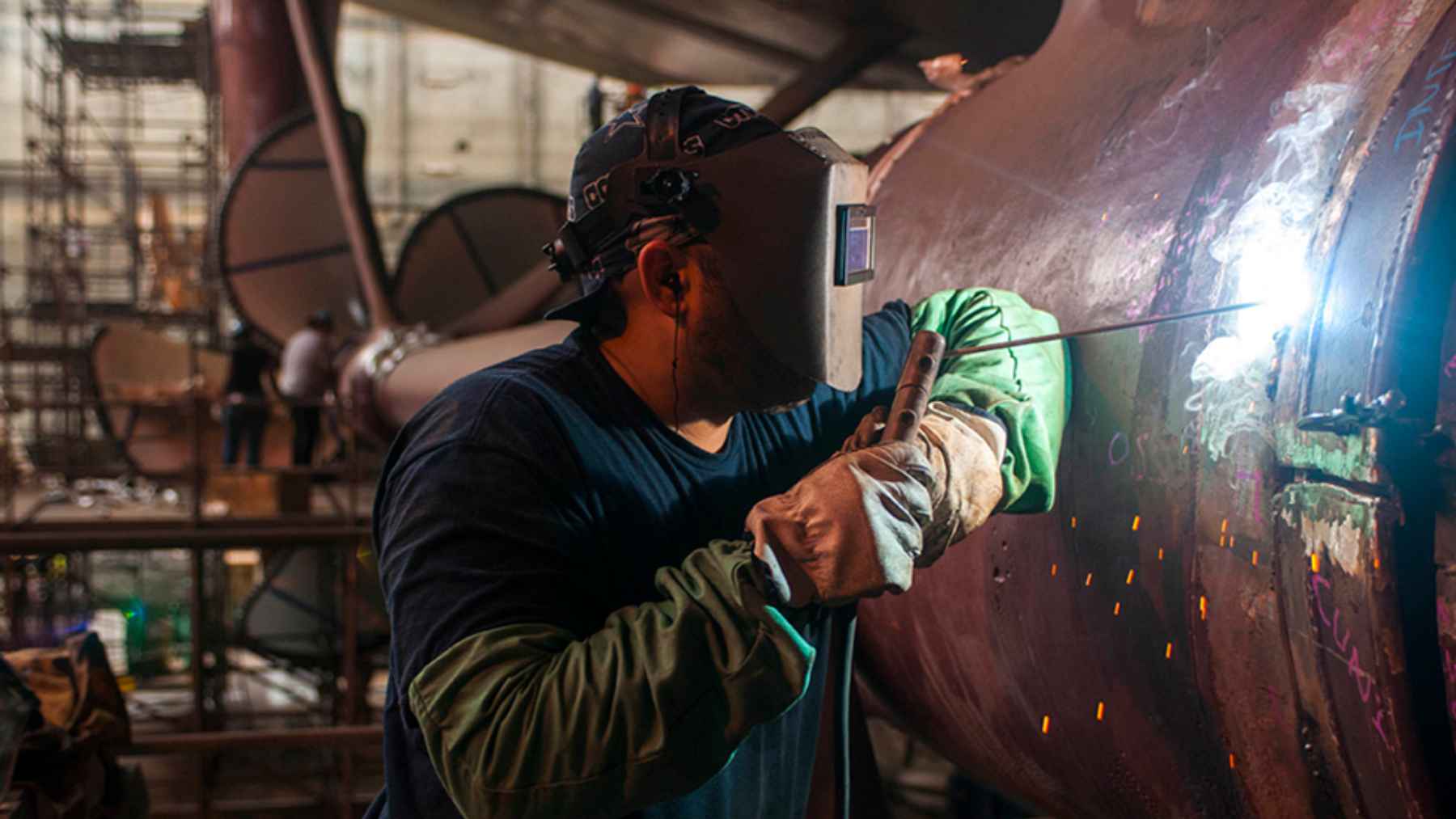
The U.S. Navy is facing a problem that has nothing to do with steel or radar. It is about paychecks. At a recent defense summit in Indiana, Navy Secretary John Phelan warned that it is tough to convince people to spend their days welding inside warships when they can earn roughly the same money working for Buc-ee’s or Amazon in air-conditioned comfort.
His plain language captured a bigger worry for the fleet. If shipyards cannot compete with retail and logistics giants for talent, new warships will keep slipping to the right on the calendar.
So what does that comparison look like in real life? Public job data show Buc ee’s front line workers often earn between $15 and $25 an hour. Amazon has pushed average U.S. fulfillment and transportation pay above $23 an hour after recent raises.
Independent salary estimates suggest that a typical shipyard laborer in the United States earns around $21 or $22 an hour, while the broader ship and boat building industry averages nearly $73,000 a year for full-time employees. On paper, that can look competitive. In practice, the workday is another story.
For a young worker choosing where to apply, the trade off feels simple. Stack boxes in a warehouse or ring up snacks under bright lights, or spend long shifts inside a steel hull surrounded by sparks, noise and fumes.
Both paths might cover the rent and the electric bill. Only one regularly asks people to crawl into cramped spaces with a welding torch and stay there through overtime.
Experts have warned for years that this calculus is draining experience from the yards. The Government Accountability Office has repeatedly found that naval facilities struggle to replace retiring artisans, leaving a larger share of the workforce with only a few years on the job and stretching out training timelines.
A 2025 review of federal wage system workers at depots that include Norfolk Naval Shipyard pointed to ongoing recruitment and retention challenges even with hiring bonuses and other pay flexibilities on the table.
High turnover is already biting into productivity. One industry analysis put annual attrition for the average shipyard worker in the low twenties as a percentage, and closer to thirty percent for some critical trades such as welders and electricians.
With churn that high, supervisors spend more time cycling in and training new hires than building the deep bench of expertise that complex warships require.
Some builders are trying to change course. Huntington Ingalls Industries, the largest U.S. military shipbuilder, has raised pay for experienced workers and expanded partnerships with regional training programs to feed its yards in Virginia and along the Gulf Coast.
Executives say those steps are beginning to improve hiring and retention, although they describe their outlook as cautiously optimistic rather than a solved problem.
Pay is not the only lever, but it is usually the first thing a worker checks before signing on. Analysts and labor advocates point to schedule stability, affordable housing near the yards, on-site training and clearer promotion paths as tools that can make shipyard careers more sustainable.
Robotic welding and other automation tools can take on some of the heaviest, most repetitive tasks, reducing fatigue and injury risk, yet they still rely on skilled people to program and oversee them. At the end of the day, most prospective employees start with a basic question.
If another employer will pay roughly the same for work that is easier on their body and family, why choose the more punishing option?
For the Navy, that personal decision has global consequences. Congressional researchers note that the United States is already competing with a rapidly expanding shipbuilding sector in China, and that industrial gap matters for long-term naval strength.
Closing it will likely require a mix of smarter training, modernized facilities and, above all, pay packets that reflect how demanding shipyard work really is.
The study was published on GAO.gov.