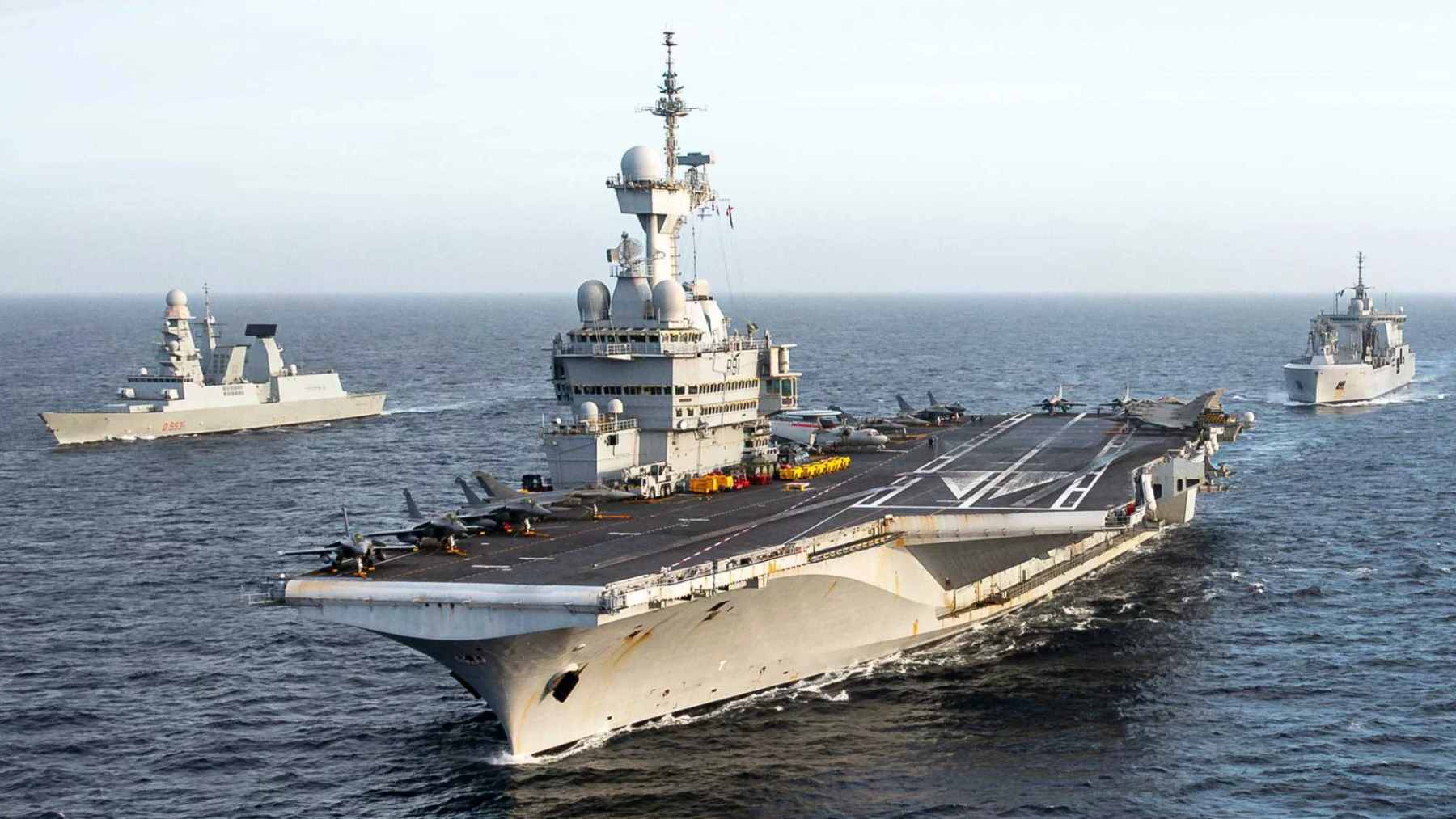
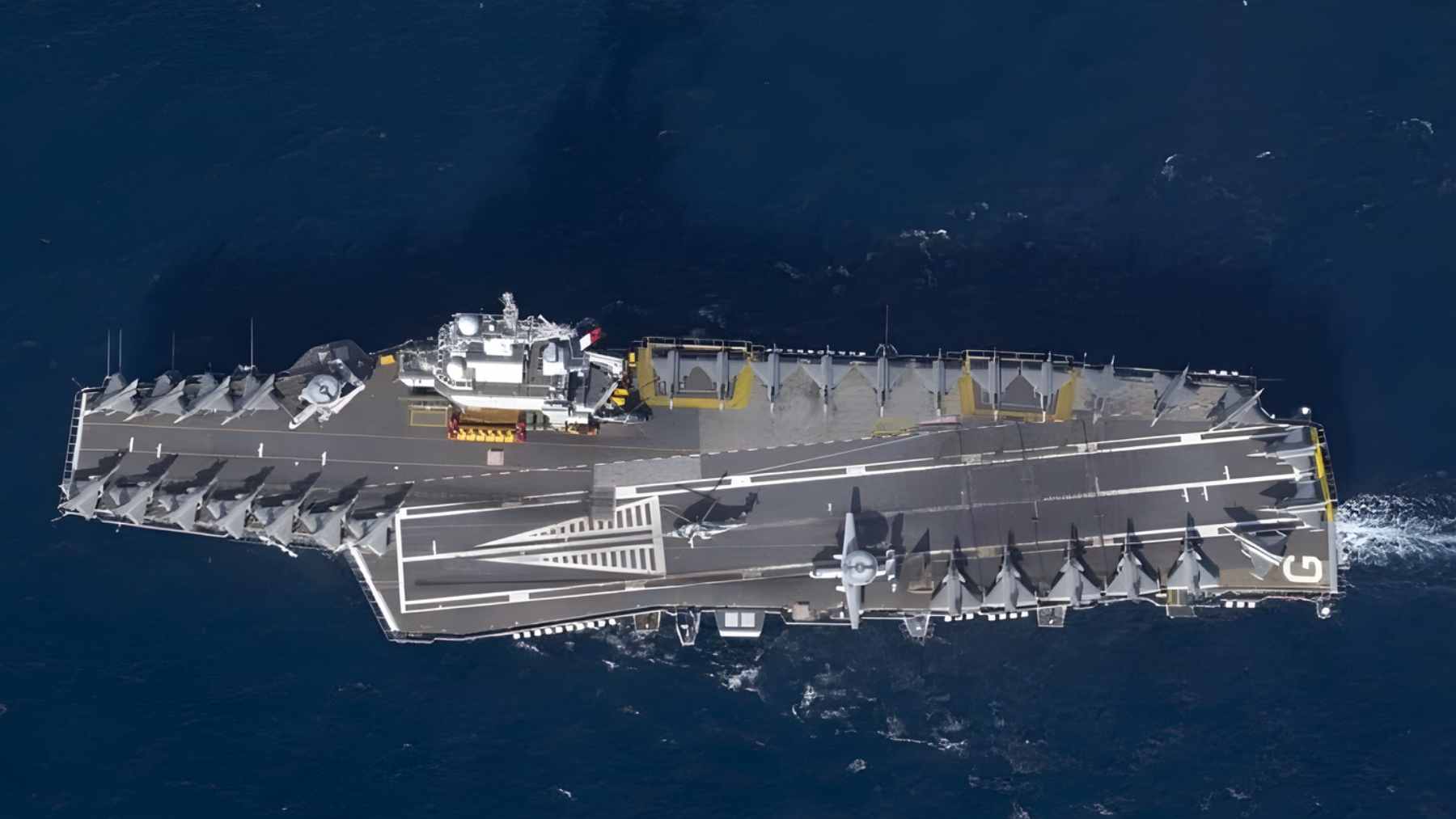
The only nuclear-powered aircraft carrier of France, Charles de Gaulle, has left Toulon and is heading for the North Atlantic with an eye on Arctic waters.
The deployment launches ORION 26, a large multi-domain exercise that will bring together more than ten thousand personnel, around twenty five major warships and well over a hundred aircraft and drones from France and allied nations.
On paper it might sound like just another war game on a crowded calendar. In practice, ORION 26 is a stress test for how Europe would handle a fast-moving crisis that starts with hybrid attacks and escalates into high-intensity combat, in a region that now matters for everything from energy flows to the undersea cables that carry most of the world’s internet traffic.
A carrier group built for high-intensity combat
The strike group around the carrier reflects that focus. Reporting from specialist outlets shows a formation centered on the carrier, an air defense FREMM frigate, a French Horizon class destroyer, the Italian destroyer Andrea Doria and the new replenishment ship Jacques Chevallier, with a nuclear attack submarine likely lurking below the surface.
French naval planners have stacked the escort with air defense ships, something analysts describe as unusual and noteworthy. It hints at a threat picture filled with cruise missiles, long-range aviation and drones, not just submarines.
According to a French Navy statement, the Atlantic where the group will operate is described as “a strategic area of maneuver for the defense of European interests”.
The carrier will embark roughly twenty Rafale M fighters along with support aircraft. At the same time, an amphibious task group built around the helicopter-carrier Mistral and her sister ship Tonnerre is expected to join the wider exercise, adding landing forces and helicopters to the mix.
What ORION 26 actually tests
ORION is a French acronym that roughly describes a large-scale operation meant to produce resilient, interoperable and innovative armed forces prepared for high-intensity combat. According to the French Ministry of Armed Forces, the 2026 edition is built around several goals.
It trains command staff to plan and conduct multi-domain operations during a major crisis on European soil, toughens both active and reserve forces along with their supply chains and forces government ministries to practice national crisis management together.
The exercise also aims to deepen interoperability with allies as the French Air and Space Force seeks certification for NATO’s new Allied Reaction Force and to trial capabilities such as drones, artificial intelligence, electronic warfare, satellite jamming, advanced simulation and even new methods of military weather forecasting.
Planning figures shared in official and specialist sources point to three combined arms brigades on the ground, about 2,150 tactical vehicles, around forty helicopters and roughly 1,200 drones.
At sea, one carrier strike group, two large helicopter carriers and some twenty five major combat ships will be involved, while air and space forces add about fifty aircraft, long-endurance drones, air defense systems and space-based sensors.
Allies on board from Italy to Brazil
ORION 26 is not just a French show. In total, twenty four partner nations are expected to take part in some form, with about 12,500 troops, twenty five naval units and 150 aircraft counted across the different phases of the exercise.
One of the more unusual contributors comes from the southern hemisphere. Brazil is sending sixteen Marines three officers and thirteen non-commissioned officers who will first embark on the amphibious helicopter carrier Mistral for joint drills and tactical rehearsals, then move ashore for ground operations in France.
Their preparation has included dedicated training and even adapting equipment for European winter conditions with temperatures between three and nine degrees Celsius.
For Italy, attaching the destroyer Andrea Doria to the French carrier group doubles as preparation for its own Littoral Expeditionary Group deployment later in the year. That kind of cross training is part of a wider push inside NATO to make sure national formations can plug into one another without weeks of adjustment.
Why the North Atlantic and Arctic matter to civilians too
The French carrier strike group will operate in the North Atlantic with a stated reach toward Arctic areas. On a schoolroom map, that looks like empty blue water.
In reality, it is packed with shipping lanes, the strategic GIUK gap between Greenland, Iceland and the United Kingdom and an underwater web of cables and pipelines that carry most international data and a significant share of energy flows.
NATO has already created a dedicated Critical Undersea Infrastructure Network, and Arctic leaders have warned about growing risks of hybrid attacks on the limited number of cables that connect remote regions to the rest of the world.
Greenland and the Faroe Islands, for example, rely on only a handful of lines, which makes them vulnerable to damage or sabotage.
Seen from that angle, a carrier and amphibious group cruising through cold, rough seas is not just about dramatic photos of jets taking off. It is also a rehearsal for protecting shipping and seabed infrastructure that keep card payments, video calls and even streaming shows running quietly in the background of daily life.
Dress rehearsal for an uncomfortable future
The ORION scenario imagines a fictional democracy called Arnland under pressure from an expansionist neighbor named Mercure that starts with militias, cyber attacks and disinformation and then moves to open invasion. France leads a coalition to defend Arnland and restore the balance.
The names are invented, but the pattern reflects lessons drawn from recent conflicts and from earlier Orion exercises in 2023.
For the most part, the public will only see a headline about a carrier heading north and maybe a short clip of Rafale fighters in the snow. Underneath that surface, ORION 26 is about something more sober.
At the end of the day, what France is trying to do is prove that it can lead a complex coalition, fight in several domains at once and still keep fuel, ammunition, data links and spare parts flowing when communications are jammed and infrastructure is under attack.
Whether the exercise fully delivers on that ambition will be judged later in classified debriefs. What is already clear is that French planners are tying their readiness to the security of the North Atlantic and the Arctic, regions that quietly shape everything from energy prices to the stability of the global internet.
The official statement was published on defense.gouv.fr.