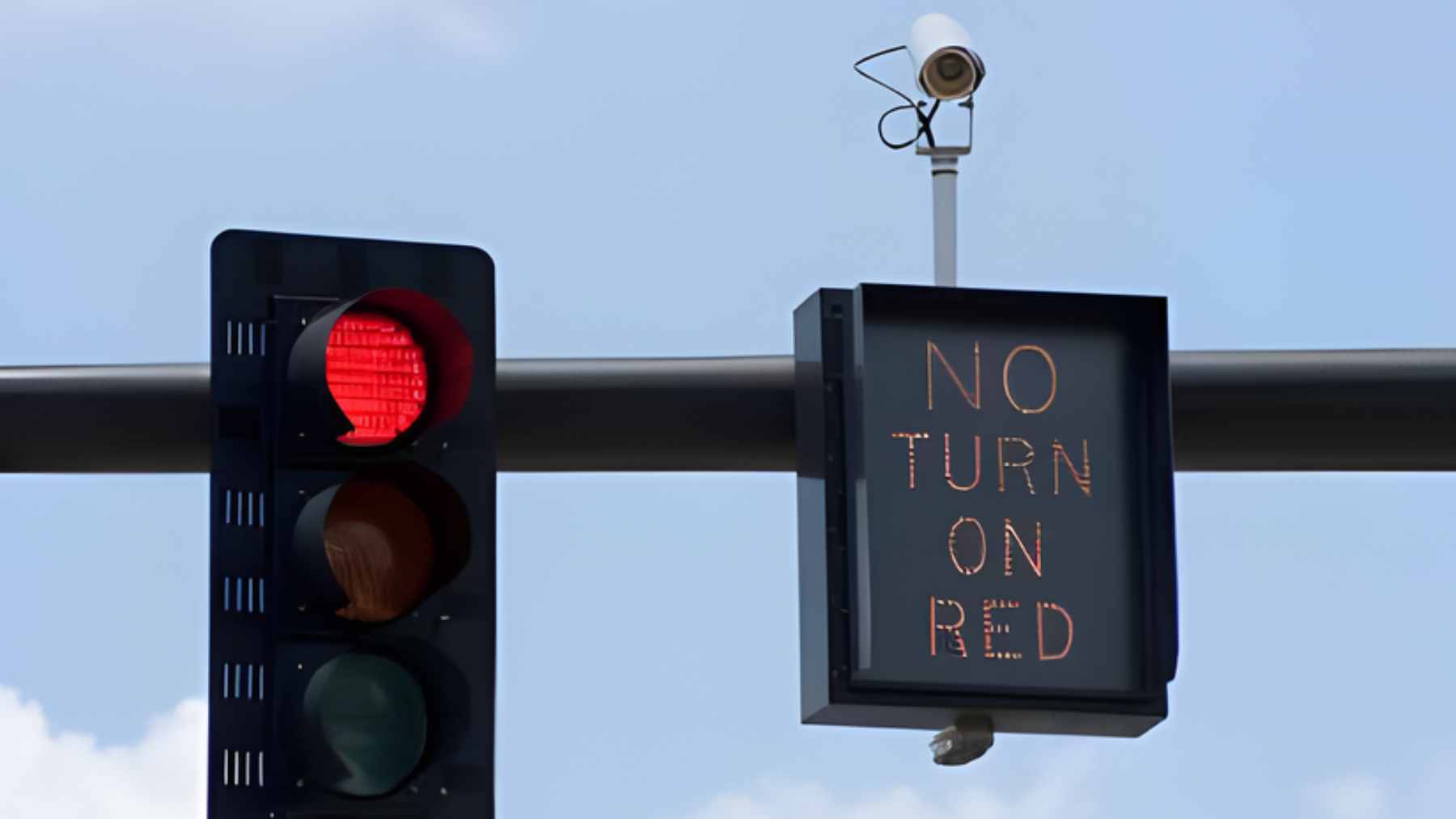
California’s new red light camera law is meant to save lives, but it is also creating a very practical question at kitchen tables across the state. When that envelope arrives with a grainy photo of your car in the intersection, should you really rush to pay it, or hit pause first?
Traffic deaths from running red lights are not abstract statistics for lawmakers in California. Nationally, crashes involving red light running killed 1,109 people in 2021 and injured an estimated 127,000 others, according to data compiled from Insurance Institute for Highway Safety research.
In 2022, the toll rose to 1,149 deaths and more than 107,000 injuries. About half of those killed were not the driver who ran the light, but people in other vehicles, on bikes, or on foot.
Those numbers are one big reason supporters of red light cameras point to studies showing that automated enforcement in large cities cut fatal red light running crashes by about one fifth and reduced all fatal crashes at signalized intersections by roughly one seventh. For safety advocates, that is not a small effect.
It is the difference between a normal commute and a call to emergency services.
How the safer streets act changes camera tickets
Into this landscape comes Senate Bill 720, known as the Safer Streets Act. The law, which took effect in January 2026, lets cities and counties opt into a new automated traffic enforcement program that focuses on red light violations recorded by cameras.
Under the new framework, tickets generated by participating camera systems are treated as civil penalties, not criminal offenses. They no longer add points to a driving record or trigger a license suspension on their own, something several legal summaries for drivers have emphasized. The fine schedule is stepwise.
A first violation within a three year window carries a $100 penalty. A second during that period rises to $200, a third to $350, and a fourth or more to $500. Late fees are capped and additional administrative surcharges are restricted.
The law also spells out privacy and equity rules. Cameras are supposed to focus on the rear plate, not the driver’s face. Placement must be justified with crash data and spread across neighborhoods, rather than clustered only in low-income communities. Cities must publish an impact report and run a warning period before tickets start.
At the end of the day, the picture lawmakers paint is simple. Cameras watch high risk intersections, fines are lower and more predictable, and extra revenue is meant to be recycled into bike lanes, crosswalks, and other traffic calming projects.
Why some experts say tickets still lack bite
So why are some experts telling drivers to think twice before paying a red light camera ticket?
Part of the answer lies in how the older camera programs have worked and how courts handle unpaid citations. Jay Beeber, a policy director with the National Motorists Association, told multiple outlets that for traditional camera tickets, California courts have limited tools if a driver simply never responds.
In his words, unpaid citations often end up with a collection agency that has little real leverage and cannot report the debt to major credit bureaus.
That credit reporting detail traces back to a 2016 settlement where the three largest credit bureaus agreed with attorneys general from 31 states to stop including many government fines, including traffic tickets, in consumer credit files.
In practice, that means an ignored camera ticket may lead to stern letters, but for most people it will not tank a credit score.
There are also questions about the evidence itself. Companies such as Ticket Snipers and GetDismissed built their business on challenging automated citations.
As Ticket Snipers founder Jorian Goes explained to CBS News California, these tickets rely entirely on machines and contractor staff, with no sworn officer watching the violation as it happens. Sensors drift out of calibration. A bright flash does not always mean a legal violation.
For drivers, that can make a camera ticket feel less like a traditional stop and more like a highly automated process that is hard to question, even when something is off.
The risks of simply ignoring a ticket
None of this means throwing every ticket in the trash is risk free. The Los Angeles Superior Court confirmed that when someone fails to appear or take action by the deadline printed on a citation, the case is sent to a collections vendor.
Court officials and legal analysts also note that in some jurisdictions outside Los Angeles County, unpaid traffic debts can be referred to the State Franchise Tax Board, which may try to recover the money through tax refunds or other state channels.
The new Safer Streets program adds another wrinkle. Because the camera tickets are civil, cities that opt in have a clearer administrative path to pursue unpaid fines, with hearings and appeals that look more like parking ticket disputes than criminal court.
What that means in everyday terms is that ignoring a notice may be less painful than dealing with a police stop, but it is not the same as making the problem disappear.
Traffic safety advocates, including groups like Streets Are For Everyone, argue that if the cameras are placed fairly and fines stay modest, the program can both deter the kind of dangerous red light running that kills people and avoid the crushing $500 tickets that once landed in many mailboxes.
What drivers should keep in mind
For most Californians, the real decision is practical. A $100 first offense with no point on the license might feel like the cost of a mistake, especially if you know you rolled through that stale yellow while thinking about dinner. For others, especially low-income households, even a reduced fine can compete with rent or the grocery bill.
Experts on both sides tend to agree on a few basics. Running red lights is genuinely dangerous. Automated enforcement, used carefully, can reduce serious crashes. At the same time, the system is technical and sometimes flawed, and the state’s enforcement tools for unpaid camera tickets are more limited than many drivers assume.
This article cannot replace legal advice, and anyone facing a citation should check local court rules or consult a qualified attorney before deciding whether to pay, contest, or ignore a notice.
The official statement was published by the California Department of Motor Vehicles.