For decades, the trip between Rio de Janeiro and São Paulo has meant six hours of trucks and brake lights on the Dutra highway or a quick but often crowded hop by plane. Brazil now wants a third option.
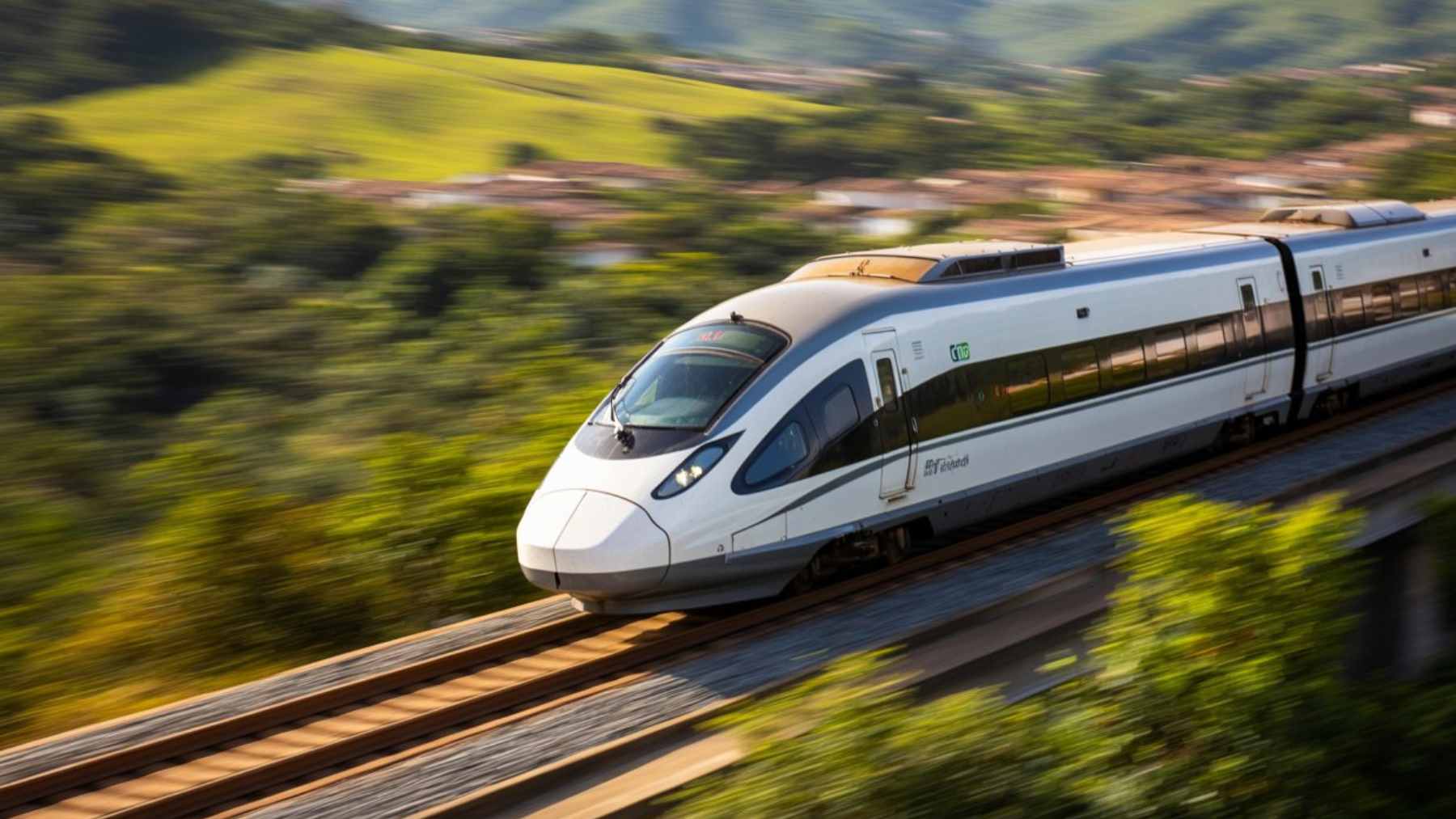
A high speed train known as TAV is being planned that would reach up to 350 kilometers per hour, link the two megacities and extend toward Campinas over a corridor of a little more than 500 kilometers.
If the project reaches the finish line, the Rio to São Paulo run would drop to about one hour and forty five minutes and the full stretch to Campinas would take around two hours.
Today that same Rio to São Paulo trip usually takes five or six hours by car and about one hour by air, not counting airport lines and delays. At the end of the day, the idea is to turn one of South America’s most congested corridors into something closer to a fast urban commute.
A new spine for Brazil’s busiest corridor
Studies by Brazil’s Ministry of Transport have long envisioned a high speed railway between the three cities with a design speed of 350 kilometers per hour and a line length near 510 kilometers. More recent plans presented to regulators focus first on the core Rio to São Paulo stretch of roughly 417 kilometers, with the possibility of extensions toward Campinas based on demand and financing.
The route would thread through industrial and university hubs such as São José dos Campos and Volta Redonda, turning the line into a moving bridge between factories, labs and ports.
How the project is being set up
The line is not a classic state megawork. In 2023, Brazil’s land transport regulator granted Agência Nacional de Transportes Terrestres (ANTT) authorization for private operator TAV Brasil to build and run the Rio to São Paulo high speed railway under a ninety-nine-year contract.
Estimates in the press and in legal briefings place the investment between ten and twenty billion US dollars or around sixty billion reais, with Brazil’s development bank Banco Nacional de Desenvolvimento Econômico e Social (BNDES) acting mainly as financial adviser rather than main funder.
Earlier statements from TAV Brasil executives pointed to construction starting around 2027 and passenger service in 2032. Newer reporting inside Brazil notes that the company now talks about work beginning in 2028 while still keeping 2032 as the target year for the first passengers.
For everyday travelers, that means any relief from highway congestion or crowded domestic flights will arrive, at best, in the next decade.
Climate benefits and what riders might feel
Supporters frame the project as a climate and quality-of-life upgrade. High speed rail generally emits far less carbon per passenger than short-haul flights, especially when powered with cleaner electricity.
On the Madrid to Barcelona corridor in Spain, for example, high speed trains now carry more than eighty percent of travelers and avoid roughly one hundred eighty thousand tons of carbon dioxide in a single year compared with equivalent air trips.
Translate that to Brazil and the stakes become easier to picture. Fewer cars on the Dutra highway could mean less time idling in traffic jams, fewer diesel fumes hanging over roadside towns and perhaps one less short flight on your monthly credit card bill.
A comfortable train seat with reliable Wi-Fi might slowly replace the scramble for a window seat on a crowded shuttle flight.
Big promises and stubborn hurdles
Experts in Brazil keep reminding politicians and investors that this story has been told before. The bullet train idea has circulated since the late 2000s and not a single kilometer of true high speed track has been laid so far. The current plan faces familiar hurdles.
Environmental licensing for the Rio to São Paulo segment is still in progress at federal environment agency Instituto Brasileiro do Meio Ambiente e dos Recursos Naturais Renováveis (Ibama) and a full environmental impact study is being prepared, a step that must be completed before major works can start.
Economists also question whether the line can pay for itself without some form of public support, especially in a country with little prior experience building and maintaining very high speed rail. At the end of the day, the project will have to convince both investors and passengers that it is more than a prestige symbol.
For now, the TAV remains a promise on paper and a set of maps on government websites. If the funding, permits and engineering all line up, residents of Brazil’s two biggest cities could one day trade six hours of road noise for a quiet coffee on a fast train that covers the distance before a movie ends.
The official statement was published by Ibama.