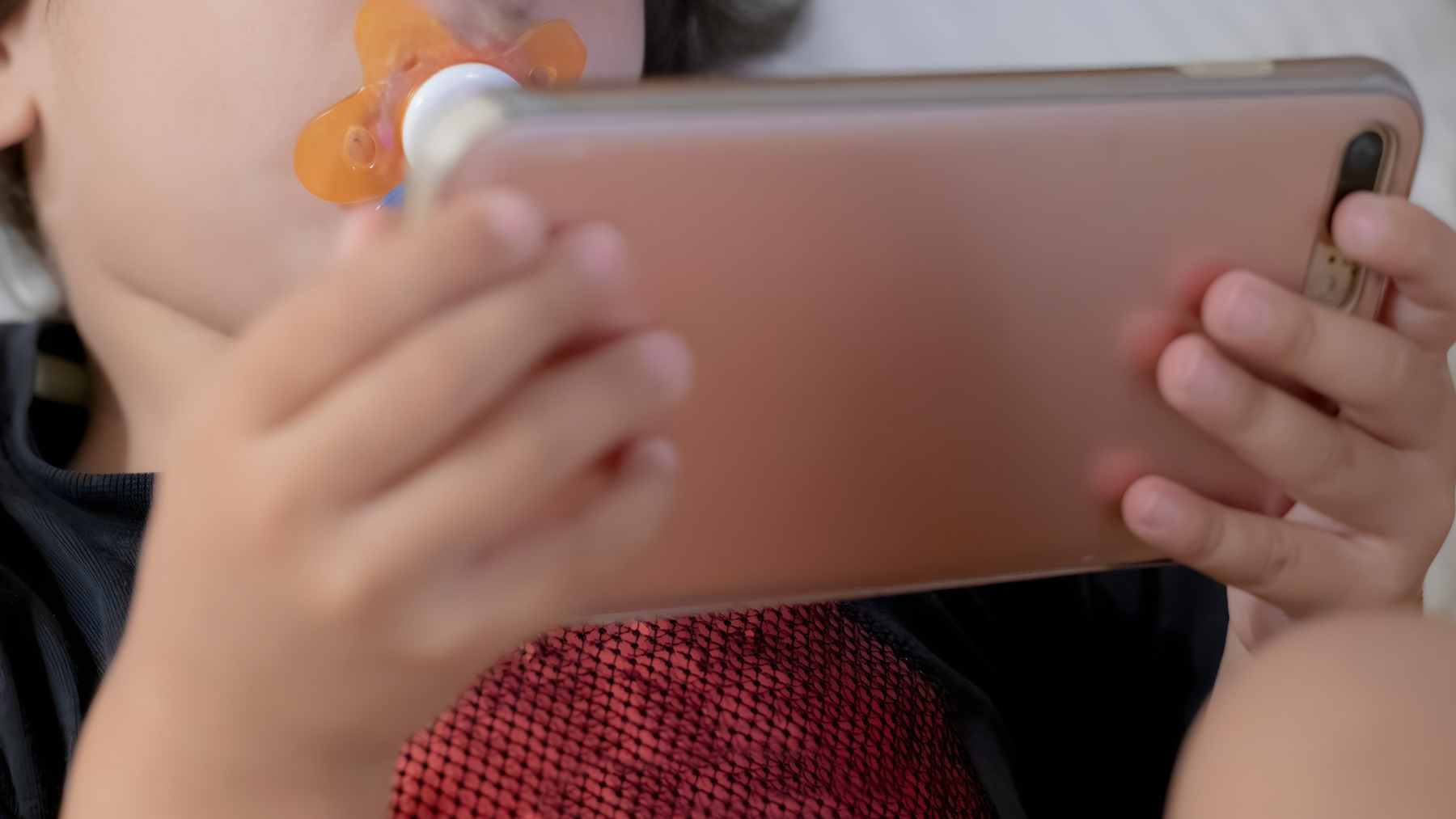
Handing a restless baby a phone during a long commute or a noisy restaurant can feel like a lifesaver. A long-term brain study from Singapore now suggests that when screens show up before age two, the trade off may be slower thinking and higher anxiety years later.
Researchers from A*STAR Institute for Human Development and Potential and National University of Singapore followed 168 children from the GUSTO birth cohort for more than a decade.
They recorded how much screen time babies had in their first two years of life, then used MRI scans at ages four and a half, six, and seven and a half to watch how their brains wired up over time. Later, the same kids took decision making tests at about eight and a half and completed anxiety questionnaires at thirteen.
Brain development changes linked to early screens
The pattern that emerged was striking. Babies who spent more time in front of screens had brain networks for vision and cognitive control that matured faster than usual.
The study team describes this as a kind of premature specialization in which circuits that help us focus and process visual information sharpen early but do not build the broad, efficient connections needed for flexible thinking.
That speed up looked helpful on the surface yet it came with a cost. By elementary school, children with these altered networks took longer to make choices in lab tasks that measure decision speed. For every extra hour of daily screen use in infancy, decision making at eight and a half was about one quarter slower on average.
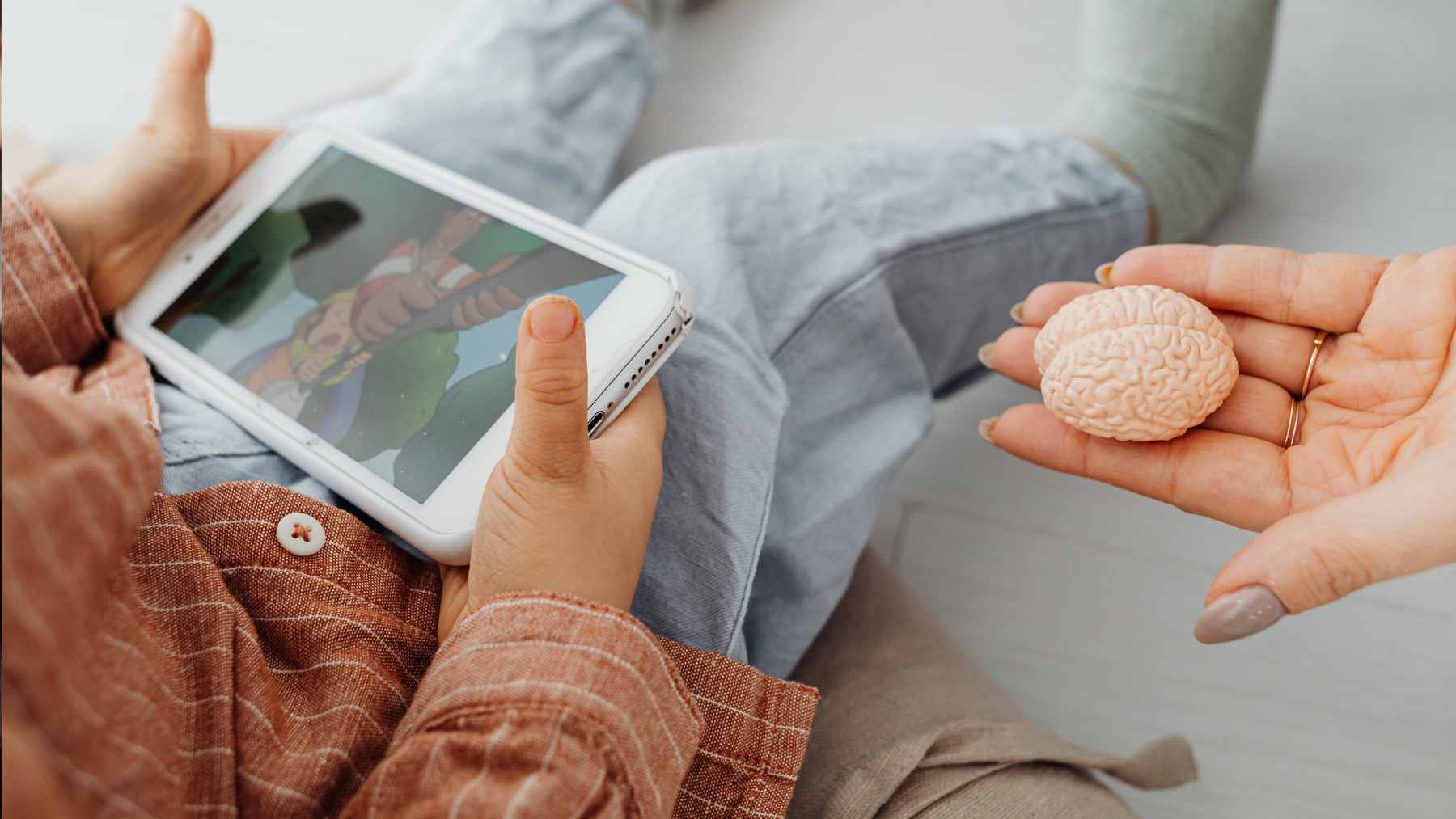
Those slower thinkers were also more likely to report anxiety symptoms in early adolescence, hinting at a chain that runs from babyhood habits to teenage mental health.
Why the first two years may be a sensitive window
One detail will matter to parents who already have preschoolers glued to cartoons. Screen use measured at ages three and four did not show the same brain effects. The sensitive window in this research was the first two years of life when the brain is wiring at high speed and experiences carry extra weight.
Scientists are careful to note that this is observational work. The study cannot prove that screens alone cause anxiety. Factors such as family stress or housing conditions may also play a role, although the researchers did adjust for several social and economic variables and still saw the link.
At the end of the day, the message is less about blame and more about how powerful early environments can be.
There is also a bit of good news. In an earlier paper in the journal Psychological Medicine using the same Singapore cohort, the team found that frequent shared reading at age three softened the association between infant screen time and altered brain networks tied to emotional regulation. In families that read together often, the disruptive brain pattern was much weaker.
Pediatric screen time guidelines for toddlers
For everyday life, that points to a practical mix. Pediatric groups such as the American Academy of Pediatrics already advise avoiding routine screen time for children under eighteen months except for video chats and keeping it limited and shared for toddlers.
This new research backs up those guidelines and adds a biological explanation for why the first years matter so much.
So what can parents actually do between spilled juice and bedtime meltdowns? Whenever possible, keep phones and tablets out of the crib and stroller for the under two set, save them for rare situations, and try to swap a quick video for a board book, a silly song, or a round of peekaboo. Those simple, face-to-face moments are the kinds of rich experiences the infant brain seems built to learn from.
The full study was published in eBioMedicine,