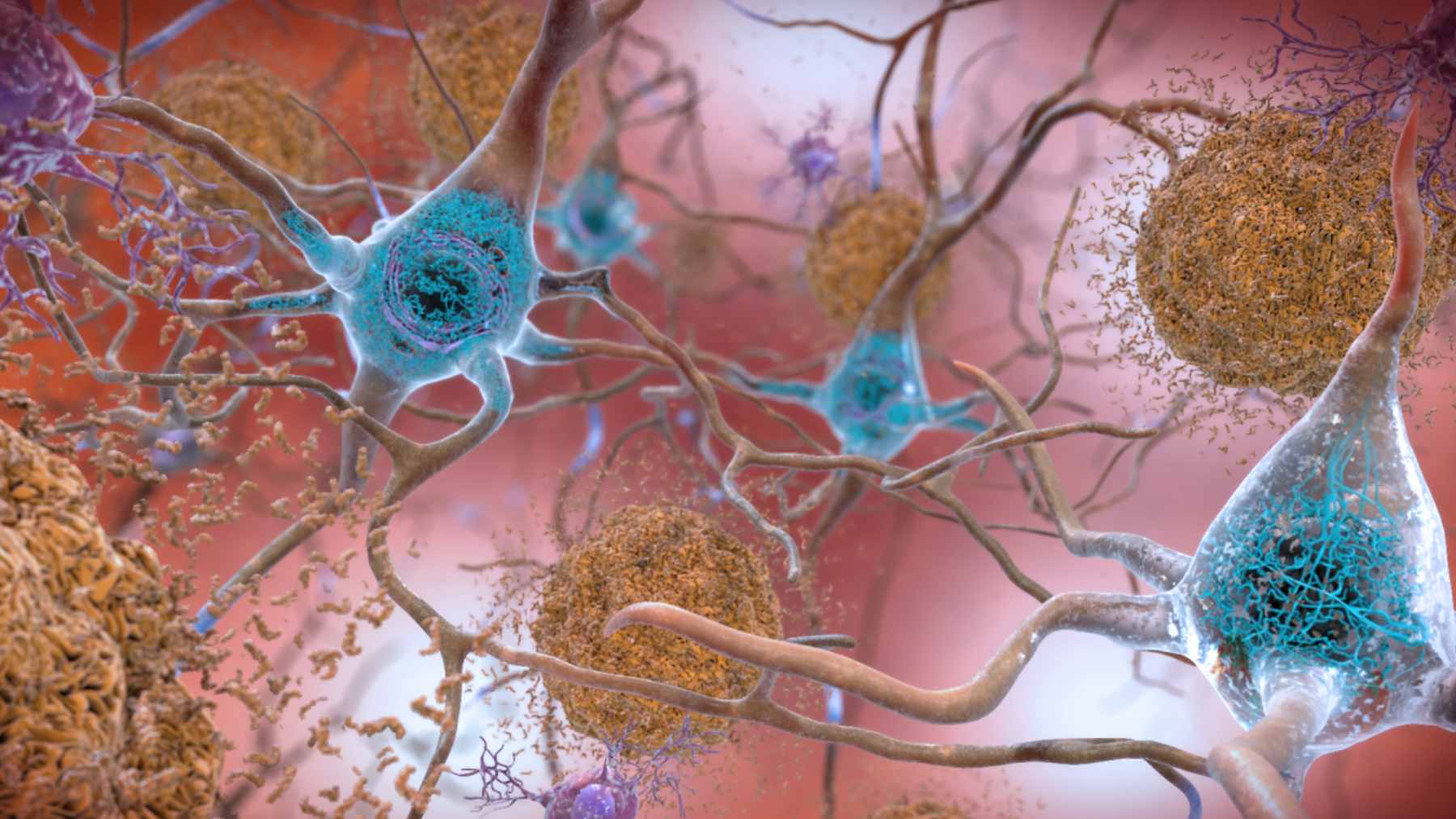
A new study suggests the brain may have more built-in defenses against Alzheimer’s than scientists once thought. By turning up a single protein called Sox9 in support cells known as astrocytes, researchers at Baylor College of Medicine were able to help mouse brains clear existing amyloid plaques and protect memory in models of Alzheimer’s disease.
For families watching a loved one slowly lose words, dates, and faces, that kind of result sounds almost too hopeful. There is a big catch though. So far, all of this has only happened in mice inside a lab.
Why scientists are looking beyond neurons
Alzheimer’s disease affects more than 7 million Americans and is rising fast as the population ages. Worldwide, at least 55 million people are living with Alzheimer’s or other dementias. Most current treatments try to protect neurons or reduce the formation of new amyloid deposits.
Those approaches have delivered modest benefits at best and often come with serious side effects.
Astrocytes sit slightly offstage in this story. These star-shaped cells help keep brain circuits running, clear waste, regulate blood flow, and support memory storage. The Baylor team asked a simple question that turns the usual script on its head. What if you empower these support cells to take a more active role in fighting the disease?
Turning Sox9 up and down in symptomatic mice
The researchers focused on Sox9, a transcription factor that controls whole networks of genes inside astrocytes as the brain ages. In their experiments, mice already had Alzheimer’s-like symptoms along with visible amyloid plaques.
That point matters. Many earlier studies tested potential treatments before any damage had appeared, which is not how real patients usually arrive in the clinic.
Using genetic tools, the team either boosted Sox9 in astrocytes or dialed it down. They then followed the animals for about six months, tracking how well they recognized familiar objects and locations and checking how much plaque remained in different brain regions.
The pattern was clear. When Sox9 levels were reduced, plaques piled up faster, astrocytes looked structurally simpler, and the cells removed less amyloid from their surroundings. When Sox9 was increased, astrocytes became more active cleaners, plaque burden dropped, and the mice did better on memory tests.
Senior author Benjamin Deneen compared the effect to giving astrocytes a powerful vacuum. In his words, raising Sox9 expression pushed these cells to “ingest more amyloid plaques, clearing them from the brain like a vacuum cleaner.”
How the cleanup system works
Digging deeper, the group showed that Sox9 controls a phagocytic receptor called MEGF10 on astrocytes. This receptor acts like a molecular hand that grabs and engulfs amyloid clumps. When Sox9 levels rise, MEGF10 activity also increases, which appears to be enough to improve cognitive performance in the mouse models.
In practical terms, the study hints at a different way to think about Alzheimer’s treatment. Instead of only trying to block the appearance of new plaques from the outside, future therapies might boost the brain’s internal sanitation crew and let astrocytes do more of the heavy lifting. For people worrying about their own risk while paying the monthly electric bill or caring for older parents, that kind of inside help sounds especially appealing.
What this means for patients today
For the most part, experts urge caution. Mouse models capture only pieces of a very complex human disease. Many promising ideas have helped rodents, only to fail in clinical trials. The Sox9 work also relied on genetic manipulation inside the brain, something far from routine in human medicine.
Even so, the findings give researchers a new target and a new cell type to explore. If scientists can find drugs, gene therapies, or other tools that safely nudge Sox9 and related pathways in human astrocytes, they might someday combine those treatments with existing amyloid-lowering drugs or lifestyle measures like physical activity to slow decline.
The team also notes that they still need to understand how Sox9 behaves in the human brain over time and whether the same cleanup process shows up in people who already have Alzheimer’s. Those answers will require years of additional work along with careful safety testing.
For now, the study offers something that is in short supply in the Alzheimer’s field. A glimpse of the brain trying to protect itself from within.
The study was published in Nature Neuroscience.