For years, European officials have worried about what would happen if China turned off the tap on rare earth metals. Today, the country processes roughly 90 percent of the world’s rare earth elements, while the European Union still relies on Chinese-centered supply chains for the metals that go into electric vehicles, wind turbines, and high-tech electronics.
Now a fresh resource update from the Per Geijer deposit near Kiruna in northern Sweden suggests Europe may have a stronger hand than it realized.
Per Geijer deposit size and LKAB rare earth estimate
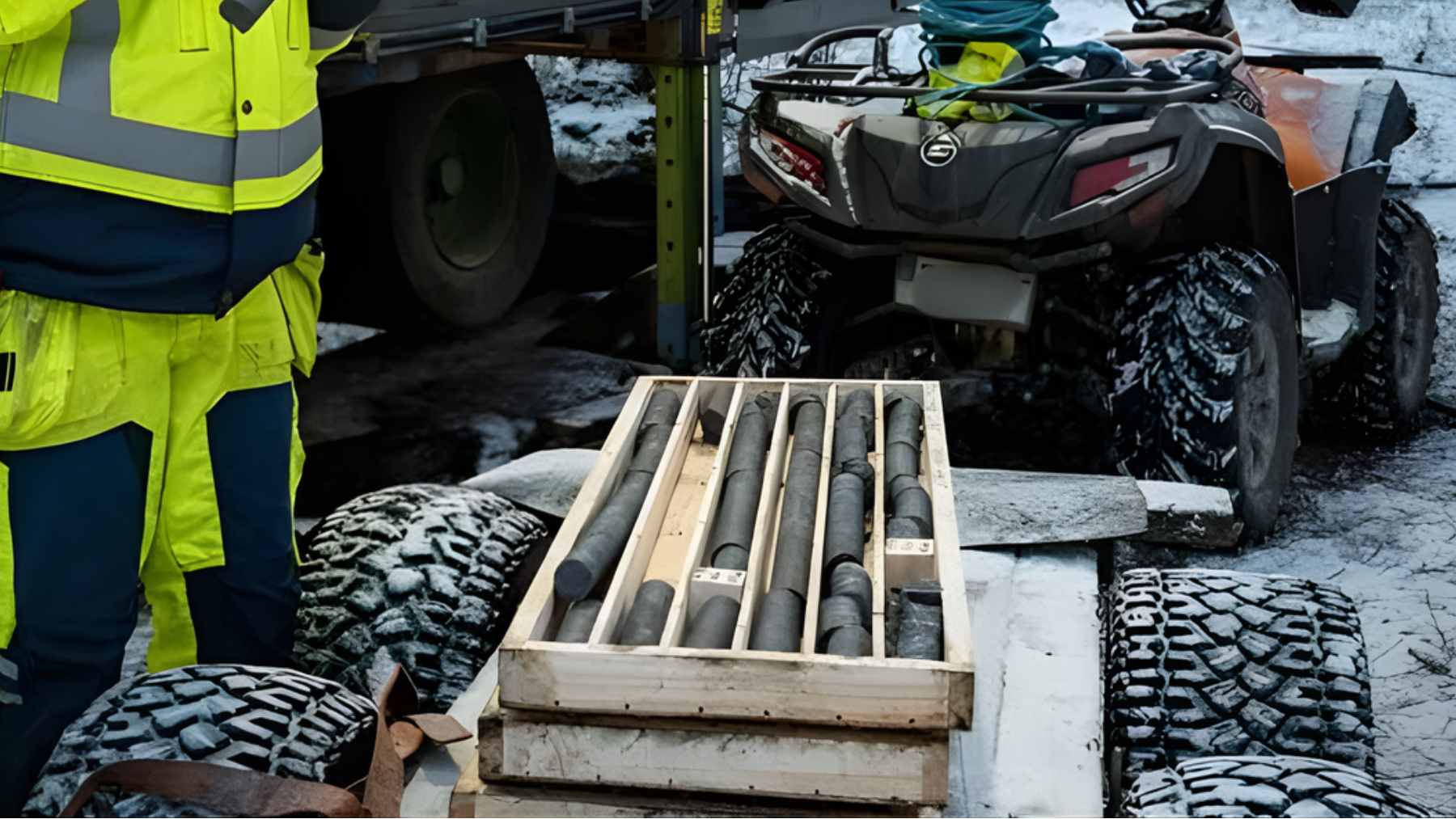
State-owned miner LKAB reports that Per Geijer holds about 1.2 billion metric tons of ore that includes roughly 2.2 million metric tons of in situ rare earth oxides. Company executives say that, once fully built out, this single deposit could cover around 18 percent of Europe’s long-term rare earth metal demand.
Rare earths are a family of 17 metals that quietly sit inside everything from electric motor magnets and smartphone speakers to guided missiles. Without them, the energy transition looks a lot more complicated.
On paper, the European Union has almost no room for error. Eurostat data show that a handful of suppliers dominate EU rare earth imports, with China by far the most important link in the chain.
Other European institutions warn that the bloc also depends on China for the vast majority of permanent magnets that end up in wind turbine generators and in the compact motors that move family cars, including the kind of quiet car that has taken people to work since 1998.
Kiruna iron mine infrastructure and rare earth processing plan
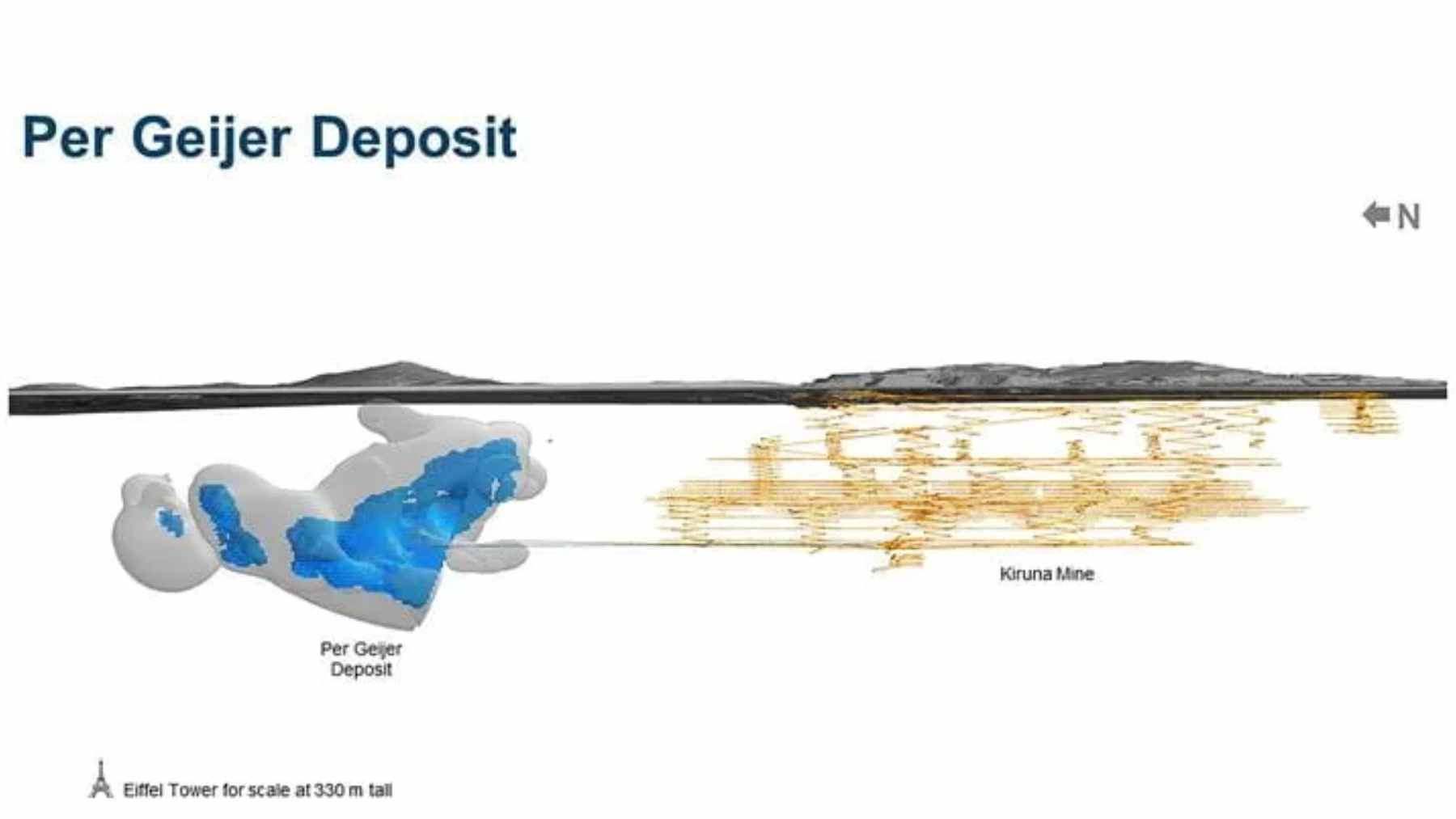
Per Geijer stands out because it is not an isolated greenfield mine. It is geologically tied to Kiruna, already the world’s largest underground iron ore operation, with rail links, skilled workers, and processing plants in place.
LKAB’s plan is to extract an apatite-rich ore that can be upgraded into a rare earth concentrate and phosphoric acid for fertilizers, then send that material to a new industrial park in Luleå for hydrometallurgical separation.
The whole package, from mine to processing, has been granted strategic project status under the Critical Raw Materials Act, which sets non-binding benchmarks for how much mining, refining, and recycling the EU should host inside its borders by 2030.
In theory, that strategic label should speed up permits and financing. In practice, the path is messier. Kiruna is already being partly relocated because of ground subsidence from a century of iron mining, and the new project overlaps with traditional reindeer grazing lands that are vital to Sámi communities.
Scientists keep reminding policymakers that there are still surprises hiding in remote landscapes, whether it is a scientific expedition in the jungle that encounters two completely new beings no one had ever recorded before or fragile Arctic ecosystems that have not been fully mapped.
Balancing Indigenous rights, biodiversity, and the hunger for critical minerals will test Swedish and EU law.
Recycling, new materials, and reducing pressure on rare earth mining
At the same time, Per Geijer is only one piece of a broader puzzle that includes smarter use of materials and more aggressive recycling.
Researchers are looking for ways to ease pressure on new mines with advances such as a method so simple it seems like a trick, where a purple glow and an inexpensive ingredient break down plastics at room temperature.
Others are thinking much further out, inspired by a new discovery in lunar dust that rewrites what we thought about a “carbon poor” Moon, and by USGS work on seabed minerals that could one day supplement land-based supplies.
For now, though, Europe’s most realistic “ace up the sleeve” sits under the snow in northern Sweden. Per Geijer will not erase the EU’s dependence on Chinese processing, and it will not remove the need for difficult conversations about where and how to mine.
What it does, to a large extent, is shift the conversation from whether Europe has any rare earths at all to how fast it can develop them without breaking its own social and environmental rules.
The press release was published on LKAB.