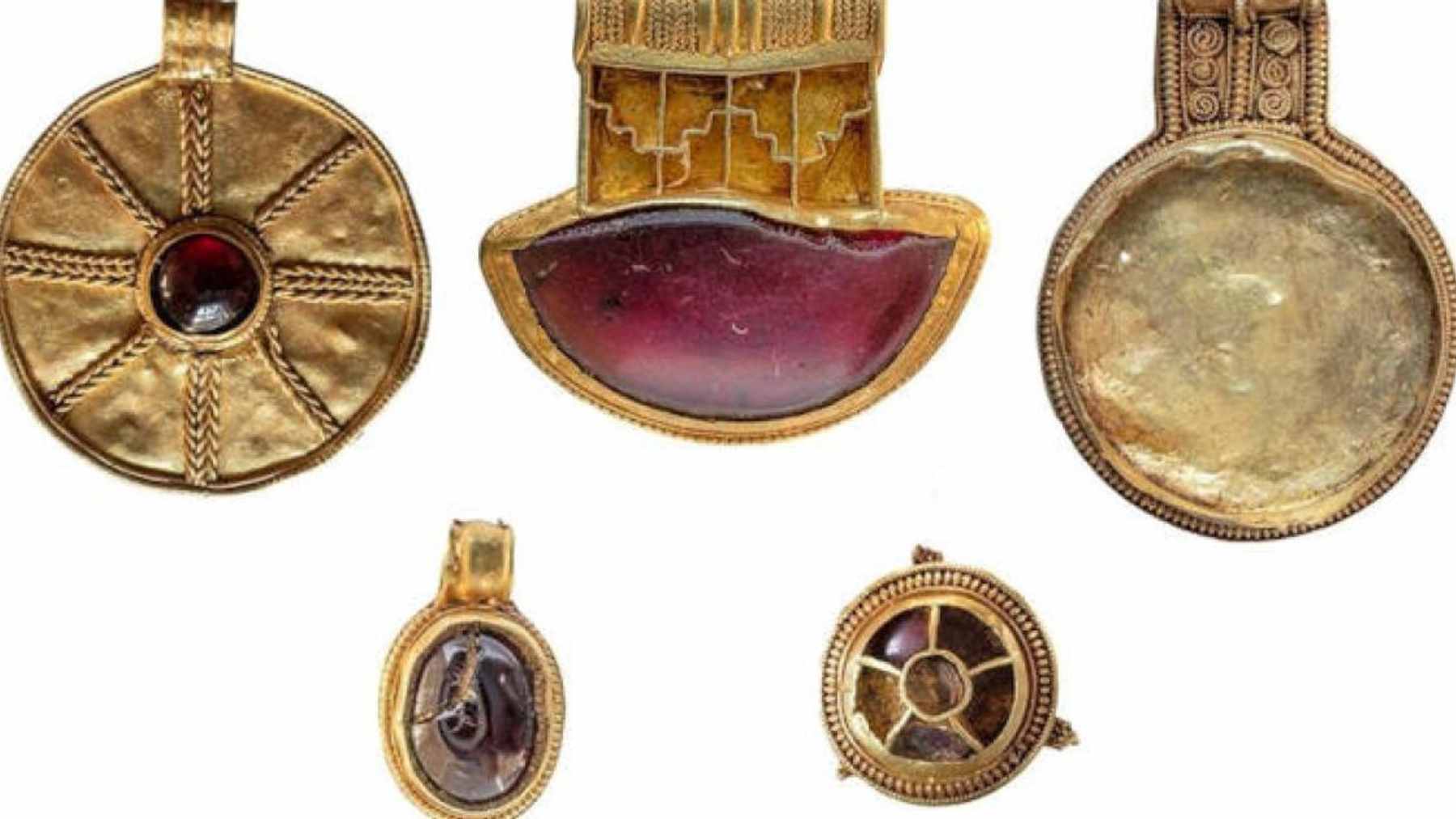
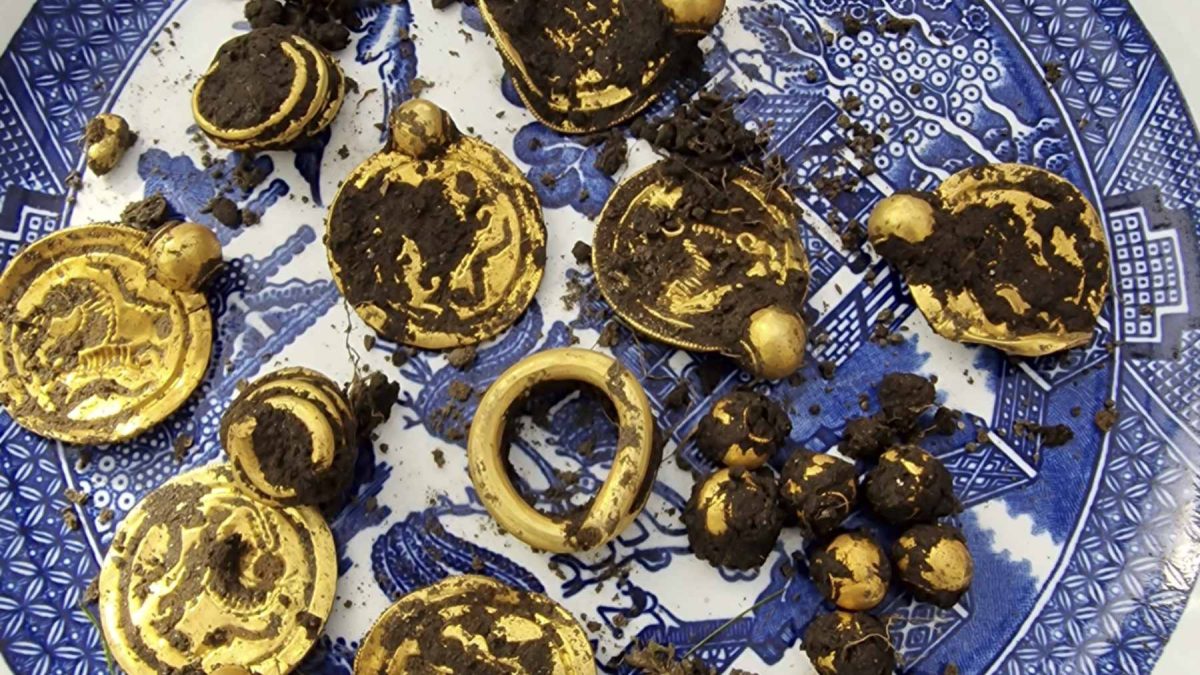
While out with his brand new metal detector on the island of Rennesøy near Stavanger, 51-year-old Erlend Bore uncovered nine gold pendants, ten beads and three rings that had been hidden in the soil for around 1,500 years. Archaeologists at the Museum of Archaeology at the University of Stavanger quickly labeled it “the find of the century in Norway” because so much gold was unearthed at once and because pieces like this are so rare in Scandinavia.
The treasure weighs just over 100 grams and dates to around the year 500 during what historians call the Migration Period. The flat, coin-like medallions are known as bracteates and were not money in the modern sense but high status jewelry crafted by skilled goldsmiths and worn by powerful members of society. Finding nine of them together in one place has not happened in Norway since the 1800s.
So why would anyone bury such a spectacular necklace in a field and never come back for it?
A walk that turned into a time capsule
Bore had bought his detector partly to get off the sofa on doctor’s orders and partly for fun. At first he dug up nothing more exciting than scrap metal and a small coin. Then the device started beeping on higher ground and he pulled up a clump of earth packed with yellow disks. He later admitted that his first thought was “chocolate coins or plastic pirate treasure” and described the moment as “surreal” when he realized it was real gold.
Following Norwegian law, he stopped digging, marked the spot and contacted local authorities. All objects from before 1537 and all coins older than 1650 belong to the state, so the hoard is now in the care of the Museum of Archaeology in Stavanger. Bore and the landowner are expected to receive a finder’s fee once the Norwegian Directorate for Cultural Heritage sets a value.
For archaeologists, though, the true value is not the metal. It is the story the hoard tells about a society under environmental stress.
Jewelry from a time of failed harvests
Associate professor Håkon Reiersen and his colleagues note that many of Scandinavia’s biggest bracteate hoards were buried in the mid-500s toward the end of the Migration Period. In western Norway this was a time of crop failures, worsening climate and disease, reflected in large numbers of abandoned farms in the region of Rogaland.
Climate scientists have linked these decades to a cluster of powerful volcanic eruptions that darkened the sky across the Northern Hemisphere. Tree ring records and ice cores point to a sharp drop in temperatures beginning in the year 536, an event that helped trigger what researchers now call the Late Antique Little Ice Age which lasted for more than a century.
In practical terms, that meant shorter growing seasons, colder summers and repeated harvest failures. When you are worrying about your own winter food stores rather than the price of the electric bill, burying precious gold as a desperate offering to the gods or as a hidden emergency fund starts to make more sense.
Reiersen believes the Rennesøy hoard fits that pattern and was likely either a stash of valuables hidden in troubled times or a ritual gift to higher powers.
What the wounded horse is trying to say
The pendants are not just shiny metal. They carry meaning.
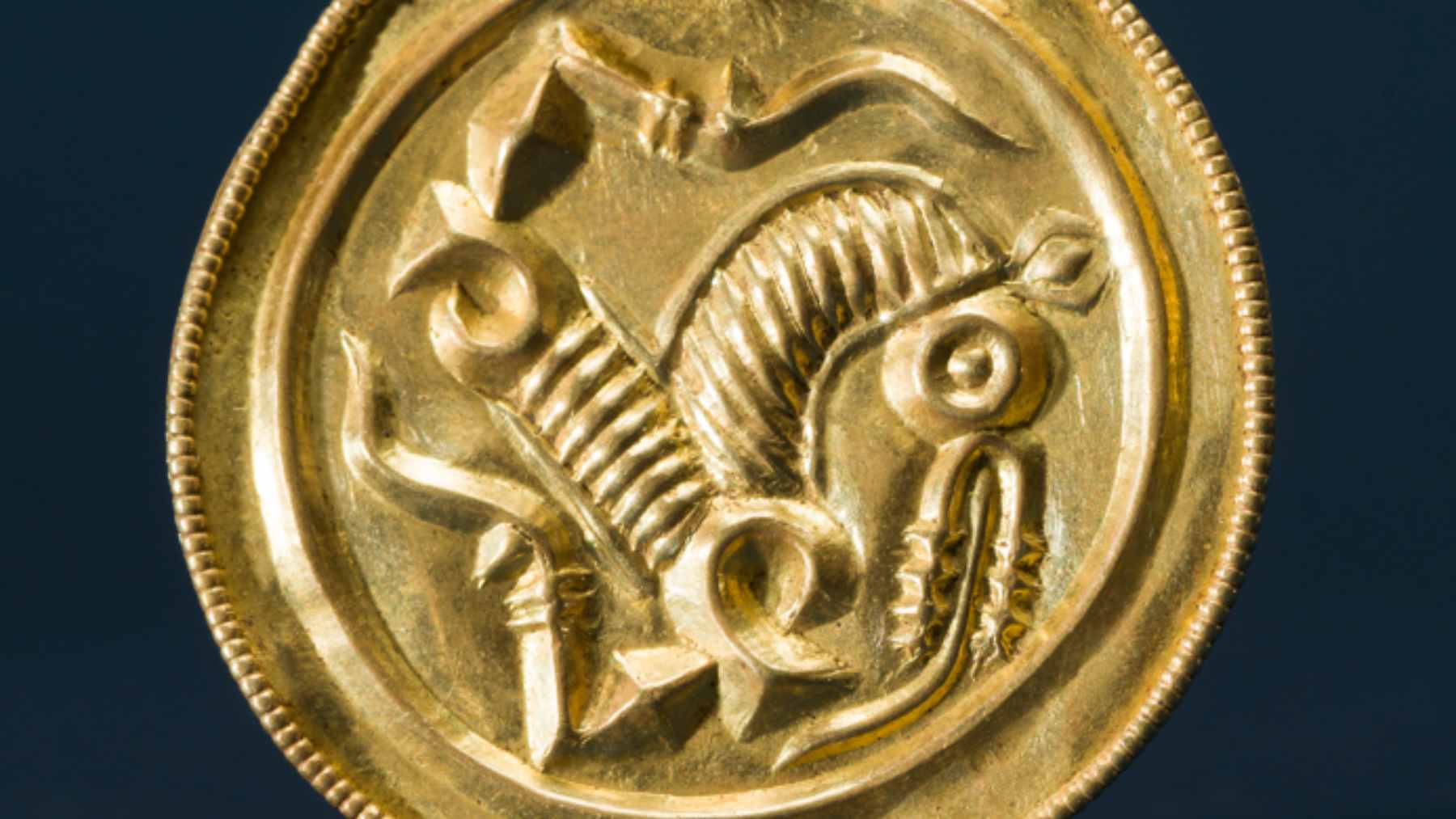
Professor Sigmund Oehrl, an expert on bracteates, explains that most similar gold medallions show the god Odin healing the sick horse of his son Balder. In Migration Period Scandinavia that myth symbolized renewal and resurrection and people believed the image could offer protection and good health to the wearer.
The Rennesøy pieces are different. They show only a horse with its tongue hanging out, body slumped and legs twisted, a pose that clearly signals injury or illness. Oehrl compares the image to the Christian cross, which was spreading in the Roman world at the same time.
Both symbols combined suffering with a promise of healing and new life. In other words, even on their jewelry people were processing fear, disease and hope in the face of a changing world.
Echoes for a warming world
Today we are dealing with the opposite problem. Instead of volcanic winters, global temperatures are rising because of human-made greenhouse gas emissions. Yet the gold from Rennesøy offers a quiet reminder that sudden climate shifts whether colder or hotter can shake societies at their foundations.
Studies of 6th century Scandinavia show widespread farm abandonment, population decline and changes in how land was used as communities tried to adapt to cooler, less predictable conditions.
The Rennesøy necklace turns that broad picture into something tangible. A handful of pendants, beads and rings buried in a Norwegian field tell us that climate and health crises were not abstract concepts. They were personal, they were frightening and they prompted people to change how they related to land, food and belief.
Looking at this treasure in a museum display, it is easy to admire the craftsmanship and forget the anxiety that may have driven someone to hide it. Yet that anxiety is part of the story too. It speaks to how communities respond when the seasons no longer behave as expected, a question that feels uncomfortably familiar today.
The press release was published by the University of Stavanger.