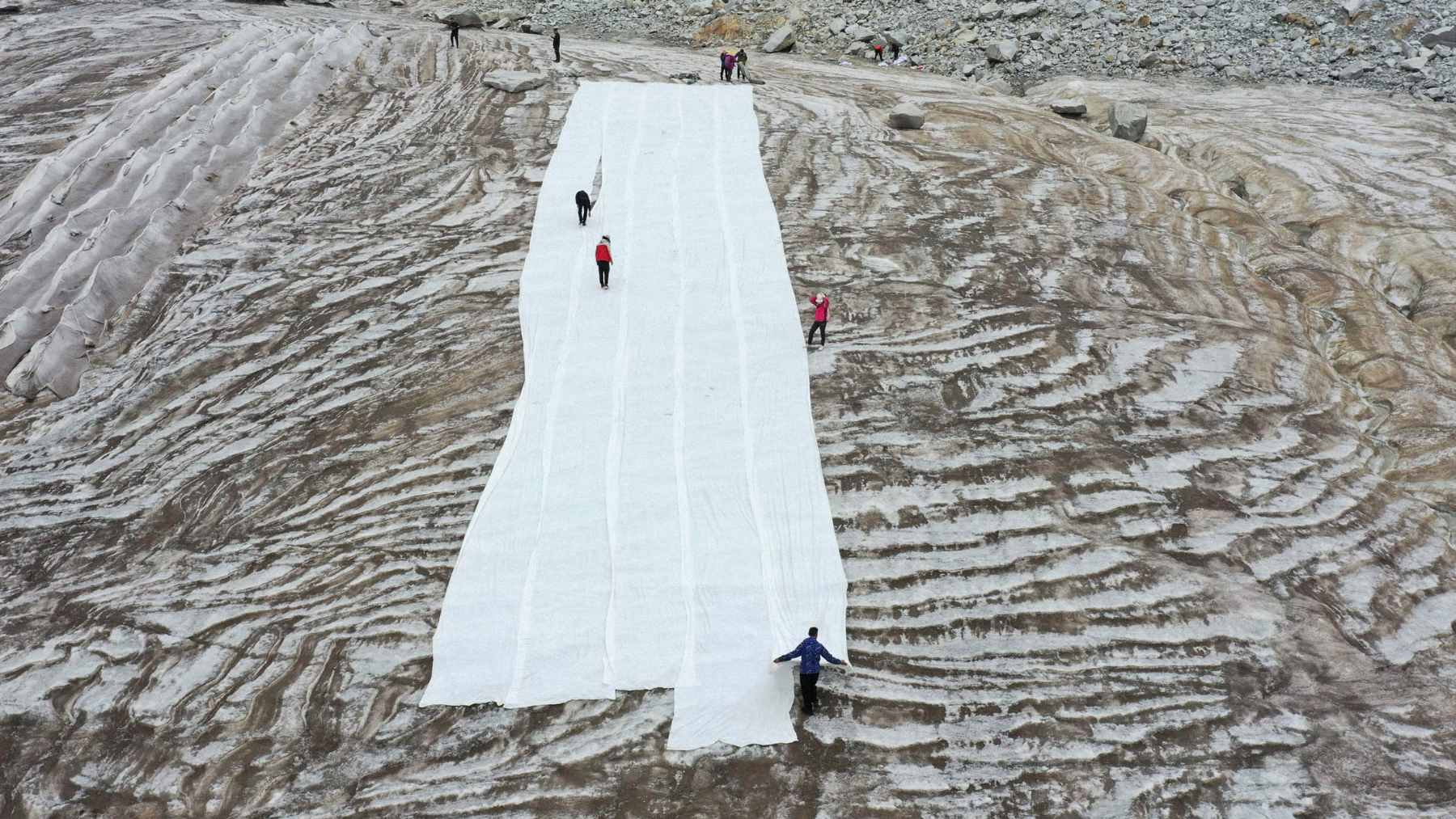
Since 2019, research teams in China have been hiking into thin air to do something that looks oddly domestic at nearly 5,000 meters altitude. They are rolling out huge white blankets over shrinking ice in an effort to slow the melt.
A detailed field study on Dagu Glacier now confirms that these covers can cut ice loss in the test areas by roughly 15 to 34 percent, yet scientists stress that the approach remains a small, local brake on a global problem.
How the glacier blankets work
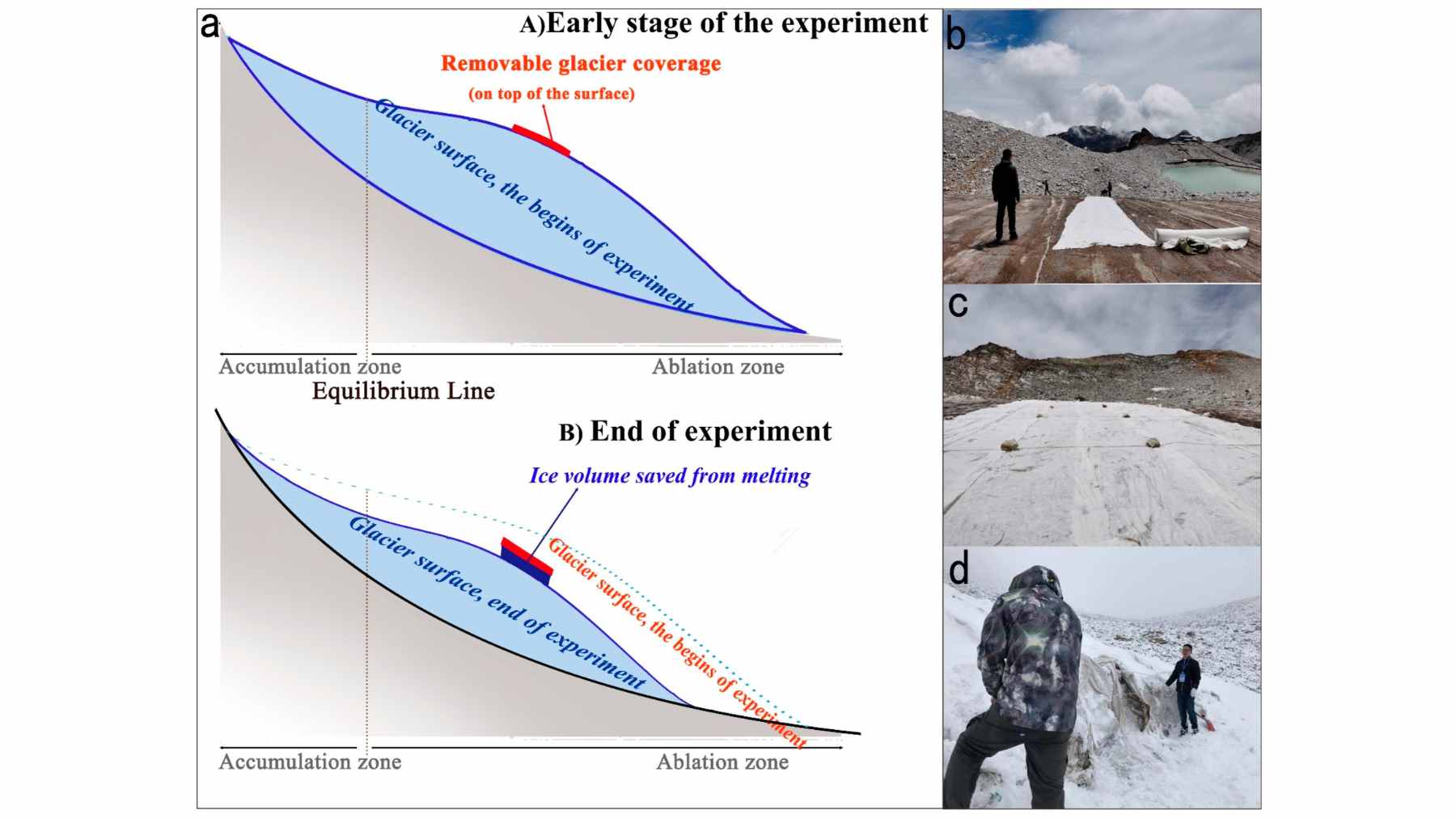
The new research in the journal Remote Sensing focused on Dagu Glacier No. 17, a tiny tourism glacier of about 0.05 square kilometers on the eastern Qinghai–Tibetan Plateau. Scientists covered a 500‑square‑meter patch with geotextile fabric between August 2020 and October 2021 and tracked surface changes using drones and laser scanners.
On average, the covered ice lost about 15 percent less mass each year than nearby uncovered ice because the bright fabric reflected more sunlight and kept the surface cooler.
Earlier tests on the same glacier used a similar patch size. In the first trial in August 2019, the insulated area ended the summer with ice roughly one meter thicker than the bare ice next to it, according to teams with the Northwest Institute of Eco‑Environment and Resources under the Chinese Academy of Sciences.
Researchers described the blankets as blocking solar radiation and heat exchange at the glacier surface, essentially giving the ice a temporary shade cloth.
If that sounds like throwing a white sheet over your car to keep it cooler in a parking lot, that is not far off. The physics is simple enough. Raise the albedo, the fraction of light that is reflected, and the ice underneath absorbs less energy during hot months.
High-tech covers and eye-catching numbers
The work at Dagu is part of a broader set of cryosphere experiments summarized by UNESCO. At Dagu, the same Lanzhou‑based team reports a melt‑rate reduction of about 34 percent in its trial area over one full ablation season.
On Urumqi Glacier No. 1 in the Tien Shan, they went a step further and spread advanced nanofiber blankets at lower elevations. Those high-tech materials cut local summer melting by up to 70 percent in test zones.
Similar experiments in Europe and Antarctica show reductions in snow and ice loss on covered strips of glacier on the order of 40 to nearly 70 percent. In one recent study on Triangular Glacier in the north‑eastern Antarctic Peninsula, non‑woven geotextiles reduced melt by between 40 and 69 percent during the 2021 to 2022 season where they were laid down.
So on paper, the method works quite well wherever the fabric actually touches the ice. The trouble is everything around it.
Big climate problem, tiny patches of fabric
Dagu Glacier No. 17 is already thinning by several meters per year and retreating even with the blankets in place. The protected patch is only a small fraction of the glacier, and the authors of the Remote Sensing study note that the total mass saved is minute compared with the glacier’s overall losses.
They also emphasize that cost, difficult terrain, and aging of the textiles make it hard to scale the method beyond small tourist sites or terminus zones.
Everything has to be carried in and out by people at high altitude. The fabrics themselves, even when marketed as eco‑friendly, require energy and materials to manufacture and eventually degrade, which can lower reflectivity and raise questions about microplastic pollution in fragile mountain ecosystems.
Glaciologist Mauri Pelto put it bluntly in an interview with the Columbia Climate School, calling glacier blankets “a desperation measure” and pointing out that if you only cover a tiny part of the glacier, the rest keeps melting.
Why the blankets still point back to emissions
The stakes go well beyond postcard views from a cable car. High Mountain Asia, including the Tibetan Plateau often called the Third Pole, feeds major rivers like the Yangtze and Yellow. Meltwater from these glaciers helps supply water for more than 1.4 billion people downstream, by one scientific estimate.
Protecting a few hundred square meters of ice can buy time for local drinking water sources, hydropower, and glacier‑based tourism. It can also serve as a stark visual reminder for visitors that climate change is literally eating away at the landscape.
Historian Mark Carey has argued that the white sheets may function as an “educational tool” as much as a conservation technique.
But at the end of the day, the blankets are not a substitute for cutting greenhouse gas pollution. They slow the melt for a season or two in a handful of locations while the wider cryosphere keeps shrinking. For the most part, scientists see them as one small piece of adaptation in a world that still needs deep emissions cuts if glaciers like Dagu are to survive in any form.
The study was published in Remote Sensing.