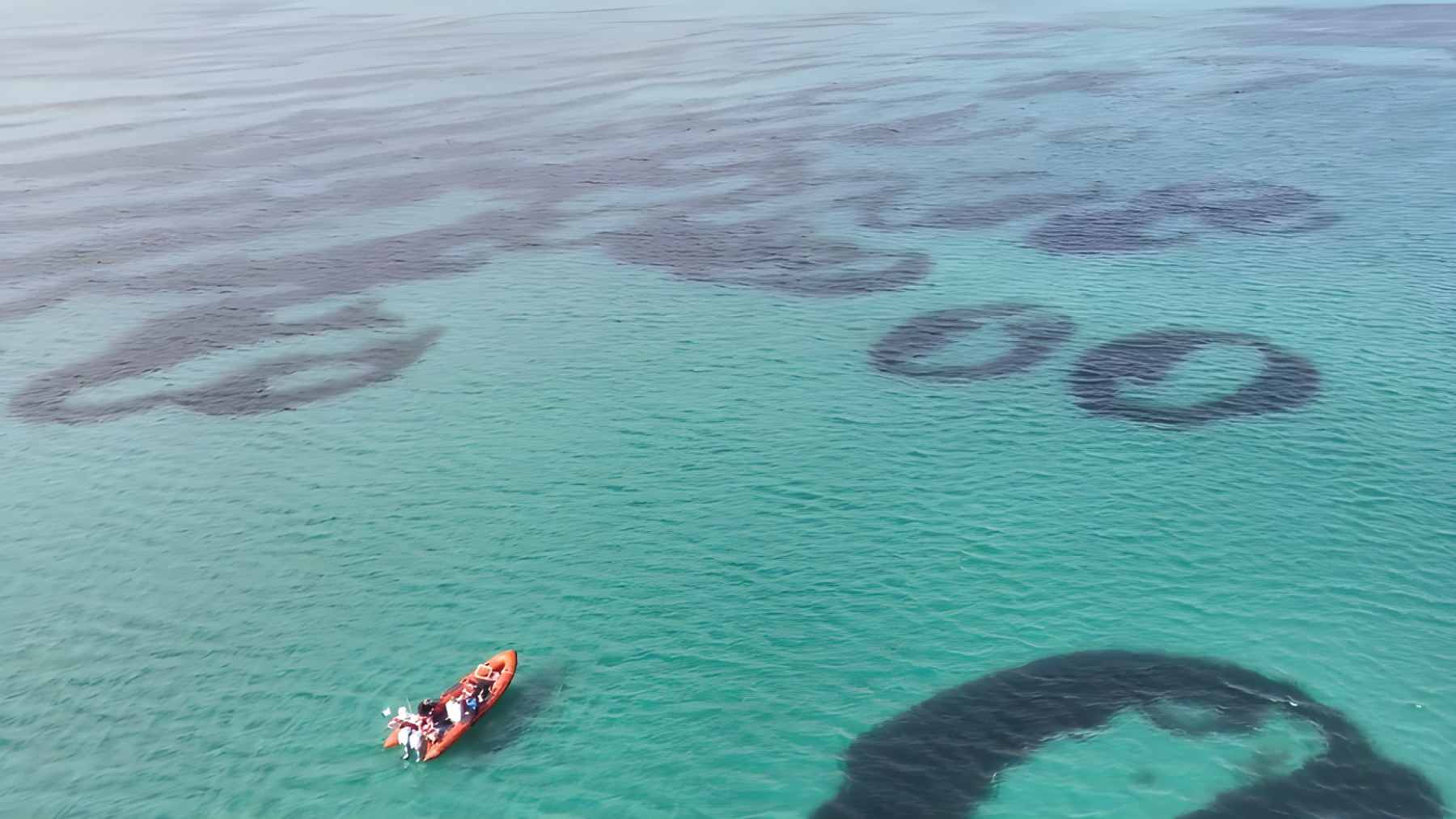
From the air, the seabed in the Sound of Barra looks like someone took a compass and traced ring after ring on the sand. Those dark circles are not crop circles under water. They are living meadows of seagrass forming almost perfect hoops and they have just been filmed in Scottish waters for the first time.
The formations sit in the Outer Hebrides off the west coast of Scotland, inside a protected marine area. According to nature agency NatureScot, their marine team captured rare aerial footage of these so called seagrass fairy circles while surveying the site.
“As far as we know, this is the first video of seagrass fairy circles in Scotland’s seas. Our marine monitoring team call them seagrass doughnuts, but whatever you call them, they are spectacular,” explained Sarah Cunningham, who leads Marine Protected Areas and Marine Enhancement at NatureScot.
What is actually growing in those rings?
The circles are made of Zostera marina, a native seagrass sometimes called eelgrass. It is a flowering plant with roots and long ribbon-like leaves that anchors in shallow sand and mud. Those underwater leaves create low-swaying lawns that shelter fish, crabs, snails, and countless tiny invertebrates.
In the Barra footage, the plants form dense rims with paler or barer centers, repeating across the seabed. Scientists know similar circles in other parts of the world can emerge when clonal patches expand outward while older shoots in the middle die back, or when feedbacks between plant growth and sediment chemistry carve out ring shapes.
For the Sound of Barra, researchers are still cautious. NatureScot stresses that the circles form naturally and are rarely seen, yet the precise combination of disease, sediment conditions, currents, or grazing that shapes them here remains unclear.
A damaged habitat that quietly works for people
Behind the pretty patterns sits a more familiar story of loss. Seagrass beds were once widespread along Scottish coasts. In Orkney people even used dried seagrass as thatch on roofs. Then a wasting disease outbreak in the 1930s wiped out vast areas, and many places have still not fully recovered.
Other pressures piled on. Pollution and poor water quality near towns, causeway and harbor construction, and mechanical damage from activities such as scallop dredging all chipped away at remaining meadows. In some channels around Shetland, seagrass was once so dense boats had to push through it. Today only scattered patches remain.
Why should anyone far from the Hebrides care about these underwater lawns while worrying about rent or the next electric bill? Because seagrass quietly does several jobs that matter in daily life.
NatureScot describes it as a “wonder habitat” often compared with a rainforest for the way it supports wildlife and locks away carbon. The leaves and roots trap sediment and carbon-rich particles, help clean the water, lower contamination in seafood, and soak up wave energy so that storms and high tides hit coastal communities with a little less force.
Signs of recovery and the bigger picture
Despite the grim history, the new footage arrives alongside some hopeful data. The NatureScot review points to pockets of recovery in places such as Loch Ryan, the Solway Firth, Montrose Basin, and the Firth of Forth, particularly where water quality has improved and dredging has been restricted.
Seagrass beds are now officially classed as a Priority Marine Feature and many lie within Marine Protected Areas.
The Scottish Government has proposed further fisheries rules to cut physical damage, while the Scottish Marine Environmental Enhancement Fund and partners such as SSEN Distribution are funding projects that aim to plant around fourteen hectares of new seagrass around the coast.
Scientists say that to a large extent, the future of those picture perfect doughnuts comes down to what happens above the waves. Cut pollution, ease mechanical pressure on the seabed, and seagrass has shown that it can bounce back. Keep piling on stress, and even the most resilient rings eventually unravel.
For now, the circles in Barra are a reminder that nature still has surprises hidden in the shallows, and that some of the most effective climate and coastal defenses look less like concrete walls and more like simple green blades swaying under the tide.
The official press release was published on NatureScot.