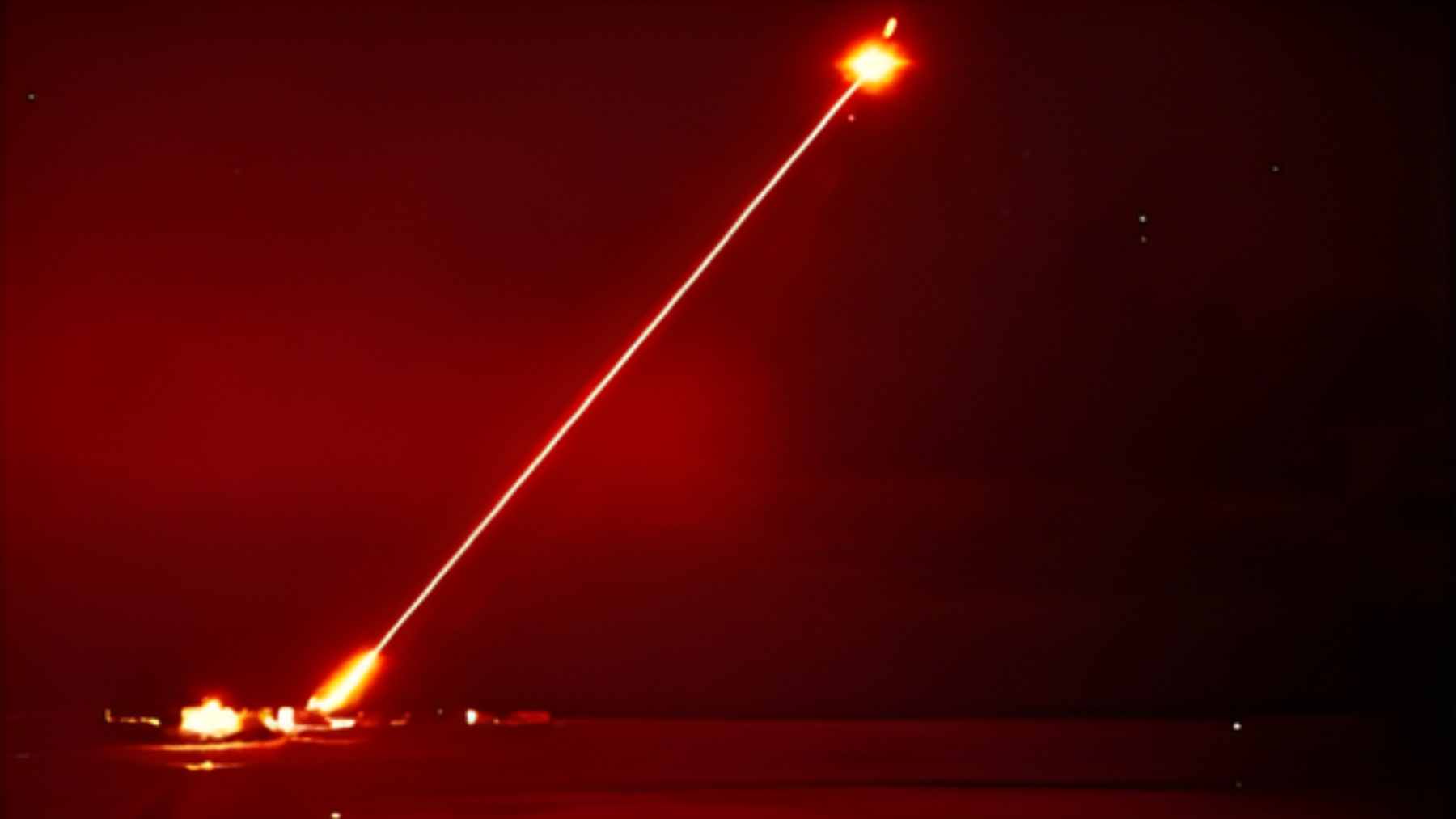
The United Kingdom is moving its DragonFire laser from test range to warship deck. After live trials in Scotland where the system tracked and destroyed high-speed drones flying up to around 650 kilometers per hour, the Ministry of Defence signed a contract worth roughly $316 million to start installing the weapon on Royal Navy Type 45 destroyers from 2027, several years ahead of the original schedule.
According to the government, DragonFire is accurate enough to hit something about the size of a pound coin at a kilometer. Each shot consumes only a burst of electrical power and is estimated to cost about ten pounds, a tiny fraction of the price of a single surface-to-air missile that can run into hundreds of thousands of pounds.
That mix of precision and low cost is exactly why militaries are suddenly so interested in high-energy lasers.
From Hebrides test range to a Type 45 destroyer
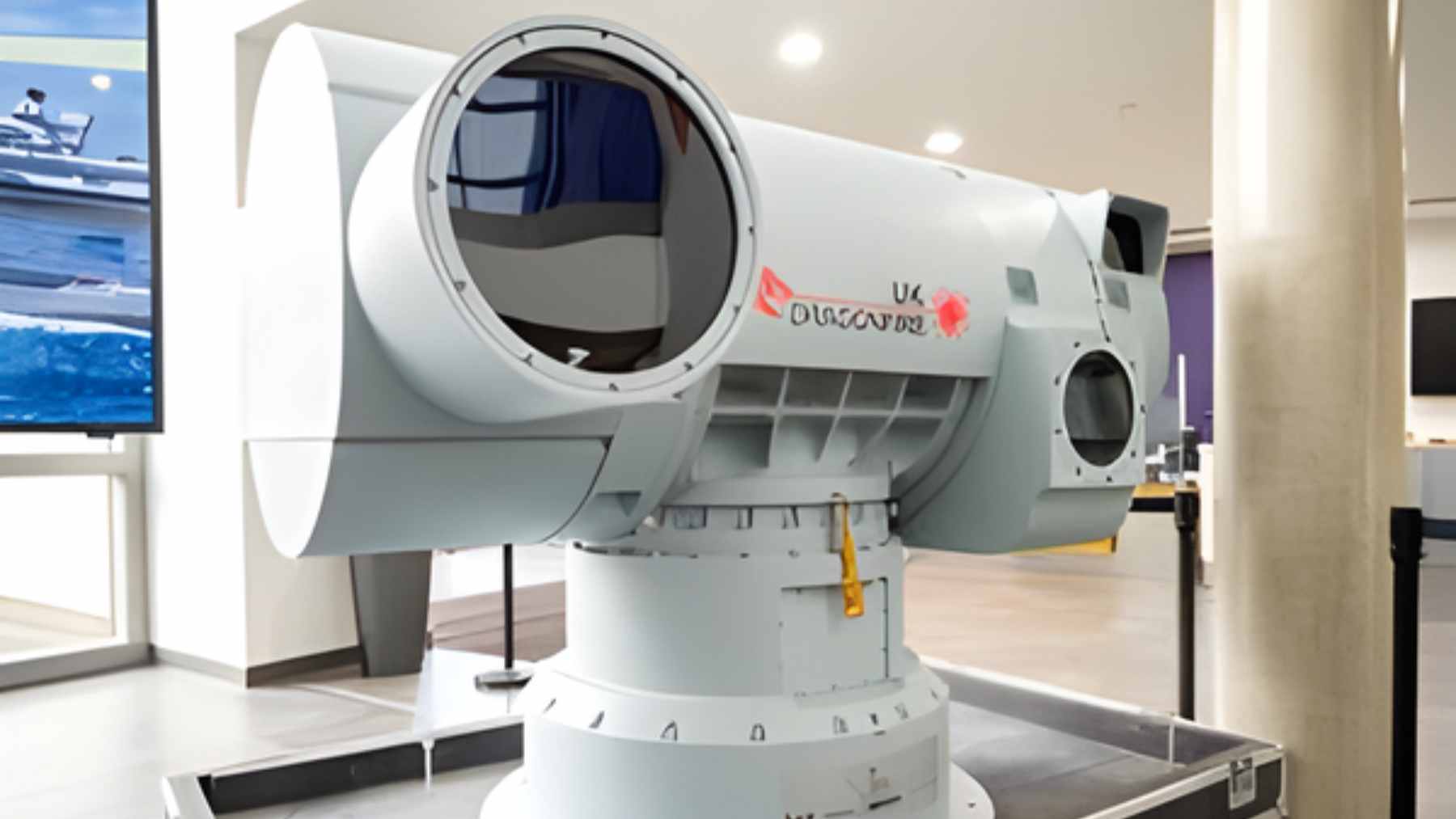
DragonFire is being developed by MBDA in partnership with Leonardo UK and QinetiQ under the UK-directed energy weapons program.
Official trial reports say the system recently pulled off a United Kingdom first by tracking and engaging fast-moving aerial targets beyond the visible horizon at the Ministry of Defence Hebrides Range off the coast of Scotland.
The new contract will put a full DragonFire outfit on at least one Type 45 as part of an accelerated acquisition cycle. That first integration is meant to test how the laser handles real shipboard life (everything from power spikes and salt spray to pitching seas) before the Navy decides whether to roll it out more widely across the fleet.
On land, the United Kingdom has already tried other directed energy prototypes, including a truck-mounted, high-energy laser on a Wolfhound armored vehicle that successfully shot down drones during recent British Army trials.
DragonFire brings that same basic idea to sea, where ship commanders worry about swarms of small drones and cheap cruise missiles eating through their missile magazines.
Why ten pound laser shots matter for defense budgets
Right now, navies often respond to uncrewed aircraft with missiles that can cost more than a family apartment. As drone swarms become more common in conflicts from the Black Sea to the Red Sea, that math looks worse every month.
In Ukraine, for instance, we have already seen underwater drones disable a Russian submarine at a major naval base, a tactic described in detail when Ukraine successfully deployed underwater drones against a Russian submarine for the first time.
Another report on Russia’s $50 million loss in a Ukrainian sabotage mission shows how relatively small unmanned platforms can inflict damage that used to require large air raids.
In the air, the United States has faced mystery objects and Uncrewed Aerial Systems near its fighter jets and training ranges, while Russia’s massive drone and missile salvos over Ukrainian cities led to Trump’s social media warning that Putin was “playing with fire” after an assault involving hundreds of projectiles, as covered in an earlier analysis of his comments.
Against that backdrop, a laser that can fire again and again without loading new interceptors looks attractive. DragonFire still needs a lot of electrical power, careful cooling and clear line of sight, and its beam can be weakened by bad weather.
Yet when conditions are right, swapping a six-figure missile for a ten pound jolt of energy could stretch a ship’s defensive endurance in a way that accountants and admirals both notice.
Part of a wider global race in laser air defense
The United Kingdom is not alone in this shift. Israel has started fielding its Iron Beam laser interception system as part of a multi-layer air defense network that also includes Iron Dome and other missile based shields.
In parallel, the United States Navy has tested its HELIOS laser on the destroyer USS Preble, using it to engage drone targets at sea as part of a growing family of shipboard lasers.
In practical terms, DragonFire is the United Kingdom’s attempt to make sure its own warships do not fall behind that curve.
If trials at sea confirm what the Hebrides tests already suggest, future Royal Navy commanders could treat the laser as a first line of defense against small drones, saving expensive missiles for tougher threats. That kind of layered mix is probably where naval air defense is heading for the next decade.
The official statement was published by the UK Ministry of Defence.