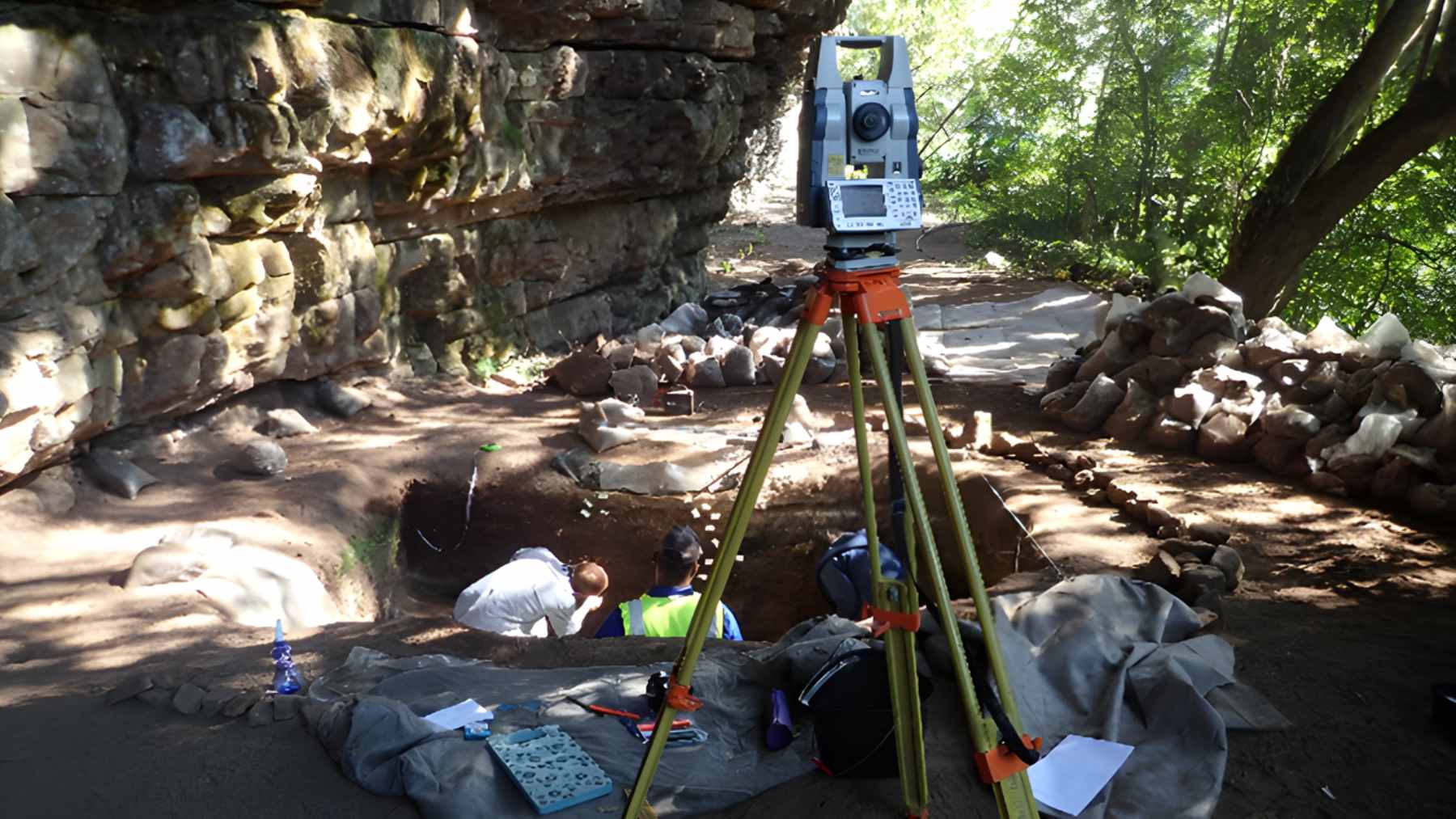
Long before chemistry labs or hunting manuals, people in southern Africa were already using plant toxins to bring down fast-moving prey. A new study of tiny stone arrowheads from Umhlatuzana Rock Shelter in KwaZulu Natal, South Africa, shows direct chemical traces of plant-based poison on tools that are about 60,000 years old.
This pushes the earliest confirmed use of poisoned arrows back by tens of thousands of years and highlights just how deeply early humans understood their living landscape.
For comparison, the previous oldest direct evidence of poisoned hunting weapons came from bone arrowheads in an Egyptian tomb a little over 4,000 years old and from arrow tips in Kruger Cave in South Africa that date to around 6,800 years ago.
So we are not talking about a small tweak in the timeline. This finding moves a key piece of hunting technology back into the deep Pleistocene.
Sixty-thousand-year-old poison arrows
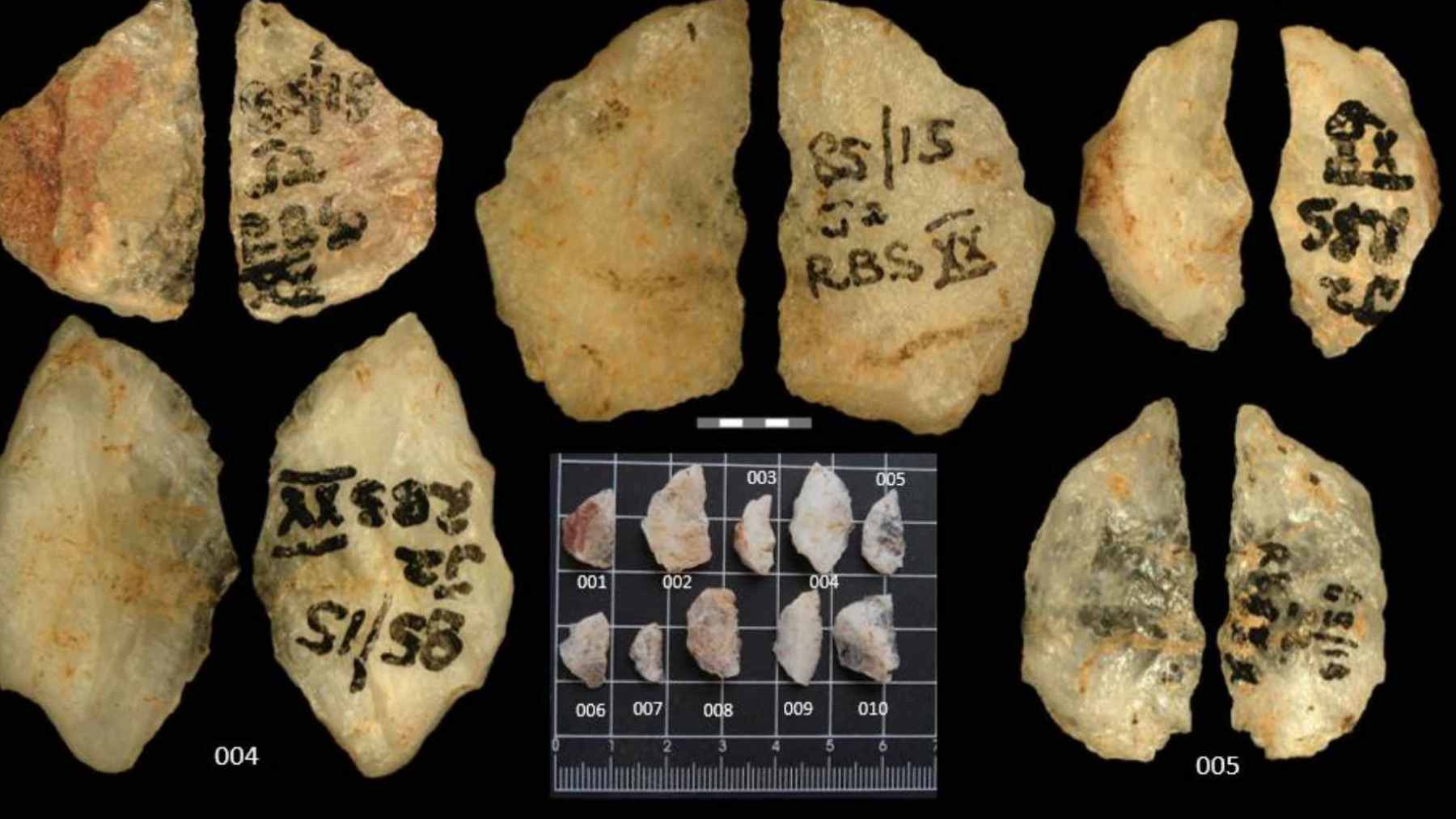
The research team analyzed residues on 10-quartz backed microliths from a well-dated layer at Umhlatuzana Rock Shelter that formed about 60,000 years ago. Using gas chromatography and mass spectrometry, they detected plant-derived toxic alkaloids on five of those stone pieces.
Those compounds are buphanidrine and epibuphanisine, which are known only from the Amaryllidaceae family of flowering plants that is native to southern Africa.
The most likely source is the bulb exudate of Boophone disticha, sometimes called the poison bulb, a plant historically used in arrow poisons by hunter gatherer communities in the region.
On at least one microlith, the reddish residue is still visible along the backed edge, suggesting the poison was mixed into an adhesive that fixed the stone tip to a shaft. Microscopic impact scars and fine striations on the cutting edge match what you would expect from an arrow striking an animal rather than from simple cutting or scraping.
In practical terms, that means these were not just tiny knives. They really were parts of projectiles designed to deliver a toxic hit.
The plant behind the poison
Boophone disticha grows in grasslands and savannas across much of South Africa. Its bulb produces a milky exudate with several potent alkaloids that can be lethal in small doses.
Historical accounts from the 18th century describe Indigenous hunters in the Cape region using this bulb to prepare arrow poison for game such as springbok, and modern chemical work confirms the same toxins on those old arrows.
Laboratory and ethnographic studies show that even a thin layer of this material on an arrow tip can kill small animals within minutes. In humans, exposure can lead to severe symptoms that affect breathing and the heart.
At lower doses, some communities have used parts of the plant medicinally, which illustrates how finely people have learned to navigate the line between remedy and toxin.
Imagine the knowledge behind that. You need to recognize the plant, know which part of the bulb to tap, understand how to dry or heat the exudate, and judge how much to apply on a small stone tip without wasting precious poison.
Early chemistry, long-distance hunting
These arrows were not meant to drop an animal on the spot. As the new study and related reporting explain, poisoned tips likely weakened prey over time instead of causing an instant kill. Hunters would strike an antelope, then follow its tracks for many kilometers until the toxin took effect.
That kind of hunting demands patience, tracking skills, and a solid sense of cause and effect. Researchers argue that using poison in this way reflects advanced planning, working memory, and the ability to imagine results that unfold hours after the shot is fired.
One archaeologist commenting on the work called poison a “breakthrough adaptation for humans” and pointed out that the use of microliths, those miniaturized stone tools, ties into broader innovations like the bow and arrow.
At the end of the day, the arrow is only the visible tip of a much bigger technological iceberg that includes plant ecology, chemistry-like reasoning and social learning.
Why this matters for ecology today
What does a 60,000 year old poison arrow have to do with the environmental choices we face now? Quite a lot, if you zoom out.
First, the study reminds us that humans have relied on detailed knowledge of local plants for survival for a very long time. The same landscapes that provided food and shelter also supplied powerful bioactive compounds.
Losing species such as Boophone disticha or erasing traditional knowledge about them does not just shrink biodiversity on paper. It narrows a library that people have been building for tens of thousands of years.
Second, these weapons hint at a style of hunting that was intense but targeted. A small group of hunters armed with light arrows and slow acting toxins is a very different picture from modern high-volume hunting with firearms or industrial meat production.
There is no need to romanticize the past, but studies like this give concrete examples of human communities that survived by reading ecosystems closely instead of overwhelming them.
For readers thinking about sustainable living today, that is a useful reminder. Our relationship with wild plants and animals has always involved technology and risk. The question is whether we use our tools in ways that keep the wider system resilient.
The study was published in Science Advances.