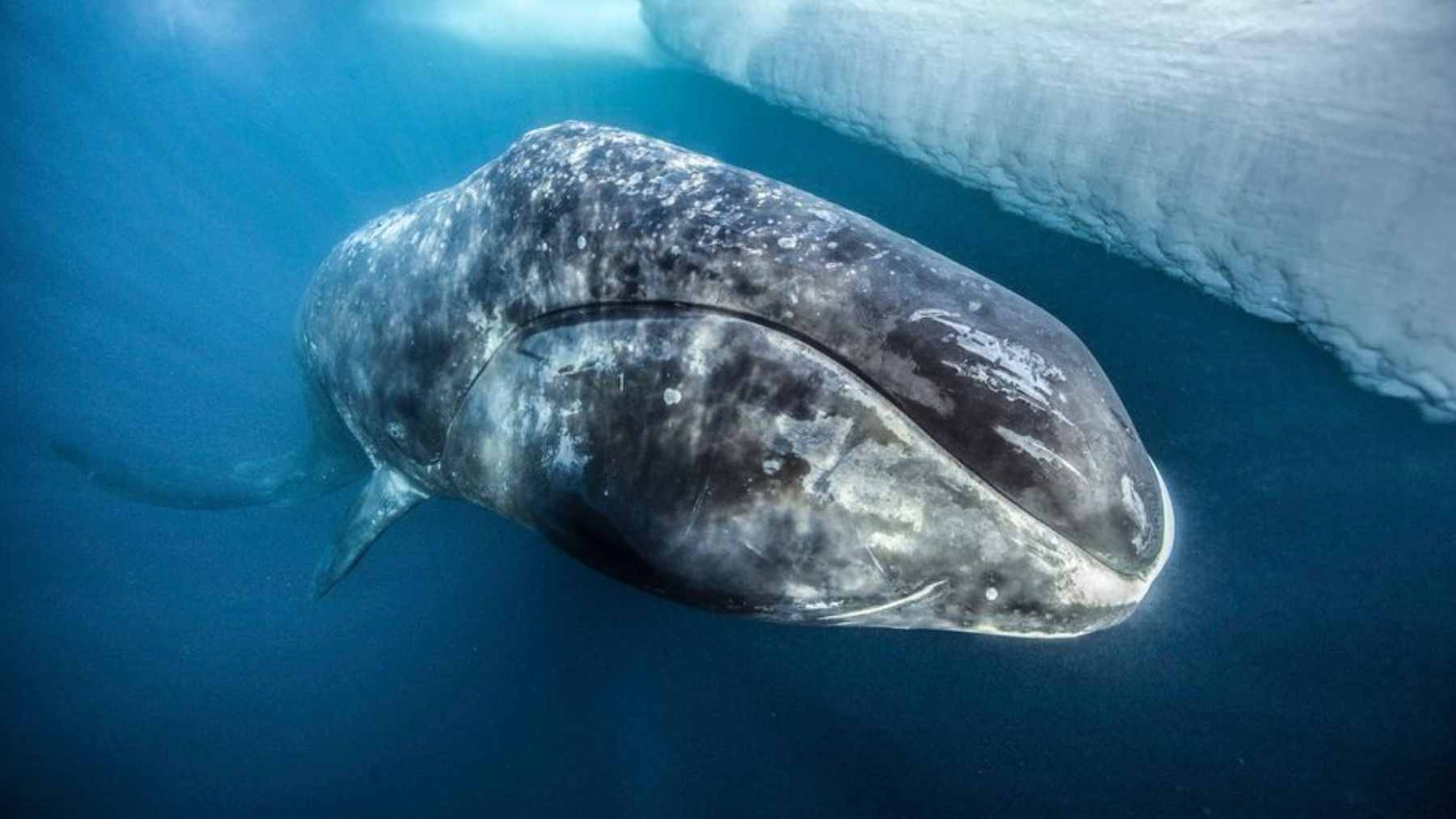
Imagine an animal that spends its life under Arctic ice, weighs as much as a fully-loaded jet, and still shrugs off cancer while living for more than two centuries. That is the bowhead whale, and a new study in Nature suggests part of its secret lies in a powerful DNA-repair protein that might one day inspire human anti‑aging therapies.
A frozen giant that rewrites the cancer rulebook
Bowhead whales are the longest‑lived mammals known, with some individuals estimated to be over 200 years old. At the same time, they rarely develop age‑related diseases such as cancer, even though their bodies contain far more cells than ours.
That combination has puzzled scientists for years. Larger animals should, in theory, run a higher risk of tumors simply because there are more cells that can go wrong. The mismatch between that prediction and reality is known as Peto’s paradox, and bowheads have become a star case study in trying to solve it.
The protein that mends broken DNA
Researchers from the University of Rochester and international partners compared bowhead whale cells with those from humans and other mammals. They found that bowhead cells repair some of the most dangerous kinds of DNA damage double‑strand breaks with remarkable accuracy and speed, and they accumulate far fewer mutations over time.
When the team searched for what makes bowhead cells so good at this repair work, one molecule leapt out. The cold‑inducible RNA‑binding protein CIRBP was present at roughly 100‑fold higher levels than in other species.
Adding the whale version of CIRBP to human cells in the lab boosted their ability to fix broken DNA and reduced signs of chromosomal damage. In fruit flies engineered to make more CIRBP, lifespan increased and the insects became more resistant to radiation.
“This research shows it is possible to live longer than the typical human lifespan,” explains study senior author Vera Gorbunova, who studies comparative aging biology at the University of Rochester.
Cold shocks, everyday life, and a fragile Arctic
CIRBP is “cold inducible,” which means cells start producing more of it when temperatures drop slightly. In cell cultures, simply lowering the temperature a few degrees increases CIRBP levels.
The research team now plans to test whether mild cold exposure in people, such as cold‑water swimming or quick cold showers that many wellness apps already rave about, nudges the same pathway.
For now, experts stress that the work is still at an early stage. No one can say yet whether turning up CIRBP in humans would safely extend healthy life, or how big any benefit might be. Boosting DNA repair sounds attractive, but tinkering with the body’s repair systems without careful testing could have unintended effects.
There is another twist. The animal inspiring this longevity research depends on a rapidly changing environment.
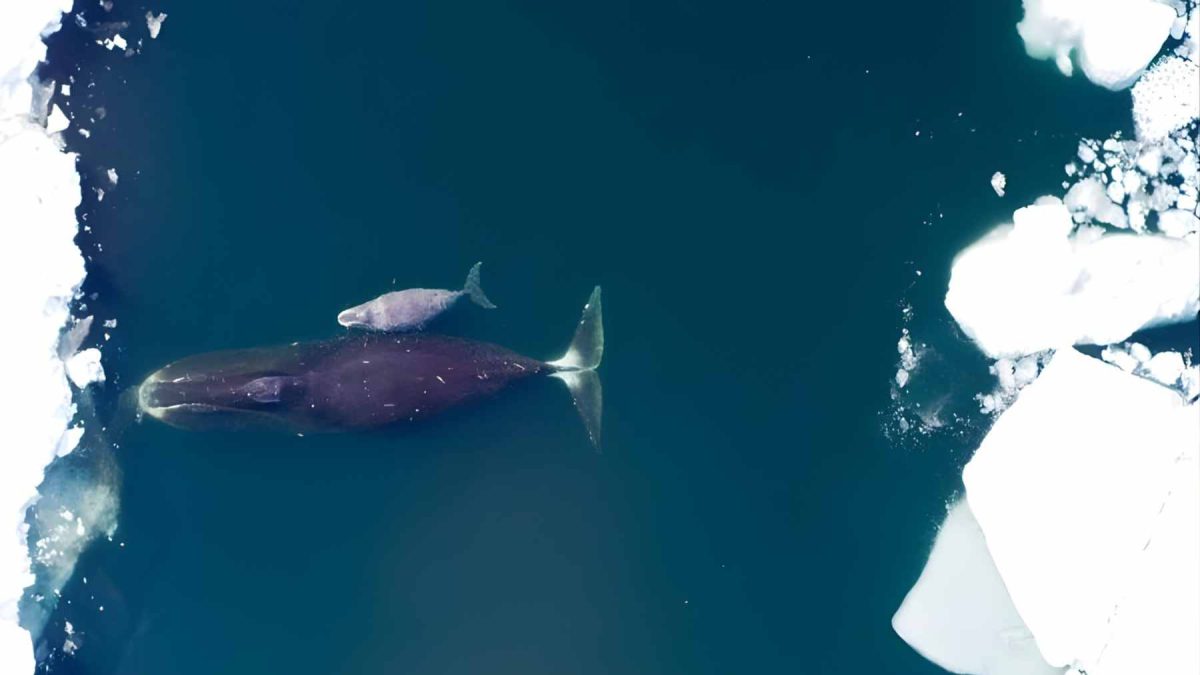
Bowhead whales live only in Arctic and sub‑Arctic waters, relying on thick sea ice, plankton‑rich seas, and quiet migration routes that are all being reshaped by climate warming, shipping traffic, and noise pollution.
So if bowheads really are guardians of a biological recipe for longer, healthier lives, protecting their icy home becomes not just an ethical duty but also a way to safeguard a priceless scientific ally.
The study was published in Nature.