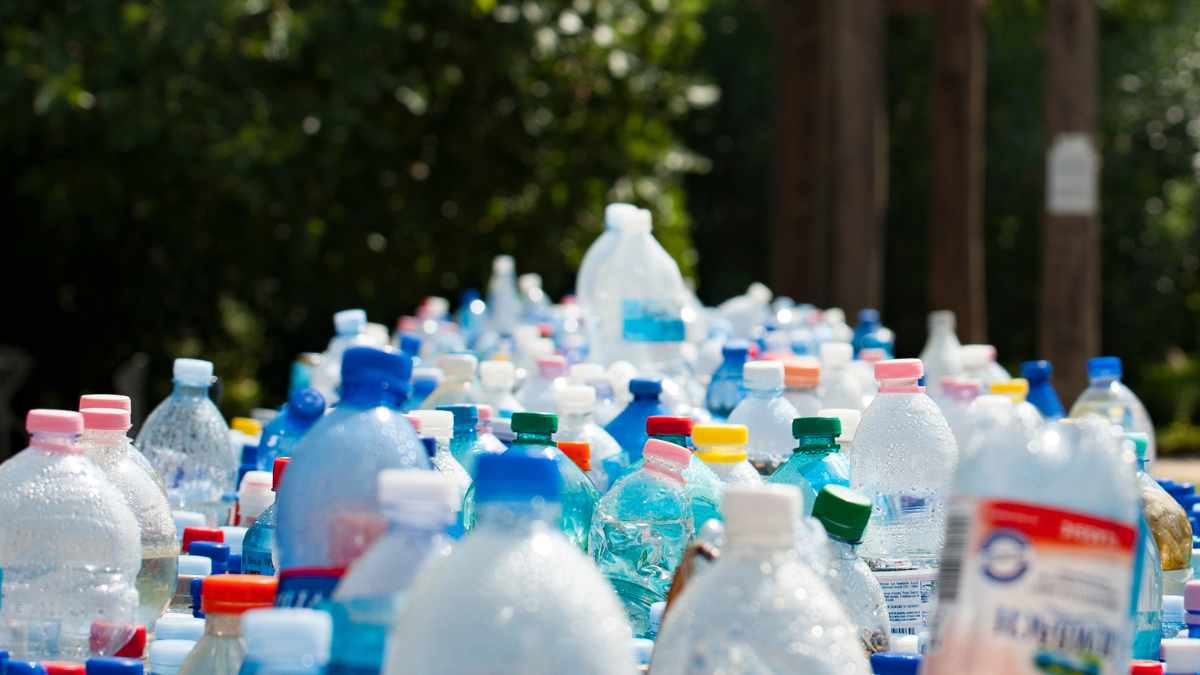
Plastic waste is piling up faster than the world can handle. Now a team at the University of New South Wales reports a simple, low‑energy method that uses purple LED light and an inexpensive iron salt to rapidly chop long plastic chains into smaller pieces. In tests, the approach broke down major types of consumer polymers in hours rather than days.
The work, led by Maxime Michelas with Laura Wimberger and Cyrille Boyer, shows that “photo‑oxidative degradation” can be turned on and off like a light switch and applied across seven families of plastics. Under oxygen at room temperature, the process degraded as much as 97 percent of a sample in less than three hours, and it worked with low‑intensity light. The study was first published on July 15, 2024.
What “photo‑oxidative degradation” means
Photo‑oxidative degradation means using light plus oxygen to snip the carbon links that hold a plastic chain together. When those links break, the long chains become much shorter molecules, which can include common compounds such as acids and aldehydes.
In this study, light triggers a step called hydrogen atom transfer, often shortened to HAT. In plain terms, the light‑activated catalyst helps pluck a hydrogen atom from the plastic chain, creating a reactive spot that oxygen can attack.
Earlier research showed similar light‑driven chemistry called proton‑coupled electron transfer for certain polymers, a sign that controlled radical chemistry is becoming a powerful tool for reshaping plastics.
How the experiments worked
The team used iron chloride, a cheap and widely available salt, as the light‑absorbing catalyst. They shined low‑intensity purple light near 405 nanometers on the plastic samples while oxygen was present, all at room temperature. No special co‑catalysts were needed, which keeps the setup simple.
Crucially, the reaction stopped whenever the researchers turned the light off. That “on‑off” control makes the method safer and easier to manage in a plant, because operators can pause the chemistry instantly without changing heat or pressure.
What the team found across common plastics
The method worked across seven polymer families that cover many everyday plastics. These included vinyl acetate, acrylates and methacrylates, vinyl ethers, an acrylamide, vinyl chloride, and ethylene oxide‑based materials.
In several cases, the samples lost more than 90 percent of their mass within three hours.
Some plastics came apart even faster. Polyethylene oxide and certain acrylates degraded within minutes under the same gentle conditions.
Polyvinyl chloride degraded more slowly, which the authors attribute to how poorly it dissolves in the test solvent, but it still showed strong breakdown over the full run.
Why this is different
A key advantage is breadth. Many earlier light‑driven methods targeted a single polymer class. This study shows one playbook that works across many of the most common plastics, under mild conditions and with basic equipment. This generality is rare in plastic chemistry and is critical for processing real‑world waste streams, which are inherently mixed and complex.
Another advantage is energy use. Room‑temperature operation and low‑power LEDs cut energy needs. Using an abundant iron salt instead of precious‑metal catalysts reduces cost and supply risk.
How it compares to other recycling approaches
In 2022, researchers showed that iron‑salt photocatalysis can upcycle polystyrene into useful small molecules, but that work focused on a single plastic and typically ran longer. The new study builds on that foundation while extending the idea to many more polymer families and showing rapid, switchable control.
Other teams have taken different routes. One Nature Chemistry study used electricity to strip chlorine from PVC and repurpose it for making other chemicals, highlighting an electrochemical path rather than a light‑driven one. Photoredox approaches have also deconstructed polystyrene into benzoic acid and related products, pointing to a growing toolbox for selective breakdown. Together, these efforts show complementary strategies that can be matched to the plastic and the desired output.
What the numbers say
Under the same light‑and‑oxygen recipe, vinyl acetate samples lost about 95 percent of their mass within three hours. Acrylate and acrylamide samples fell by roughly 96 to 98 percent. Polyethylene oxide dropped by about 99 percent. Methacrylate samples, known to be tougher, still declined by more than 90 percent in that time window.
Speed depended on how easily a given plastic gives up a hydrogen atom in the first step. Materials with weaker bonds at those positions degraded faster. The authors also showed that increasing oxygen supply or adjusting concentration can nudge the reaction forward when it slows, which is useful for scale‑up.
Why it matters for waste management
Mixed plastic waste is difficult to process with today’s methods, which often rely on heating and grinding or on high‑temperature reactors. A room‑temperature, switch‑controlled process could slot into existing facilities with modest upgrades. Because the catalyst and light are inexpensive, costs may remain low as reaction vessels get bigger.
The ability to pause or resume the process with the simple flip of a light switch mitigates operational risks. Operators can halt the process instantly during a clog or sensor alert, then restart when conditions are safe. That is harder to do with hot, pressurized systems.
What comes next
Future work will focus on more architecturally complex plastics, such as block copolymers, and on steering the chemistry toward specific, valuable outputs rather than a broad mix of products. That shift from “degradation” to “targeted conversion” would move the process closer to true chemical recycling.
They also aim to measure products carefully to confirm environmental safety and to explore continuous‑flow reactors that could run around the clock. Similar advances in the field, from polystyrene‑focused studies to electrochemical PVC work, suggest industry interest is growing.
The official study has been published in Macromolecular Rapid Communications.