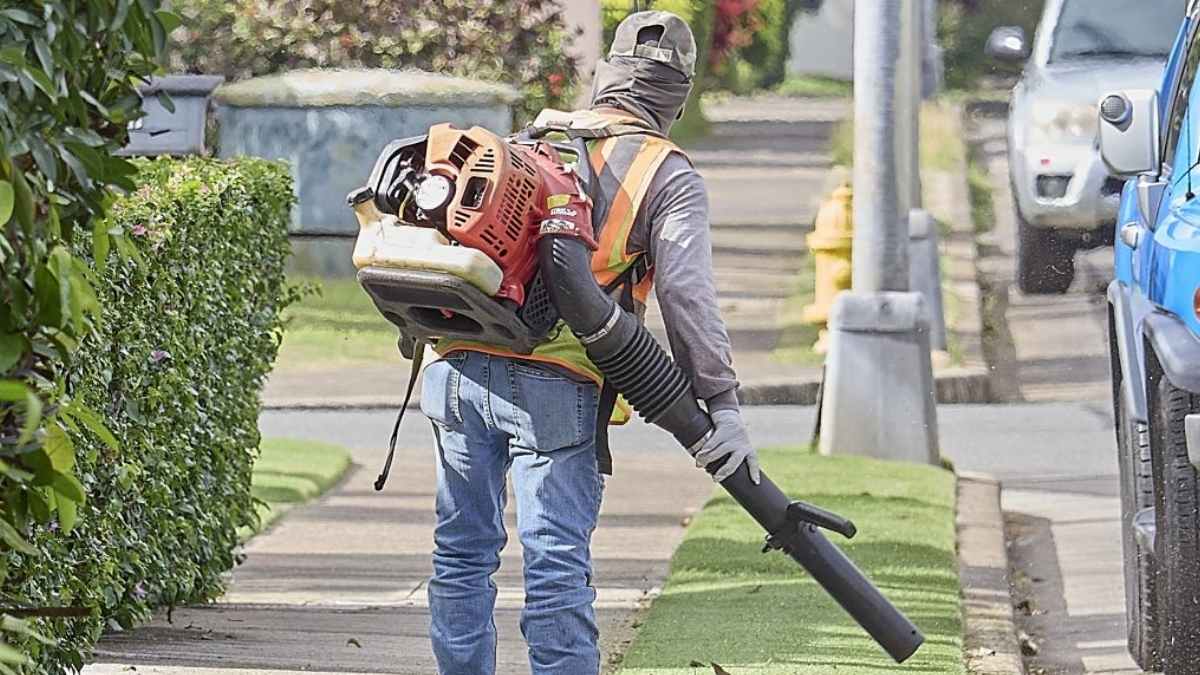
If your fall weekends revolve around chasing leaves with a noisy blower, Arlington, Massachusetts is about to change that. Town officials treat gas-powered leaf blowers as a noise and pollution problem, not just a handy tool. A local noise bylaw is phasing them out and tying violations to fines of $100 to $200.
Commercial crews are already under tight limits, and residents are in the last phase of the transition. On March 15, 2026, the last legal gas blower in a private yard is supposed to fall silent. Until then, homeowners are trying to keep yards tidy without breaking the rules or the bank.
What exactly does Arlington’s gas leaf blower ban require from homeowners?
Arlington folded the rules into its noise bylaw, focusing on leaf blowers powered by internal combustion engines. Commercial landscaping companies and town crews are already barred from gas models except in limited cases such as emergencies.
Residents are in a transition period in which they may use gas blowers only during specific dates and daytime hours, and that permission ends on March 15, 2026.
The Board of Health enforces the bylaw. A first violation in a calendar year brings a written warning, a second a $100 fine, and later offenses $200. Fines can apply to the property owner and any landscaper on site, while electric blowers remain legal year-round when used within the approved hours.
Why did Arlington move against gas-powered leaf blowers?
Officials point to a mix of environmental and health concerns. Gas-powered leaf blowers use two-stroke engines that burn an oil and fuel mix and emit pollutants linked to higher risks for the heart, lungs and brain.
Noise is the other big issue. In nearby Arlington County, Virginia, which is considering a similar prohibition, county materials say gas blowers can reach about 115 decibels and disturb people and wildlife. Washington, DC, Montgomery County in Maryland and Alexandria, Virginia already have gas blower bans or limits, often with fines in the hundreds of dollars.
How are residents and landscapers reacting to the new limits?
The rules have not landed quietly. Some landscapers and homeowners say battery-powered blowers are not yet a realistic replacement, arguing that batteries take hours to charge for short run times while gas units run longer. Others complain that lawmakers are piling on rules that hit small businesses and ordinary residents while bigger polluters remain untouched.
Supporters focus on everyday life. Residents describe days when the drone of blowers makes it hard to talk on the porch and say the sound carries well beyond one yard. Some add that in many cases a rake still gets the job done, even if it means more sweat and fewer gadgets.
How can Arlington homeowners prepare for the full ban in 2026?
With March 15, 2026 set as the end date for residential gas blowers, homeowners have a window to adjust. Ignoring the rules risks fines, complaints from neighbors and an unwelcome knock from the Health Department. Here are some practical steps residents can take now:
- Check the town’s schedule so any remaining gas use stays within allowed dates and hours, then stop using gas models once the residential ban begins in March 2026.
- Compare the purchase and running costs of electric blowers and make sure any landscaping company you hire follows Arlington’s rules.
Official materials note that electric models eliminate fuel costs and need less maintenance, even if they cost more up front. Is a quieter, cleaner neighborhood worth trading in that old gas blower and getting reacquainted with a rake?