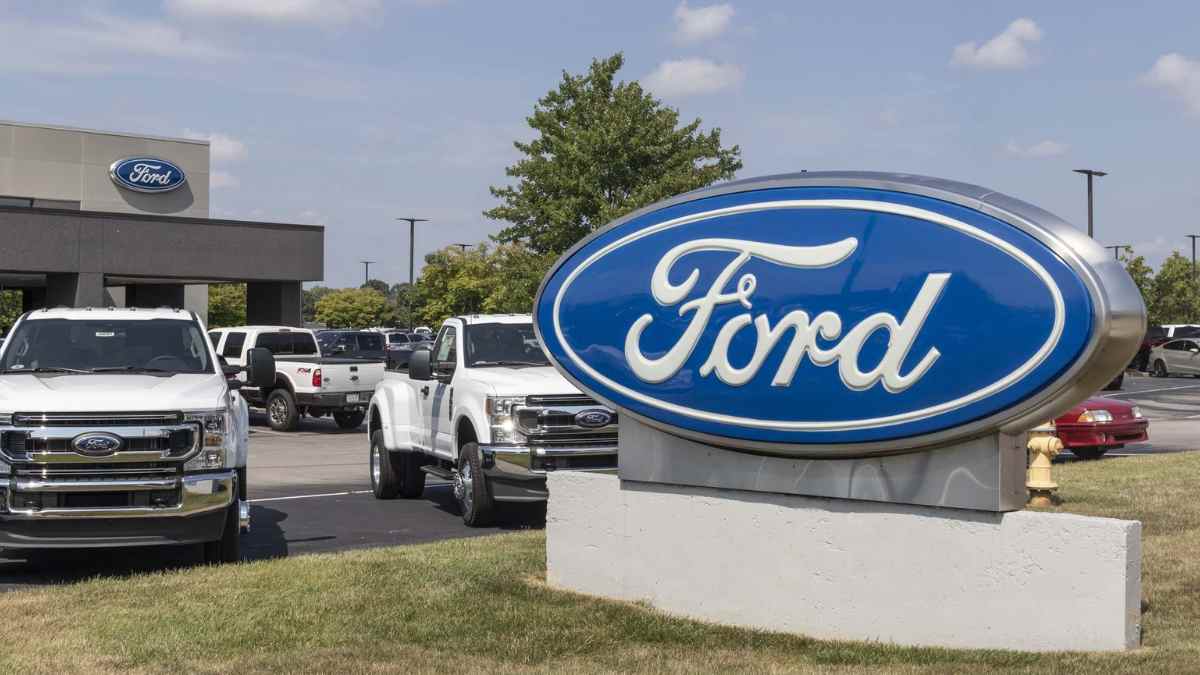
For a lot of people, the Ford Focus was not a car you thought about it was just the car that got you to work, to school drop-offs and to the grocery store. After nearly three decades of doing that job, Ford has now built the last Focus.
Company staff in Europe shared the news internally, and Ford later confirmed that the final example was a white five-door hatchback produced on a Friday in mid-November 2025. With that car, a 27-year run and more than 12 million units sold quietly came to an end.
The model had already disappeared from the United States in 2018 and Europe had been warned that electrification would eventually kill the nameplate.
Now the Focus is officially history and drivers are left wondering what comes next.
How did the Ford Focus become a global car for commuters and enthusiasts?
When Ford launched the Focus in 1998, it was not just another compact. It was the centerpiece of the Ford 2000 initiative, an internal project to create a single global compact car instead of separate models for Europe and North America.
In plain terms, it was designed so that a driver in Michigan and a driver in Munich could be buying essentially the same car.
To see how long the Focus has been part of everyday life, it helps to look at its basic timeline.
| Year | Event | What changed for drivers |
| 1998 | Focus launched under Ford 2000 strategy | New global compact replaces older small Fords |
| 2002 | First Focus ST (ST170) introduced | Sportier suspension, brakes and styling for enthusiasts |
| 2018 | Focus withdrawn from the U.S. market | No more new Focus at American dealers |
| 2020 | Focus RS discontinued | End of the most extreme performance version |
| 2025 | Final Focus built in Europe | Global production of the model ends |
Across those years, the Focus became one of Ford’s biggest volume sellers, with more than 12 million units produced.
It was engineered as an economical compact, meaning a small and relatively affordable car, but drivers quickly noticed that it did not feel cheap to steer or to push along a twisty road. That everyday usability made it a favorite for commuters and families.
At the same time, Ford could not resist turning it into a “hot hatch,” a performance-tuned small hatchback. The first ST170 in 2002 added stiffer suspension, revised styling and larger brakes.
The later Focus RS turned the volume up further with a turbocharged engine, all-wheel drive, a manual gearbox and aggressive styling, even spawning a limited RS500 version that delivered rally style thrills for the street and attracted high-profile fans like Ken Block.
Why did Ford kill the Focus and other small cars?
The death of the Focus says as much about Ford’s strategy as it does about the car itself. In Europe, the company has moved away from low-margin small cars and toward crossovers and electric SUVs such as the Kuga, the Puma and the Mustang Mach E.
According to data cited from Autocar and the European Automobile Manufacturers’ Association, Ford went from being Europe’s second largest carmaker in 2015 to 12th overall last year, a slide that coincided with dropping models like the Fiesta and the Focus.
Inside the company, the issue is well understood. Even before the focus on electrification fully hit, Bill Ford Jr. admitted that the brand’s car lineup was “not as robust as we need to be.” Today, the Mustang is essentially the only traditional car left in Ford’s new vehicle range in both the United States and Europe.
Everything else is a crossover, a sport utility vehicle, a van or a truck, which might be good for margins but leaves less choice for people who still want a straightforward compact car.
What does the end of the Ford Focus mean for drivers, and what can you do now?
For current owners, the badge disappearing from factory lines does not instantly change daily life. A Focus that took you to work last week will do the same tomorrow, and the existing network of dealers and independent garages can continue to maintain it.
The bigger impact is on people who were thinking about buying a new Focus, or who wonder what this means for the value of the cars already on the road.
If you drive or were planning to buy a Focus, these are some practical moves you can consider now:
- If you want a new Focus, ask local dealers whether any unsold cars remain in stock, then compare those to similar compact models or to Ford’s own crossovers like the Puma and Kuga in terms of price, running costs and practicality.
- As an owner, keep service records up to date and follow the maintenance schedule so your car keeps its value in a market where no new units are coming.
- If you have a Focus ST or RS, talk with your insurer and a trusted dealer about how rarity might affect premiums and resale, and decide whether you want to keep it as a long-term enthusiast car.
- Before making any big decision, check your warranty documents and any local consumer protections so you know exactly what coverage you still have.
There are already rumors that Ford could bring back the Focus name or launch new regular car models, but there is no confirmed plan and no guarantee that any future “Focus” would be a familiar hatchback or sedan.
Until the company announces something concrete, the story is simple: after 27 years, one of Ford’s most important small cars is gone, and drivers will need to look elsewhere while the brand tries to find its own focus again.